














How to Assess Handmade Quality from Close-Up Product Photos

You can assess handmade quality from photos only within the visible field. A close-up may document edges, knots, seams, settings, enamel boundaries, and surface condition; it cannot reveal an internal pin, alloy chemistry, adhesive strength, origin, or future service life. A useful image set therefore combines an overall view, numeric scale, multiple angles, neutral color, and an honest view of natural variation. The decision should rest on consistency across the series and written specifications, not one beautiful photograph.
The views you need and what to inspect
Begin with the complete object, with no cropped ends or extreme perspective. Add numerical dimensions or a ruler; a hand or display form can help orientation but is not an accurate scale. Wide-angle perspective enlarges the nearest area. Compare listed length, width, thickness, and diameter, and request separate documentation for each piece in a pair.
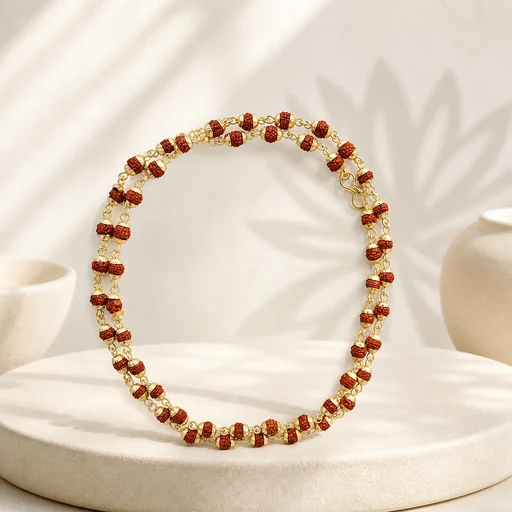
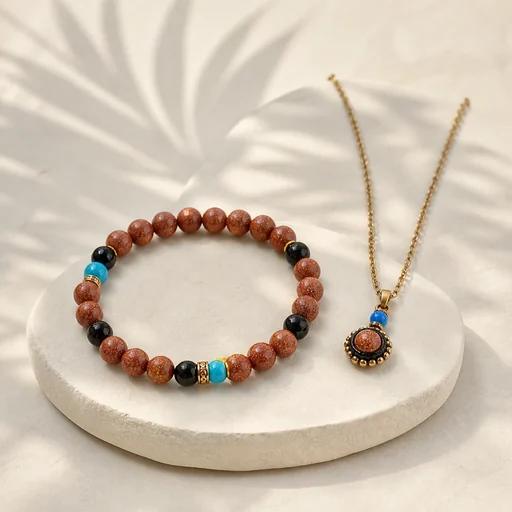
The next layer is construction. Beads and bracelets need the knot, cord join, holes, and highest-flex area. A pendant needs its bail, jump ring, back, and transition from decoration to base. A setting needs prongs or bezel edge, the gap around the insert, and a side view. Textile or leather work needs the start and end of stitching, corners, cut edges, and hardware attachment. Transitions often reveal more than the decorative center.
For carving, inspect edge safety, relief depth, cross-grain chips, and fragile bridges. For inlay, look at gaps, insert level, and active lifting without demanding laboratory uniformity from every hand-worked boundary. On cast work, the back, cleaned sprue area, visible porosity, and joined sections are useful. One pore is not automatically functional failure, while a smooth face cannot rule out a hidden void.
Photograph enamel both head-on and in raking light. The first view shows pattern and cells; the second may reveal waviness, a chip, bubble, or lifted edge. Stones need neutral reflected light and another angle when an optical effect is represented. Do not combine warm lamps, daylight, and boosted saturation in one comparison series, because the viewer cannot tell whether the object or editing changed.
Pair every macro with an orienting view of the same recognizable area. Without context, a microscopic scratch can look like a major defect and a structural seam like random texture. A repeatable sequence—front, back, side, scale, connection, decoration macro, natural variation, and known imperfection—makes a catalog easier to compare without commenting on another seller's work.
| View | What it can support | What remains unknown |
|---|---|---|
| Overall + dimensions | Proportion, completeness, broad asymmetry | Universal fit and hidden-part accuracy |
| Back + side | Thickness, transitions, bail, some joins | Internal pin, solder, or adhesive below an insert |
| Knot or seam macro | Position, tails, visible wear, stitch spacing | Fiber strength and load life |
| Setting or inlay macro | Gaps, edges, chips, lifting | Mineral identity and hidden seating depth |
| Neutral-color frame | Comparable hue and batch variation | An exact match on every display |
Separating honest documentation from a dramatic image
The series should be internally coherent. Track an inclusion, grain direction, bead order, or small tool mark: do all views show one object, or combine the best areas of several? Naturally variable goods benefit from an actual image of the selectable piece or a clear “range example” showing multiple specimens. An editorial illustration or generated still life must never be presented as documentary SKU photography.
Color control begins with neutral lighting and consistent processing. FADGI's stringent heritage-digitization guidance is not a mandatory retail standard, but its principles translate well: controlled illumination, a target in a reference frame, color management, focus review, and retention of a master file. Buyers do not need a target in every published view; the editorial team should retain a verifiable series reference.
The Library of Congress treats resolution, tone, color, noise, artifacts, and other factors as interdependent aspects of still-image quality. Pixel count cannot rescue clipped highlights that erase an enamel boundary or shadows that hide a fracture. Strong denoising can smooth pores and wood grain. Request at least one frame without theatrical contrast and with information in highlights and shadows.
Read functional evidence instead of demanding aesthetic sameness. A knot should avoid an abrasive edge; stitching should carry its load without skipped areas; a jump ring should close without an obvious gap; a prong should sit securely and not catch fabric; an edge should have no hazardous burr. Intended hand variation may be acceptable, but safety and mechanism still receive separate review.
When a view is missing, ask neutrally: “Could you show the back and connection in diffused light?” Absence of an image does not prove a defect, and requesting one is not an accusation. If a seller cannot photograph the specific piece, account for uncertainty, return terms, and the cost of risk without assigning motives or disparaging competitors.
After delivery, repeat the sequence in diffused daylight or neutral artificial light. Compare size, pattern, edges, and disclosed variation before wearing the piece. If something differs, retain packaging and source images, photograph the item before cleaning, and follow the published contact process. Polishing or repair can erase evidence of the received condition.
- Obtain the full front, back, side profile, and numeric scale.
- Request applicable macros of knots, seams, settings, edges, enamel, and moving joints.
- Track one-piece identifiers across the set and separate actual photos from illustrations.
- Check detail in highlights and shadows, restrained saturation, and visible macro scale.
- List what images cannot prove: composition, hidden construction, origin, and service life.
- Inspect after delivery before cleaning or wear, and retain the source record.
Questions and answers
- How many product photos are enough?
- There is no fixed number. Cover every meaningful side, numeric scale, and construction transition. A simple object needs fewer frames than a multi-part one.
- Can screen color be trusted?
- Only as a controlled approximation. Light, camera, processing, and display all change color; neutral references and actual-item photos reduce but cannot remove variation.
- Can a macro prove knot strength?
- It documents placement and visible condition. Cord specification, hidden tails, and behavior under load require other evidence.
- Are tool marks defects?
- Not automatically. Consider safety, function, design intent, and stability. A sharp burr or active crack matters more than aesthetic irregularity.
See current options and actual product photos in the Narayana Shop handmade collection. For a chosen piece, compare its own full view, scale, back, and construction close-ups.
Continue reading
Sources and further reading
- Federal Agencies Digital Guidelines Initiative — Technical Guidelines for Digitizing Cultural Heritage Materials.
- Library of Congress — Still-image quality factors.
- Library of Congress — TIFF format profile and color-management considerations.
Photo review is limited to visible condition and is not a gemological, metallurgical, or engineering examination. Editorial illustrations must remain clearly separated from actual product photography.