
Narayana Journal — Practice, Culture and Meaningful Living

Narayana Journal

Practical guides to meaningful objects and mindful living

Evidence-aware guides to rudraksha, tulsi, malas, natural materials, incense, puja objects, handmade craft, care, and responsible choice. Traditional meanings are presented as cultural context—not as medical advice or guaranteed results.
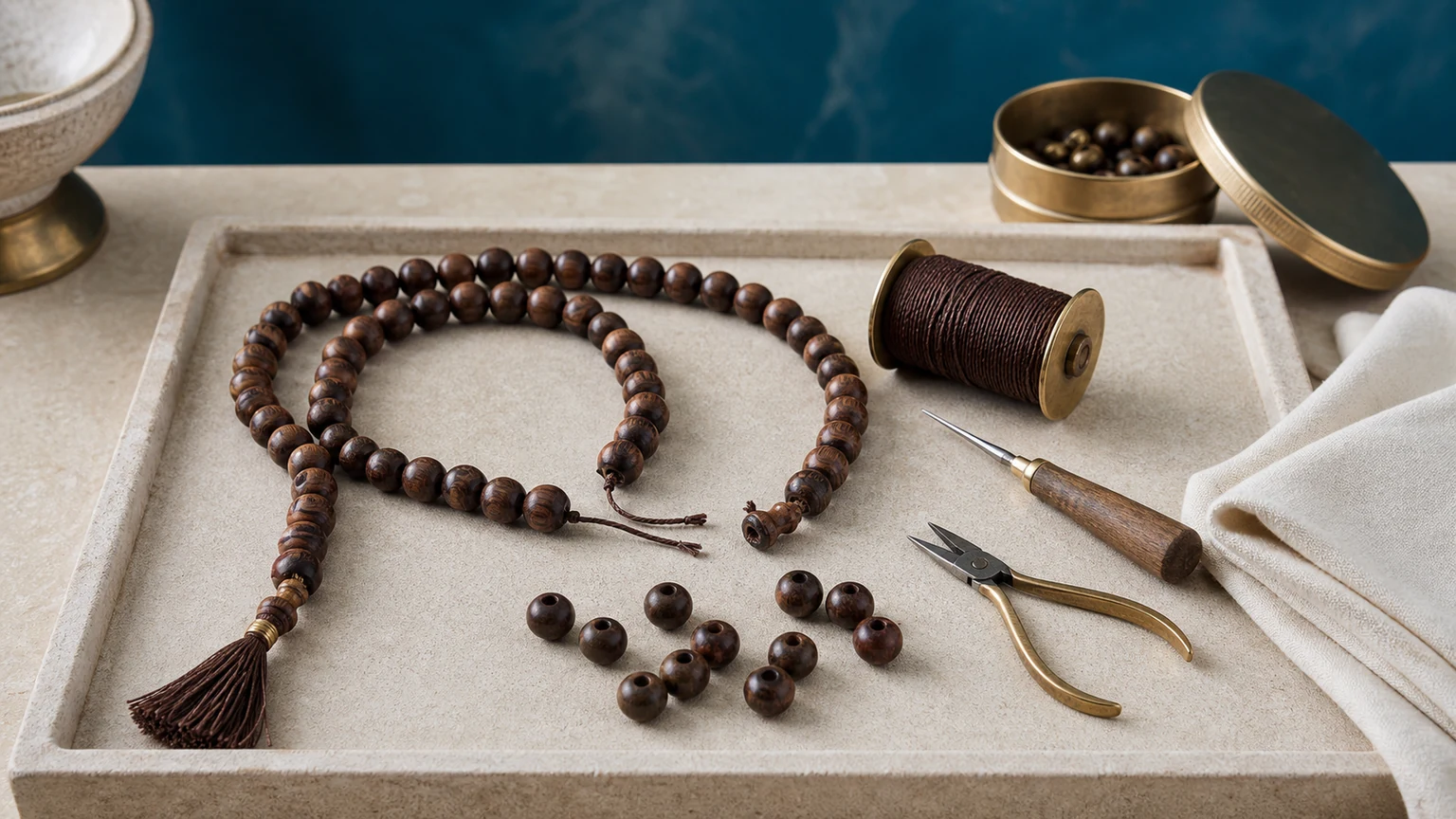
Tulsi beads, hand tools, shipping twine, a blank tag, and an unlabeled map texture
Product provenance
“Made in Vrindavan”: What Provenance Facts a Seller Should Disclose

A lot-level provenance model that separates where materials originated, where an item was made or assembled, and where it was purchased.

Narayana Journal / September 1, 2026
Tulsi beads beside a dry cloth, soft brush, cotton pouch, and closed storage case
Tulsi care
Caring for Tulsi Beads: Water, Oils, Humidity, and Storage

Material-aware Tulsi care covering water exposure, complete drying, clean storage, and regular inspection of the stringing structure.

Narayana Journal / September 1, 2026
Round and barrel-shaped Tulsi beads beside an unnumbered brass caliper
Tulsi bead sizing
Tulsi Bead Shapes and Sizes: Round, Barrel, Strand Length, and Fit

A clear measurement system for bead form, diameter, and strand length, designed to compare actual items rather than photographic impressions.

Narayana Journal / September 1, 2026
One-, two-, and three-row kanthi malas displayed on three abstract jewelry stands
Kanthi mala fit
One-, Two-, and Three-Row Kanthi Malas: Construction, Length, and Fit

Compare one-, two-, and three-row construction through measurable features, without presenting one community's wearing conventions as universal.

Narayana Journal / September 1, 2026
Several pale Tulsi bead forms arranged as a visual material glossary
Tulsi glossary
Tulsi, Tulasi, Kanthi, and Kanti Mala: A Clear Terminology Guide

A bilingual glossary that respects transliteration variants while separating product function, tradition-specific usage, and measurable catalog facts.

Narayana Journal / September 1, 2026
A rudraksha bead, loupe, caliper, and closed unprinted cream dossier
Document review
What a Rudraksha Certificate Can—and Cannot—Prove

A certificate is useful only within its stated sample and method. Learn how to read the report, connect it to the bead, and spot claims that need review.

Narayana Journal / August 30, 2026
Rudraksha beads beside a soft brush, dry cloth, and breathable care pouch
Rudraksha care
How to Care for Rudraksha: Cleaning, Drying, Storage, and Inspection

A preventive care protocol for the beads and the entire construction, emphasizing minimal intervention, gentle drying, and early wear detection.

Narayana Journal / August 30, 2026
One panchamukhi bead shown through a sequence of unlabeled macro angles
Panchamukhi
Panchamukhi Up Close: How to Count Mukhi Lines and Describe the Actual Bead

A repeatable method for counting longitudinal boundaries on panchamukhi through sequenced photography, documented limits, and independent review.

Narayana Journal / August 30, 2026
Two groups of rudraksha beads with different sizes and textures beside a brass divider
Rudraksha comparison
Nepal vs Indonesian Rudraksha: An Honest Comparison of Size, Texture, and Origin

An honest comparison of two trade descriptions using measured beads, documented provenance, and clear limits on appearance-based conclusions.

Narayana Journal / August 30, 2026
Macro arrangement of rudraksha beads showing longitudinal grooves and natural openings
Rudraksha anatomy
Anatomy of a Rudraksha Bead: Mukhi Lines, Natural Openings, and Organic Variation

A clear guide to the visible anatomy of rudraksha, how to describe organic variation, and where visual observation stops short of identification.

Narayana Journal / August 30, 2026