

How to Choose Your First Mala

Across India, Tibet, and neighboring regions, strands of beads have long helped practitioners keep count during prayer, mantra repetition, and breath awareness. A mala may also serve as a daily reminder of a commitment or intention. Its value comes less from ornament alone than from the practice and meaning associated with it.
Japa mala and kanthi mala: what is the difference?
The terms describe related but distinct objects, and usage varies among lineages.
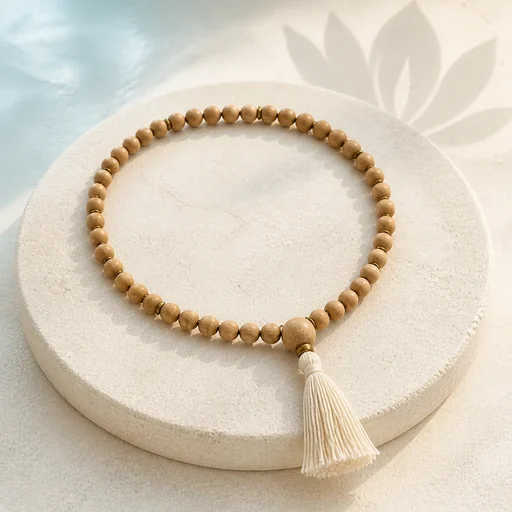
A japa mala is a strand used for repetitive prayer or mantra practice. Many Hindu and Buddhist malas have 108 counting beads plus a larger guru or meru bead, although other counts also exist. During practice, the beads provide a tactile rhythm and help the practitioner keep count without looking at a clock.
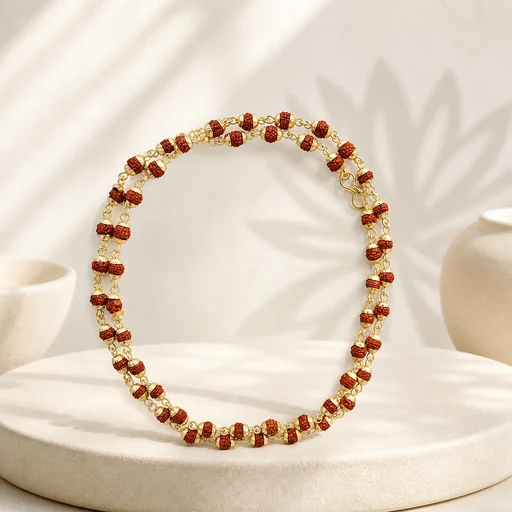
A kanthi mala—often made from tulsi wood in Vaishnava traditions—is typically worn around the neck as a sign of devotion. A kanthi may have one or more short strands and is not automatically the same thing as a 108-bead japa mala. Customs concerning who wears one and how it is treated differ by community, so guidance from a teacher or tradition is preferable when that context matters.
Common materials and their traditional meanings
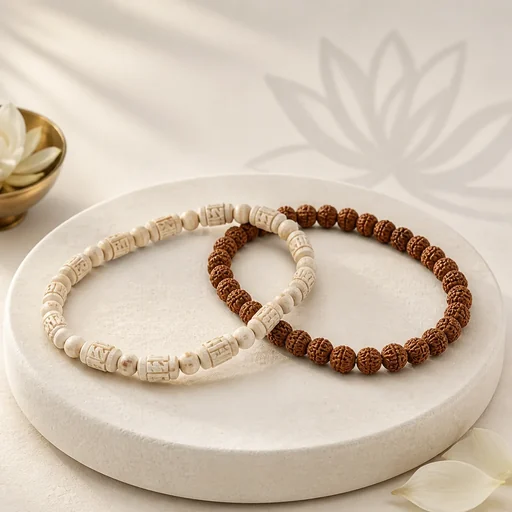
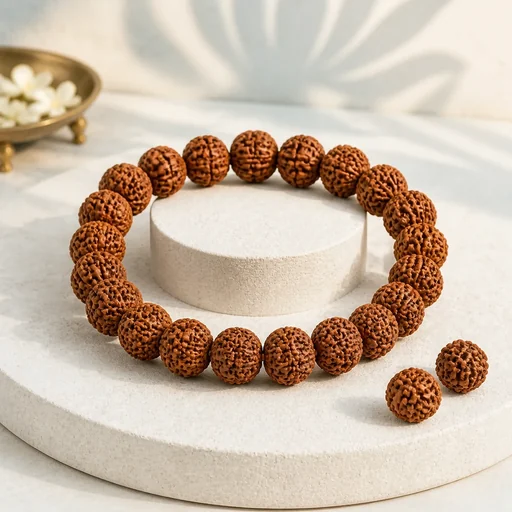
- Rudraksha: textured seeds associated especially with Shiva and Shaiva traditions. They are widely used for japa and worn as devotional beads.
- Tulsi: sacred basil wood, particularly significant in Vaishnava bhakti. Its meaning centers on devotion and remembrance.
- Sandalwood: valued for its smooth feel and gentle aroma. Sandalwood malas are used in several contemplative traditions.
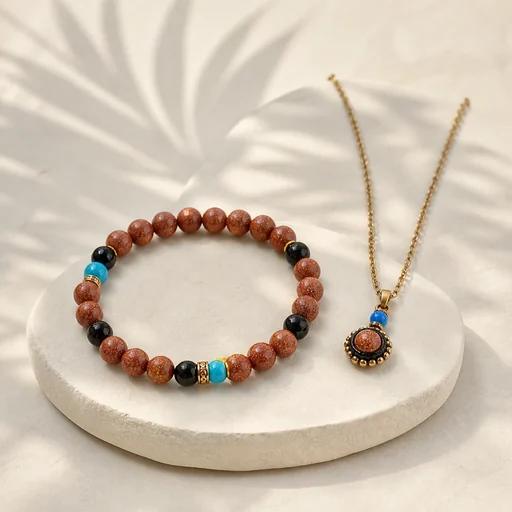
- Gemstones: amethyst, tiger’s eye, jasper, moonstone, and other stones are chosen for color, texture, and the symbolism assigned to them in different systems of belief.
- Lotus seeds: associated with purity and awakening in several Asian traditions.
- Bone or shell: used in particular traditions and regions. Because these materials can carry specific ritual meanings, it is worth learning their provenance before choosing them.
How to choose your first mala
Begin with purpose. If you plan to count mantra repetitions, check the bead count, the size of the beads, the strength of the cord, and whether the strand moves comfortably through your fingers. If you want a wearable reminder, consider length, weight, and the customs of the tradition that inspires you. Natural variation is normal; clarity about materials and workmanship matters more than mystical promises.
For japa, many practitioners move one bead at a time while repeating a mantra, stopping at the guru bead rather than crossing over it. Hand position and finger use vary by lineage. Treat the mala with clean hands, keep it dry unless the maker says otherwise, and store it where it will not be crushed or tangled. Smoke, moonlight, or other ritual forms of “cleansing” belong to personal or lineage-based practice; they are not required for the physical care of the beads.
Most importantly, choose a strand you will actually use. A comfortable, well-made mala can become familiar through repetition—a quiet marker of time, attention, and intention.
Explore our English-language selection: malas and prayer beads at Narayana Shop. If you would like help comparing materials or sizes, contact us before ordering.