













Natural-Care Oils and Soaps: Reading Ingredients, Patch Testing, and Storage
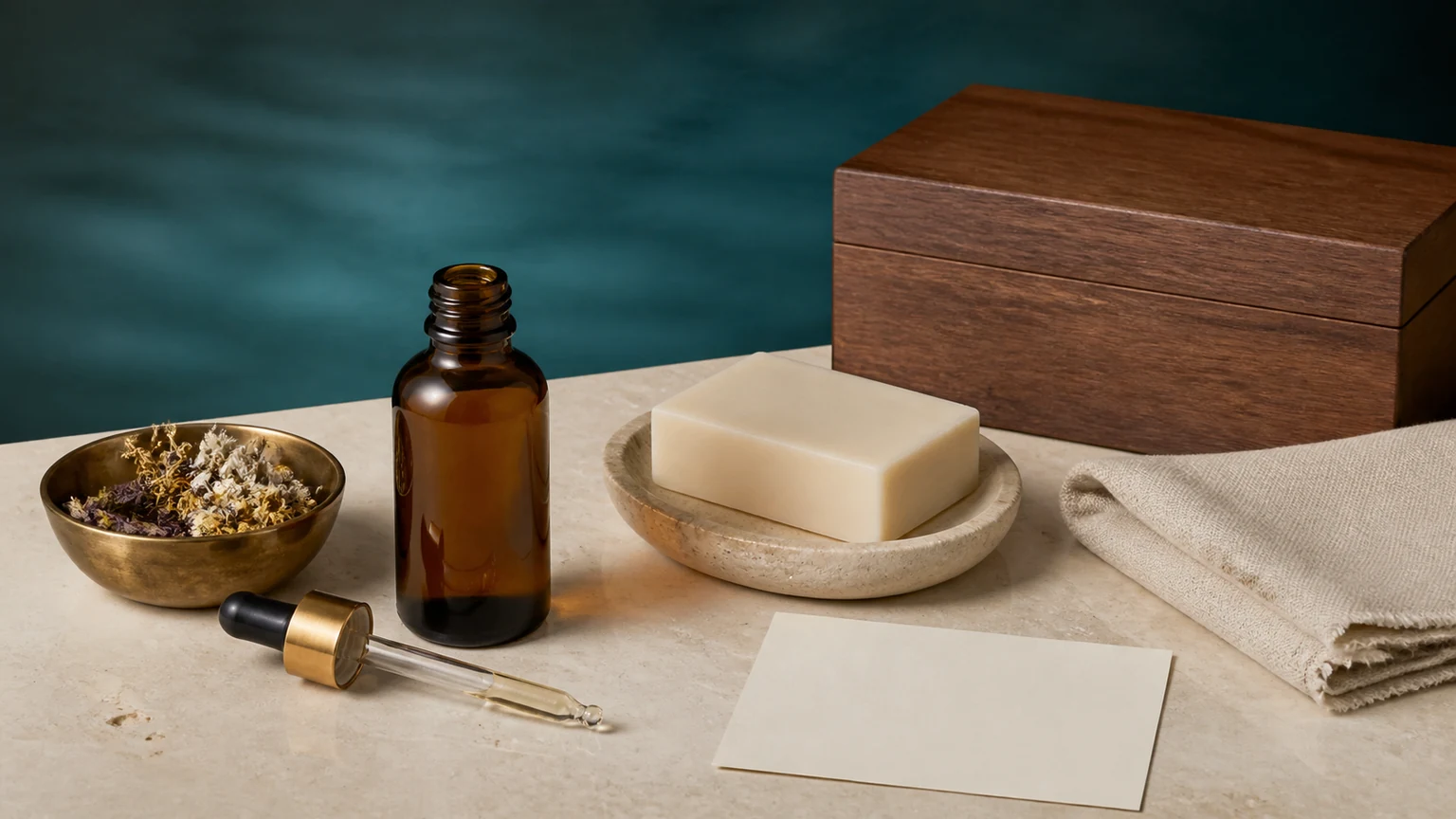
Choose natural-care oils and soaps by product category, complete ingredients, directions, and warnings—not by the word natural. A small-area home use test may reveal an obvious reaction before broader use, but it cannot guarantee tolerance and is not the diagnostic patch testing performed by a dermatologist. Storage also depends on formula and packaging: protect oil from unnecessary light, heat, air, and contamination, and generally let a solid soap dry between uses unless its maker directs otherwise.
Read ingredients and directions before judging the sensory experience
Identify the product: cosmetic oil, aromatic blend, hair treatment, massage product, toilet soap, or another category. Oil may mean a plain carrier oil, a blend with fragrance, a concentrated essential oil, or a finished cosmetic formula. These are not interchangeable. Take route and intended use from the label, and request maker directions when the category is unclear.
Transcribe ingredients in order. Cosmetics may use INCI names; CosIng helps identify a term, but the European Commission says a database entry is not permission to use an ingredient in every formula. Do not reduce a long list to two familiar plants. A carrier, fragrance, aromatic allergen, antioxidant, color, or preservative may matter more than the front illustration.
Do not infer tolerance from origin. FDA consumer information explains that natural or organic source does not automatically make a cosmetic safer, and hypoallergenic language should not be read as a guarantee against reaction. For someone with a known allergy, the exact ingredient matters more than a plant’s general reputation. Discuss uncertainty with a dermatologist or allergist.
Inspect packaging. Oil benefits from a tightly closed cap, clean dispenser, and a container selected by the maker. Soap should arrive with intact packaging, a legible batch, and no unexplained pre-purchase wetting. Natural raw materials can vary in color and aroma, but unusual separation, swelling, leakage, mold, or a broken seal is a reason to stop and contact the seller.
| Check | Oil | Solid soap |
|---|---|---|
| Category | Carrier, essential, or finished blend | Cosmetic, toilet, or another defined type |
| Ingredients | Base, fragrance, actives, antioxidants | Saponified materials, oils, fragrance, additions |
| Use | Area, amount, leave-on or rinse-off | Area, contact time, thorough rinsing |
| Storage | Close, keep dispenser clean, avoid heat | Drain water and dry on a clean support |
| Stop signal | Unexpected odor, leak, or unexplained sediment | Slime, mold, contamination, damaged package |
Preliminary testing and storage without a false guarantee
The American Academy of Dermatology recommends testing a new skin-care product on a small area, using the normal product routine and observing the site over several days. A rinse-off product remains on the test area only for the labeled contact time. This is general education, not a personalized prescription. Do not test on broken or already inflamed skin, and stop for burning, swelling, or substantial itching.
Distinguish that home use test from clinical patch testing. A professional selects allergens, controls exposure, and performs repeat readings. No reaction at home does not prove allergy is impossible; body site, frequency, sunlight, combined products, and cumulative exposure can change the result. When reactions recur or the cause is unclear, take the package and ingredient list to a qualified clinician.
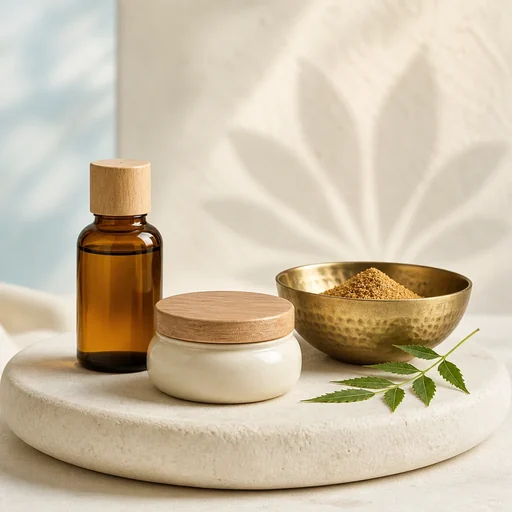
Store oil according to its label, generally with a tightly closed cap and clean dispenser, away from excess heat and direct light. Do not add water or return dispensed product to the bottle. FDA notes that air, moisture, temperature, fingers, and contaminated applicators can shorten cosmetic life. A printed date or period after opening does not replace inspection for damage or contamination.
A soap bar usually benefits from a clean, draining support and time to dry; a sealed wet container can soften its surface. Do not extend that rule to medicated, household, or unusual products without checking category and directions. Avoid sharing products over broken skin, and stop using a cosmetic after an unexplained change unless the maker confirms that the variation is expected.
- Identify category, application area, and format from the label.
- Photograph full ingredients, batch, shelf information, storage, and warnings.
- Check known allergens and discuss uncertain components with a professional.
- For a home test, use a small area and the normal routine for that product.
- Stop for a reaction; a home test is not diagnostic patch testing.
- Close oil with a clean cap and keep fingers and water away from the dispenser.
- Let soap drain and dry on a clean support unless directions say otherwise.
- Do not use a damaged package or a product with an unexplained change.
Final practical review: Mark the opening date without covering required labeling and keep a private note of product, batch, test area, dates, use, and observation. Never publish skin images as proof of safety or a typical result. If a reaction occurs, keep the package and do not combine the remainder with another bottle. The record helps a clinician connect the event to one formula without turning one experience into a promise for others.
Questions and answers
- Must every natural oil be diluted?
- There is no universal answer. Carrier oils, essential oils, and finished blends differ. Follow the exact product type and directions; do not guess a concentration.
- Does a home test guarantee no allergy?
- No. It may reveal some reactions under those conditions but cannot rule out delayed, cumulative, site-specific, or combination-dependent reactions.
- Does a short ingredient list mean hypoallergenic?
- No. A short list is easier to read, but one relevant ingredient may still matter to a particular user. Exact formula and reaction history are more useful.
- Where should I store oil?
- Follow the label. A well-closed container, clean dispenser, and protection from excessive heat, light, and moisture are common priorities.
- What if a soap bar becomes soft?
- Let it drain and dry on a clean support if it is ordinary cosmetic soap. Stop using it for unusual odor, mold, or contamination.
See current options and actual product photos in the Narayana Shop Ayurveda and natural-care collection. Review the full ingredients, format, shelf information, and maker directions on the individual listing.
Continue reading
Sources and further reading
- American Academy of Dermatology — How to Test Skin Care Products.
- U.S. Food and Drug Administration — Cosmetics Labeling.
- U.S. Food and Drug Administration — Shelf Life and Expiration Dating of Cosmetics.
- European Commission — CosIng Cosmetic Ingredient Database.
This material does not replace a dermatologist or allergist. A home use test cannot guarantee tolerance and is not clinical patch testing; the current label controls the use of each product.