
















How to Compare Indian Toothpastes: Ingredients, Label Directions, and Warnings
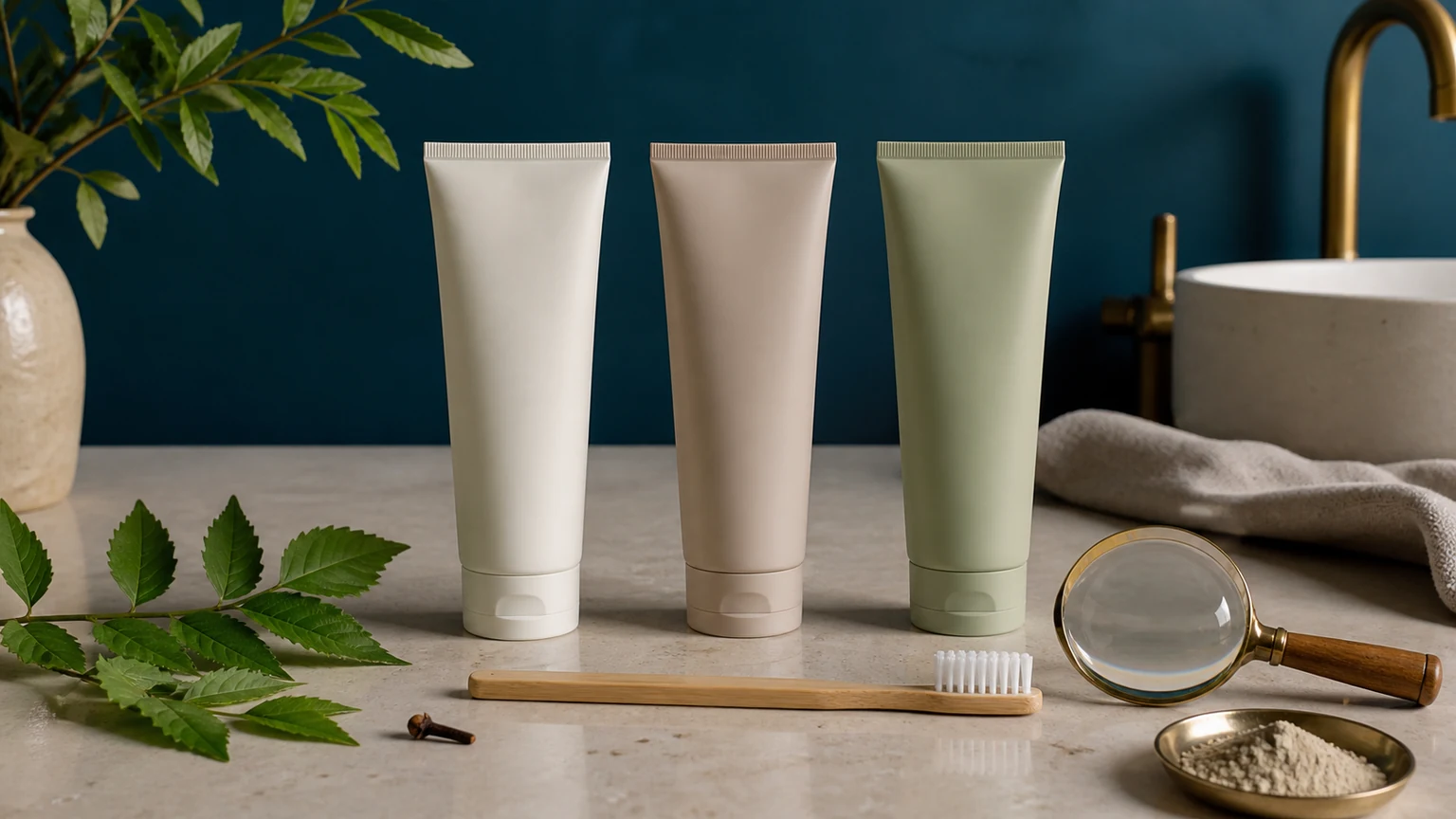
Compare Indian toothpastes through their actual labeling—not the word “Ayurvedic” or the number of herbs printed on the front. Check the product category, complete ingredient list, labeled purpose, directions, and warnings. The same trade name may have a different formula or regulatory status across countries and batches. For sensitivity, pain, bleeding, pediatric use, or another health concern, discuss the choice with a dentist instead of inferring an answer from promotional copy.
Five fields that make a comparison meaningful
First, identify the labeled purpose in the market where the toothpaste is sold. A product may be positioned for routine cleaning, cavity protection, sensitivity, surface-stain removal, or another use, but each claim has its own regulatory and evidence context. Do not transfer an ingredient’s reputation to the finished product. The presence of a plant, mineral, or oil does not establish that the formula delivers a particular result.
Second, read the entire ingredient list. The ADA describes common functional groups such as abrasives, humectants, binders, surfactants, flavors, and, in some formulas, active ingredients. This framework helps readers decode a list; it does not reveal an undisclosed concentration or clinical outcome. If a listing compresses the formula into “herbal complex,” request a readable label image.
Third, identify the labeling framework. Depending on jurisdiction, claims, and actives, toothpaste can be handled as a cosmetic, an over-the-counter drug, or a combination category. Read active/inactive, purpose, directions, and warnings within that destination-market context. CosIng can help identify a cosmetic ingredient name, but the Commission explicitly notes that a database entry is not approval for a particular use.
Fourth and fifth, compare directions and warnings. Record age, amount, frequency, spitting or rinsing directions, swallowing cautions, storage, and actions for an adverse reaction exactly as printed. Do not average two labels into one routine. If the directions are unreadable, the products are not ready for an informed comparison.
| Criterion | Record | Do not infer |
|---|---|---|
| Purpose | Exact labeled claim | That any listed ingredient delivers it |
| Ingredients | Complete list in order | That herbal means gentler or safer |
| Actives | Name and amount when declared | That no separate panel means no such substance |
| Directions | Age, amount, frequency, rinsing | One universal dose for the category |
| Warnings | Swallowing, irritation, storage | That natural care needs no precautions |
A practical choice process without medical promises
Build a two-column comparison from current packages. Record the maker and country exactly as labeled, net weight, batch or formula version, full ingredients, and intended use. Mark ingredients you personally avoid on a dentist’s advice or because of a documented reaction. Do not declare them unsafe for everyone; individual tolerance and regulatory status are different questions.
Do not rank toothpastes by the length of the herb list. Botanical flavors and essential oils can irritate some users; low foam does not prove inferior cleaning; a strong taste does not reveal abrasivity. Use an RDA value or any technical metric only when a reliable source publishes it for the exact formula. Never assign a number from a category or look-alike product.
Check seals and claims. Professional-looking graphics do not equal independent review. If a dental association, standard, or certification is invoked, verify the registry and scope. Avoid claims such as treats gum disease, eliminates sensitivity, safe for children, or whitens unless the current permitted label and supporting review specifically authorize that wording.
After purchase, keep the carton or label and watch for changes in appearance, odor, and texture. Do not use a tube with a broken seal or unclear date. For pain, ulcers, swelling, persistent irritation, bleeding, or pronounced sensitivity, stop self-selection and consult a dentist. A retail article neither diagnoses a condition nor prescribes treatment.
- Compare only matching product categories and current formula versions.
- Obtain readable front, back, and crimp images of the actual package.
- Transcribe the full ingredients and separately labeled actives.
- Compare exact purpose, age, directions, and warning language.
- Check the maker, responsible importer, batch, and shelf information.
- Do not rank safety by herbal, natural, or Ayurvedic wording.
- Verify a certification or professional seal in its registry when it drives the choice.
- Discuss symptoms or special needs with a dentist familiar with the user.
Final practical review: Before choosing, prepare a neutral note for a dentist: label images, warnings, user age, known reactions, selection goal, and other oral-care products. Do not self-diagnose or rank a toothpaste in advance. Recheck every new package after purchase because a familiar design does not guarantee an unchanged formula.
Questions and answers
- Is herbal toothpaste always fluoride-free?
- No. Herbal is positioning, not a complete formula statement. Read the ingredients and any labeled actives on the current package.
- Does low foam mean weaker cleaning?
- Foam sensation does not establish finished-product performance. Compare the labeled purpose and evidence, and ask a dentist about brushing technique.
- Can I determine abrasivity from ingredients?
- You cannot reliably calculate a precise value from the list. Use verified data for that exact formula and do not turn one metric into a medical ranking.
- Is an Indian toothpaste suitable for children?
- Follow the age and swallowing directions on the specific label. Ask a dentist for young children, swallowing risk, or special needs.
- What if the toothpaste irritates my mouth?
- Stop using it and keep the package and ingredient list. Seek dental or medical advice for a significant or persistent reaction rather than trying to treat it from a review.
See current options and actual product photos in the Narayana Shop Indian toothpaste collection. Verify ingredients, purpose, and warnings on the individual listing and current package.
Continue reading
Sources and further reading
- American Dental Association — Toothpastes.
- U.S. Food and Drug Administration — Summary of Cosmetics Labeling Requirements.
- European Commission — CosIng Cosmetic Ingredient Database.
This article supports label comparison and does not replace a dentist. It verifies no therapeutic, whitening, anticavity, sensitivity, or other effect for a specific toothpaste beyond its current permitted labeling.