


What to Do When a Mala Breaks: Inspection, Repair, Reuse, and Storage
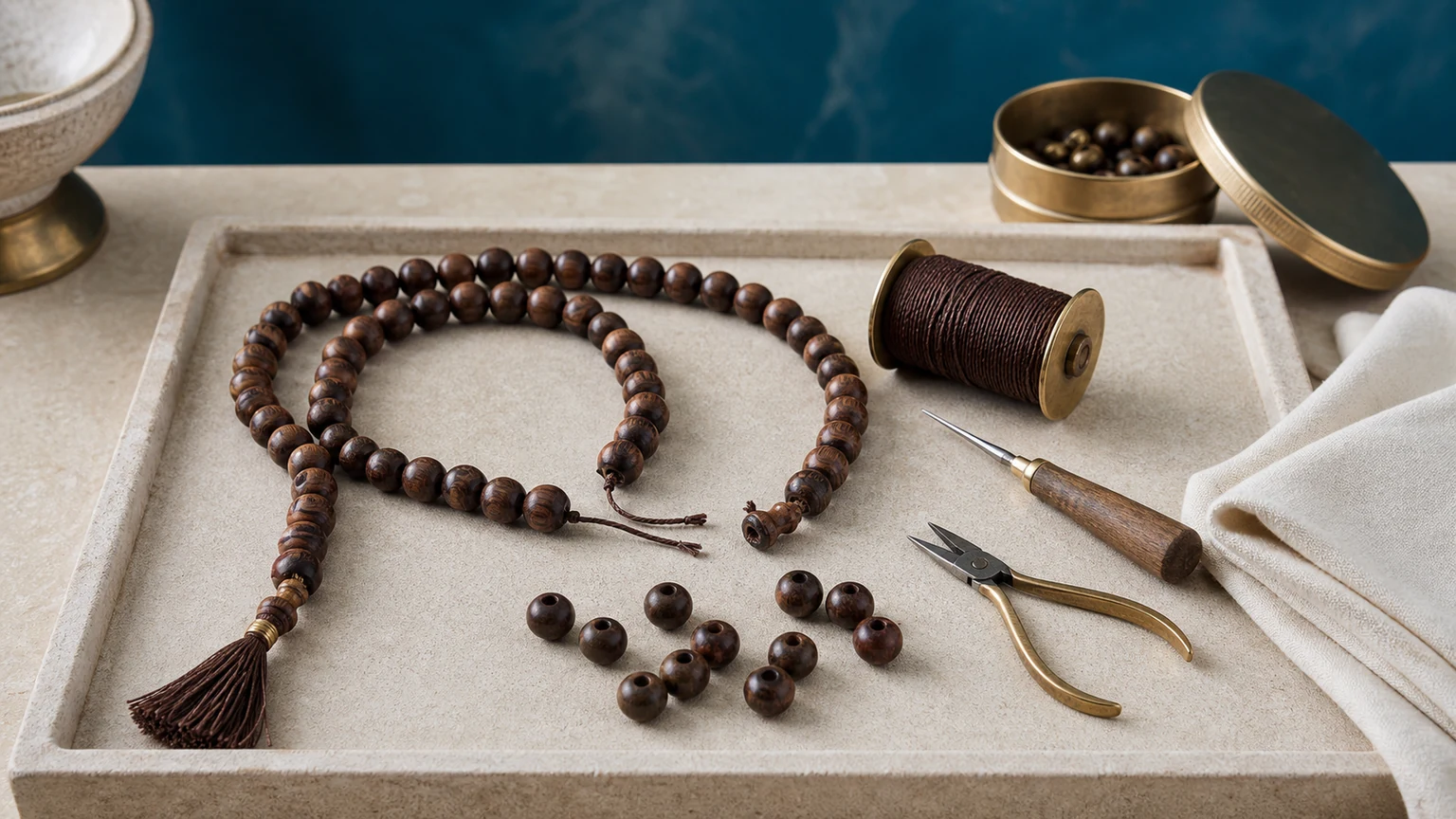
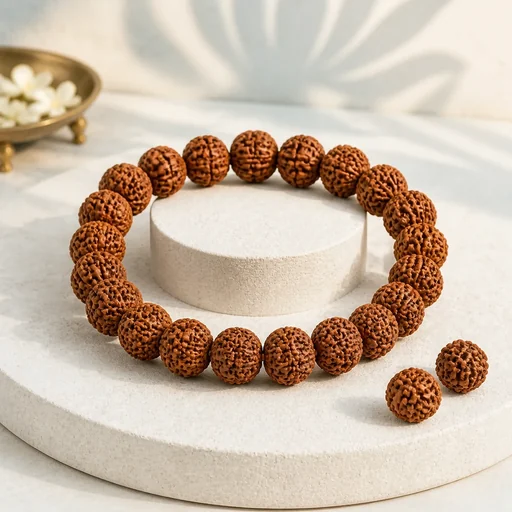
When a mala breaks, stop using it, collect every component on a pale soft surface, and photograph the arrangement before moving anything. Keep knots, cord, head bead, spacers, and tassel because they document the construction. Then inspect every hole and decide whether repair, complete restringing, or safe reuse of some beads is possible. Do not assume Narayana Shop offers repair until the service is confirmed, and ask within your tradition about any religious meaning or respectful retirement practice.
First response: collect, record, and inspect
Do not lift the mala by a remaining end; more beads may fall. Restrict the area, keep children and animals away, and use a light-colored tray or cloth with an edge. Pick up large pieces, then examine floors and folds with side lighting. The Metropolitan Museum of Art recommends saving detached pieces and bringing them to a conservator with the object; the same principle preserves repair options for a personal mala.
Photograph overall sequence, both sides of the break, knots, and distinctive beads. If order remains intact, transfer it to a loose temporary cord without tightening. Do not rely only on memory of the count: working beads, head bead, spacers, ornaments, and counters may play different roles. Label unknown components separately, but never mark a sacred object with permanent ink.
Inspect holes under magnification. Fresh powder, a crack from channel to surface, a sharp lip, split, deformed metal, or an abrasion mark means a new cord alone may not solve the cause. Check neighboring beads and distant sections because cord may have aged throughout. Do not grind stone, seed, or wood without understanding material behavior and cultural appropriateness.
Treat the old construction as evidence: cord type, number of strands, knots between beads, direction, head-bead hole, and tassel attachment. Vedabase publishes a specific Gaudiya Vaishnava structure with 108 working beads and one head bead, each knotted, but it is not a universal specification. Reconstruct your mala from photographs, maker guidance, or an appropriate tradition source.
| Observation | Likely path | Why to pause |
|---|---|---|
| Clean cord break; beads sound | Complete restringing | Other sections and tension still need review |
| Sharp hole edge | Maker assessment; possible bead replacement | New cord may abrade again |
| Crack or split | Remove from working strand | Load can enlarge the damage |
| Missing bead | Find a compatible replacement or review format | Count and role may matter traditionally |
| Unknown sequence | Use photos and an appropriate source | Decorative symmetry may not equal practice |
Repair, reuse, and preventive storage
Decide who should perform the work. A simple decorative strand may be manageable for an experienced owner, but valuable stone, fragile seeds, a complex tassel, metal findings, or religiously significant construction calls for a maker. Before handoff, ask whether sequence will be preserved, which materials will change, how replacements will be identified, and whether old cord can be returned. Narayana Shop should promise no repair until scope, timing, and responsibility are established.
Choose cord by more than color. Hole diameter, flexibility, abrasion, strand count, stretch, knots, and contact material all matter. Cord that is too thick stresses the channel; cord that is too thin wears quickly; excessive tension transfers load to beads. The Canadian Conservation Institute notes the vulnerability of plant-fiber cords and lashings under repeated flexing, a useful reminder to avoid point loads.
Reuse follows inspection. Sound beads can return to the same mala, remain as documented keepsakes, or serve another use when appropriate within the owner’s tradition. Do not hide a damaged bead in a new strand. Never sell or gift a rebuilt mala as entirely original; disclose replaced cord, beads, tassel, and other work.
After repair, conduct a dry mechanical check before practice. Lay the strand on a soft surface, move each bead gently, and inspect knots and the head section. Store without sharp bends, weight on top, water, heat, or direct sun; exact conditions depend on bead materials. In Gaudiya Vaishnava practice, Krishna.com describes a bead bag for keeping japa beads clean and off the floor. Other traditions may direct differently.
- Stop use and contain the area so no more components are lost.
- Collect beads, cord, tassel, and findings in a labeled closed container.
- Photograph sequence, break point, knots, and distinctive elements.
- Inspect every hole, crack, sharp edge, and section of worn cord.
- Verify count and construction from photos, maker, or a source in your tradition.
- Select cord, knots, and tension by material rather than appearance alone.
- Document every replaced part and disclose the repair.
- Perform a dry mechanical check and store the rebuilt mala without load.
Final practical review: After repair, record date, maker, original scheme, recovered count, damaged-bead condition, new cord, replacement parts, and before-and-after images. Keep old components when appropriate and distinguish mechanical choices from tradition-specific ones. Reinspect knots and hole edges after several uses rather than waiting for another break. The record helps the next maker and preserves object history; it is not a certificate of spiritual activation.
Questions and answers
- Can I simply tie the two broken ends together?
- A temporary knot can hide widespread wear and alter length or tension. Inspect the entire cord and all holes first; complete restringing is often more reliable.
- Should I keep the old cord?
- Yes, until repair is complete. It records material, diameter, knots, and sequence, and may have personal significance in some traditions.
- What if one bead is missing?
- Do not substitute by eye. Check its role and format in your tradition, find a compatible material, and document the replacement honestly.
- May sound beads become another piece of jewelry?
- It can be physically possible after inspection, but cultural appropriateness depends on history and tradition. Ask a teacher or informed practitioner when uncertain.
- Does Narayana Shop repair malas?
- Do not assume the service is available. Contact the shop with photographs and confirm feasibility, timing, materials, and responsibility before sending an item.
See current options and actual product photos in the Narayana Shop malas and prayer beads collection. For repair, first request an item-specific assessment; this article does not promise that a service is available.
Continue reading
Sources and further reading
- Metropolitan Museum of Art — The Care and Handling of Art Objects.
- Canadian Conservation Institute — Caring for Basketry and Plant Materials.
- Krishna.com — How to Chant on Beads in Gaudiya Vaishnava Practice.
- Vedabase — Primary Instructions for Making and Using Japa Beads.
This article promises no repair service and establishes no universal religious rule. A maker should assess a complex or valuable mala, while tradition-specific questions belong with a competent practitioner.