


108 Beads, 33 Knots, 99 Names: Prayer Beads Across Traditions

Beads and knots can help the hands keep rhythm while the mind returns to prayer. Similar tools appear across religions, but each belongs to its own history, language, and practice.
In a Buddhist temple, a practitioner moves through a mala. An Orthodox Christian repeats the Jesus Prayer with a knotted prayer rope. A Muslim recites dhikr with a misbaha. A Hindu practitioner repeats a mantra on a japa mala. From a distance, the objects may look related. Up close, their meanings and methods are distinct.
Buddhist malas: counting repetition and returning to attention
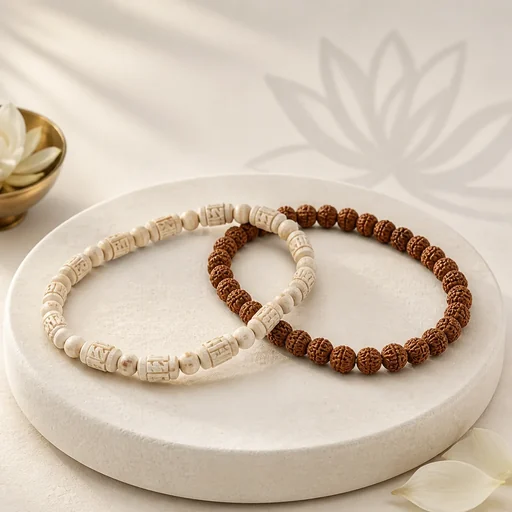
Bead counts vary across Buddhist cultures and schools; 108 is especially common, while shorter wrist malas may represent divisions of that number. Materials can include wood, seeds, stone, or, in particular ritual contexts, bone. Interpretations of 108 also vary—it may be connected with afflictions, teachings, or other traditional enumerations.
Many practitioners advance one bead for each mantra, breath, or prostration. The larger bead or marker is generally not crossed in the same way as an ordinary counting bead; the strand may be turned to begin another round. Exact finger use and ritual rules depend on lineage.
Orthodox prayer ropes: a discipline of repeated prayer
The Eastern Orthodox komboskini or chotki is typically a rope of carefully tied knots rather than a string of beads. Common counts include 33, 50, and 100, though many others exist. It is closely associated with repeated forms of the Jesus Prayer and with the cultivation of attention, humility, and repentance.
Monastics may keep a prayer rope discreetly, but practices differ among clergy and laypeople. It is not simply a Christian version of an Asian mala; its knotting, prayers, theology, and pastoral context are specifically Orthodox.
Islamic misbaha: remembrance through the Divine Names
A misbaha, tasbih, or subha commonly has 33 or 99 beads. It may support recitation of phrases of praise and remembrance after prayer or in personal dhikr. Ninety-nine is associated with the beautiful names of Allah, while a 33-bead strand can be counted in repeated rounds.
Materials range from wood and date pits to stone and amber. Some Muslims use beads; others prefer to count on the fingers in accordance with their understanding of tradition. The devotional act matters more than the prestige of the material.
Hindu japa malas: mantra at the fingertips
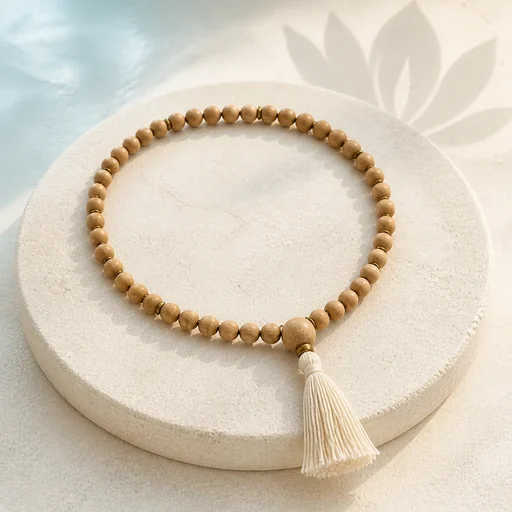
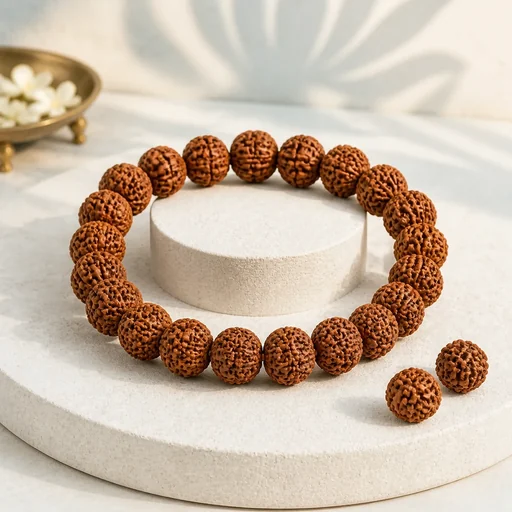
A Hindu japa mala commonly has 108 counting beads and one guru or meru bead. The practitioner repeats a mantra once per bead, then turns the strand at the guru bead rather than crossing it. Specific hand and finger conventions differ by school.
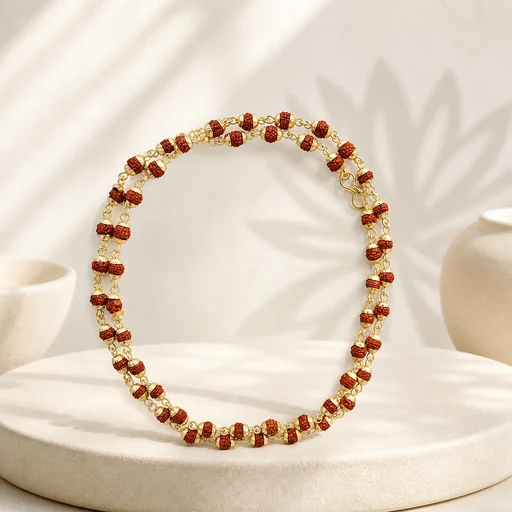
Materials often reflect devotional affiliation. Tulsi is especially important in Vaishnava traditions; rudraksha is strongly associated with Shiva; sandalwood and other woods also appear. These materials carry inherited symbolism. Describing them as containing measurable “energy” goes beyond what science can establish and can obscure their real religious significance.
Choose with respect
If you are selecting prayer beads for a living religious practice, begin with the practice itself. Learn the relevant name, count, method, and etiquette from a trustworthy source within that tradition. If you are choosing a strand as a tactile reminder or piece of craftsmanship, be honest about that purpose and avoid presenting it as initiation or authority.
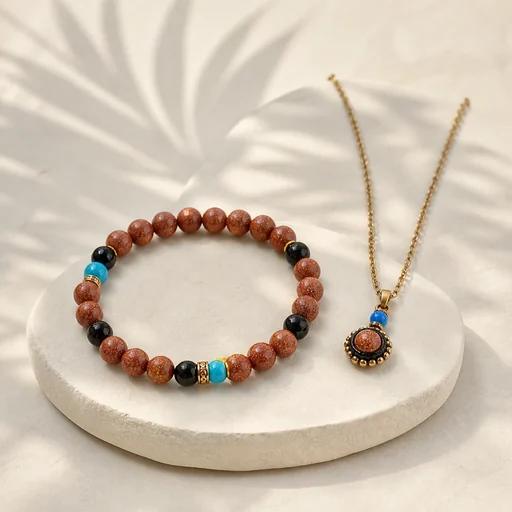
Narayana Shop specializes in malas and related devotional goods from India and Nepal. Product origin and material should be checked on each listing; ask us if you need measurements or help distinguishing a japa mala from a shorter wearable strand.
Explore the collection: malas and prayer beads at Narayana Shop.
Do not choose a strand for the number alone. Choose a practice you understand, then choose a well-made tool that can serve it.
