







Sound Meditation: How Listening Can Shift Attention

How sound changes a moment
Music and sustained tones can alter the way a moment feels. A slow pulse may encourage us to settle; a bright rhythm can make movement feel easier; a familiar melody can bring back detailed memories. These responses involve hearing, attention, expectation, emotion, and context—not a mysterious rewriting of every cell in the body.
A singing bowl offers a vivid demonstration of vibration. Add water and play the rim, and ripples or droplets may appear on the surface. Cymatics and Chladni figures likewise show how sound-driven vibration can organize particles or liquid into visible patterns. These demonstrations are fascinating physics, but they do not prove that a particular tone repairs organs, clears “blocks,” or treats disease.
Human bodies contain a substantial amount of water—the proportion varies by age, sex, and body composition and is generally well below the often-repeated claim of 80 percent. That fact alone does not mean sound moves through a person in the same way it behaves in a bowl.

What sound meditation can reasonably offer
In a sound meditation, participants listen deliberately to tones, overtones, silence, and changes in volume. Many people report relaxation, focused attention, or an easier transition away from everyday mental chatter. Research on music-based interventions supports benefits in some settings, but evidence depends on the specific method and outcome. A sound bath should not be presented as a replacement for medical or mental-health care.
Claims that 396, 432, 528, or 639 Hz has a unique power to release fear, regenerate tissue, repair DNA, or harmonize relationships are not established scientific facts. Those frequencies may still be used as artistic choices or within contemporary spiritual frameworks, provided the distinction is clear.
Instruments and listening qualities
- Gongs produce a broad, evolving spectrum of sound and can create an immersive listening field.
- Metal singing bowls offer a sustained fundamental tone with audible overtones; technique, shape, and alloy all influence the sound.
- Crystal singing bowls create strong, relatively pure tones that can feel intense in a small room.
- Karatals are small hand cymbals used especially in kirtan; their clear attack helps establish rhythm and collective attention.
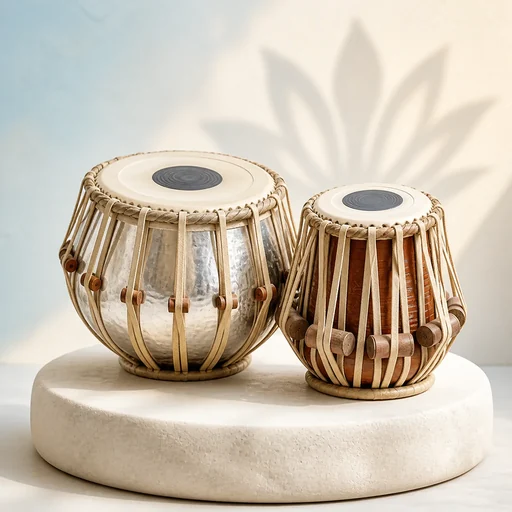
- Drums, shakers, and other percussion support pulse, movement, and participatory practice.
- Bells and jaw harps add fine overtones and distinctive rhythmic textures.

Listen safely
More volume is not more healing. Keep sound at a comfortable level, give participants room to move away from loud instruments, and use additional care for children, people with tinnitus or sound sensitivity, and anyone for whom intense sensory experiences may be difficult. Stop if sound causes pain, dizziness, panic, or persistent discomfort.
Narayana Center hosts contemplative and group practices that may include sound, subject to the current program. At home, a well-made instrument can become part of a simple listening ritual: play one tone, follow its decay, and notice the silence that follows.
Explore instruments: singing bowls, karatals, and percussion at Narayana Shop.
