



Bodhi, Lotus, Rudraksha, and Tulsi Seeds: Material, Texture, and Care
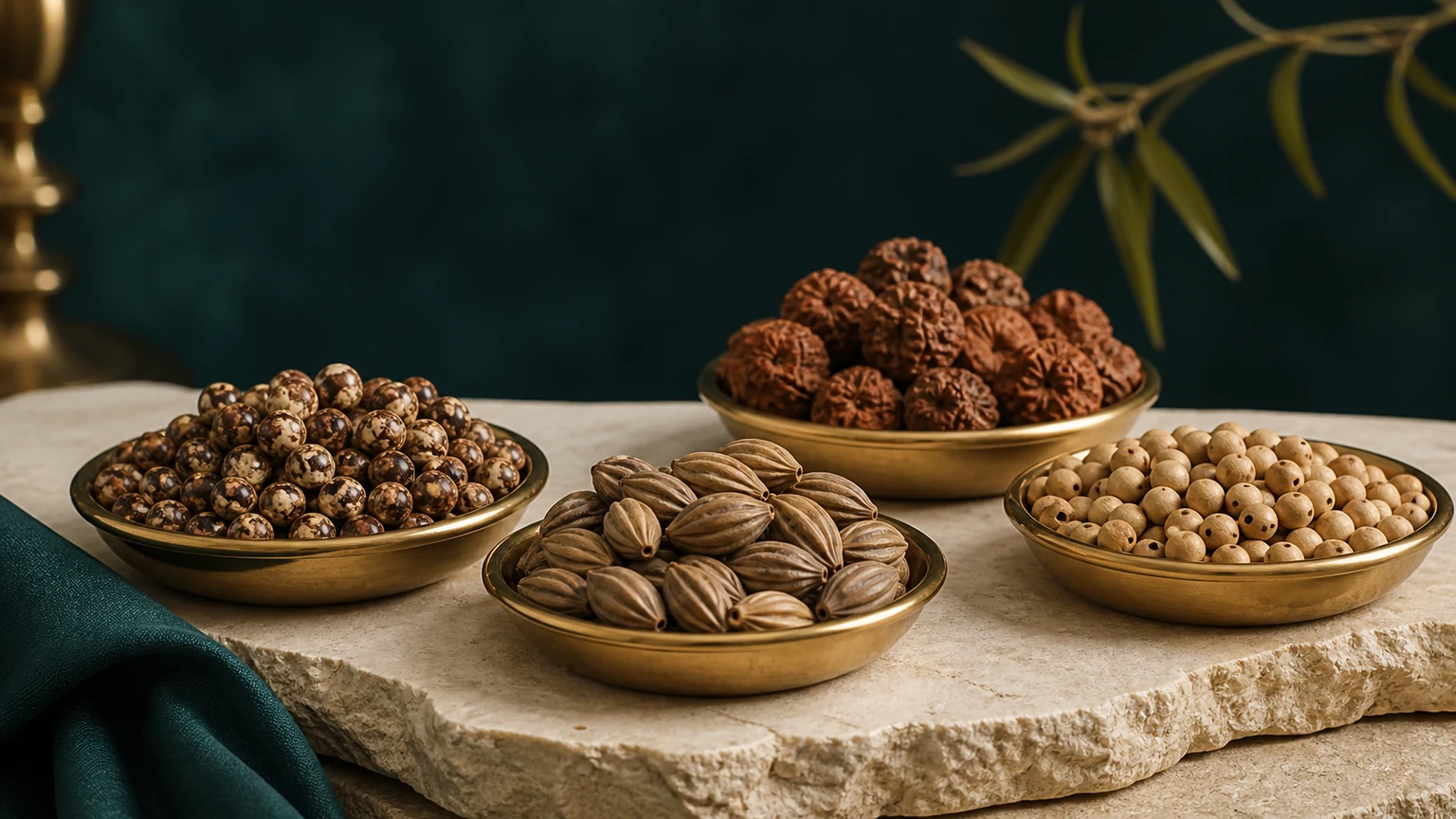
“Seeds for malas” is convenient trade language, but it is not always botanically precise. Bodhi can refer to the fruits or seeds of many plants; a rudraksha bead is the cleaned hard stone of a fruit; tulsi beads are often turned from woody stem; and a “lotus seed” must still be connected to a documented species and batch. Texture describes an object, while identity requires records and, when necessary, qualified examination.
Why the word seed conceals four different materials
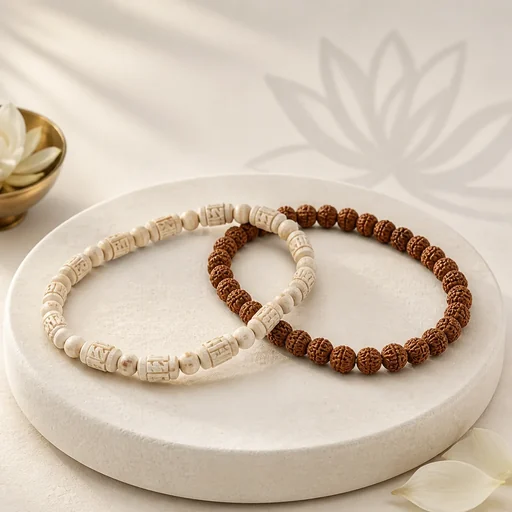
An ethnobotanical study published by BMC and archived in PubMed Central demonstrates the breadth of bodhi terminology. Researchers documented 52 market types derived from 47 plant species. They explicitly note that the Chinese name refers to the bodhi tree, Ficus religiosa, while popular beads are not seeds of that tree. A listing therefore needs more than “bodhi”: it should give the local type name, proposed species, batch region, and basis for identification.
Sacred lotus, Nelumbo nucifera, is a documented botanical species, and Kew describes the plant and its edible “seeds,” more precisely nutlets. Yet lotus seed is also used as trade language for other materials. A rounded shape or dark surface does not identify a species. The seller should connect the name to supplier evidence for the strand rather than to visual resemblance alone.
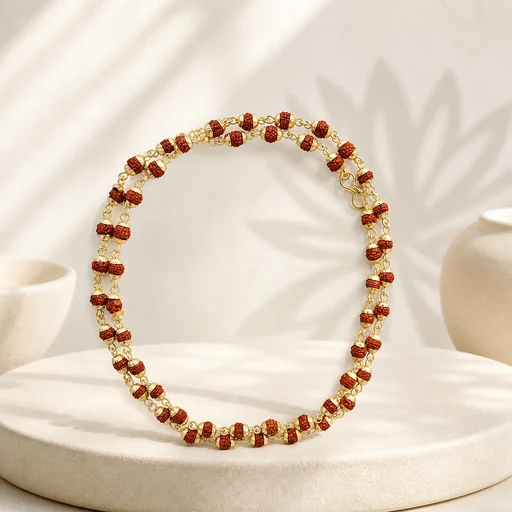
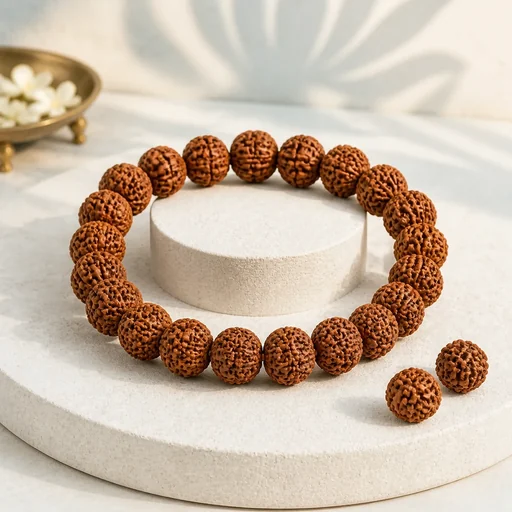
Rudraksha requires another terminology note. Kew accepts Elaeocarpus sphaericus and lists Elaeocarpus ganitrus as a synonym. The familiar textured bead is not a soft seed removed from a shell; it is the cleaned stony part of the fruit. Its grooves, poles, and channel describe the endocarp. They do not prove geographic origin or any promised effect.
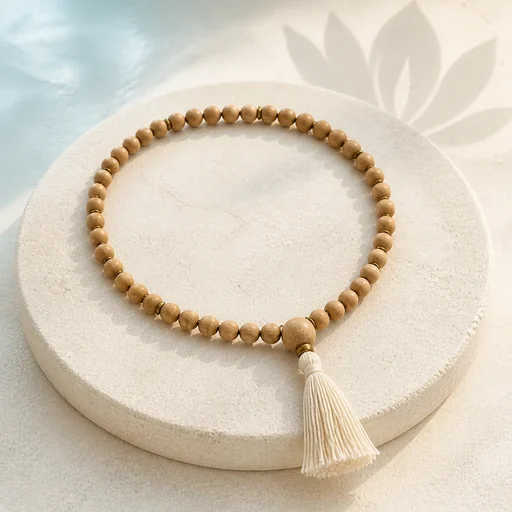
Tulsi, Ocimum tenuiflorum, makes the limit of the general label especially clear. Kew notes that woody stems are used to make prayer beads. A finished round or barrel bead is processed woody tissue, not a tulsi seed. Precision does not diminish its cultural meaning; it improves material disclosure and leads to more appropriate care.
| Catalog name | Possible material | Required disclosure |
|---|---|---|
| Bodhi | Fruits or seeds from many plant species | Type, proposed species, identification source |
| Lotus | A Nelumbo nutlet or another trade material | Scientific name and batch connection |
| Rudraksha | Hard Elaeocarpus fruit endocarp | Species/synonym, channel processing, actual photo |
| Tulsi | Turned woody stem of Ocimum tenuiflorum | Plant part, finish, measurements |
Reading the surface and caring without guesswork
Compare materials in macro images captured at one scale. On bodhi types, note the fruit-stone shape, repeated pattern, and finishing marks; on lotus, the surface and channel; on rudraksha, continuous grooves and sound poles; on tulsi, wood fibers, turned profile, and hole edges. These observations help assess condition and workmanship but do not replace botanical identification.
Ask to see batch variation, not only the most uniform specimen. Organic material can vary in color, dimensions, and depth of pattern. At the same time, not every crack is benign variation. A fresh split beside a hole, delamination, a friable surface, or a repair should be disclosed. A useful listing separates expected variation from the condition of the actual item.
Baseline care is deliberately conservative: clean dry hands, a soft cloth, breathable storage, and no prolonged water contact. Do not dry organic beads on a heater or leave them in intense sun. A rapid move from wetting to heat adds stress to an irregular material and to its cord.
Oil, wax, and wet cleaning cannot be prescribed for the entire category. Porosity and coatings differ, and a product may darken the surface, fill relief, or weaken adhesive. If the maker supports a method, test it on a comparable spare bead or inconspicuous area, use the smallest amount, and document the condition before and after complete drying.
Before regular wear, let a new strand settle in a dry indoor environment and inspect it in diffused light. Small relief differences are expected, but a damp odor, sticky film, powdery area, or rapidly opening crack warrants a pause. Do not apply oil to restore a “natural” appearance without a material-specific instruction; it can darken the surface, hold dust, affect adhesive, or alter cord tension.
Stable storage matters more than sealing by default. Keep a clean, fully dry strand away from damp fabric, cosmetics, incense, and strongly scented wood. A closed bag is suitable only after complete drying and with attention to condensation. Recheck holes and turn the strand gently without a sharp bend, because moisture change and mechanical stress meet at the channel.
When one bead changes, compare it with the original photograph. Organic variation can be normal, but a new friable area, mold-like deposit, or damp smell should not be dismissed as character without inspection.
- Record the trade and scientific names, plant part, and source of the statement.
- Confirm whether photographs show the exact strand or a material example.
- Inspect channels, poles, fibers, fresh cracks, and applied coatings.
- Store dry and away from sharp heat; blot accidental moisture and air-dry at room conditions.
- Do not use oil or cleaner without a test on the same material and finish.
Questions and answers
- Are all bodhi beads made from Ficus religiosa?
- No. Market research identified many botanical sources under the bodhi name. Ask for the specific type, proposed species, and batch-level basis for that identification.
- Is a tulsi bead a seed?
- Often it is not. Kew notes the use of tulsi’s woody stems for prayer beads. A listing should identify the plant part and processing.
- Can these beads be rinsed under a tap?
- Avoid soaking unless the item has a tested care instruction. Remove dry dust first; after accidental wetting, blot and air-dry away from heat.
- Does darkening prove age or authenticity?
- No. Hands, oil, light, dirt, coating, and storage all affect color. Age, species, and provenance need separate evidence.
See current options and actual organic-material photos in the Narayana Shop mala and prayer-bead collection. Verify the scientific name and plant part on the individual listing; not every trade type is necessarily in current stock.
Continue reading
Sources and further reading
- BMC / PubMed Central — ethnobotanical study of plants sold as “bodhi seeds”.
- Kew Plants of the World Online — Nelumbo nucifera, sacred lotus.
- Kew Plants of the World Online — Elaeocarpus sphaericus, accepted rudraksha species.
- Kew Plants of the World Online — Ocimum tenuiflorum, tulsi and the use of woody stems for prayer beads.
This guide explains terminology and care but cannot establish the identity of a specific bead without batch evidence. Cultural meanings are not medical claims or guaranteed spiritual effects.