


Sandalwood, Rosewood, Neem, and Ebony: How Wooden Beads Differ
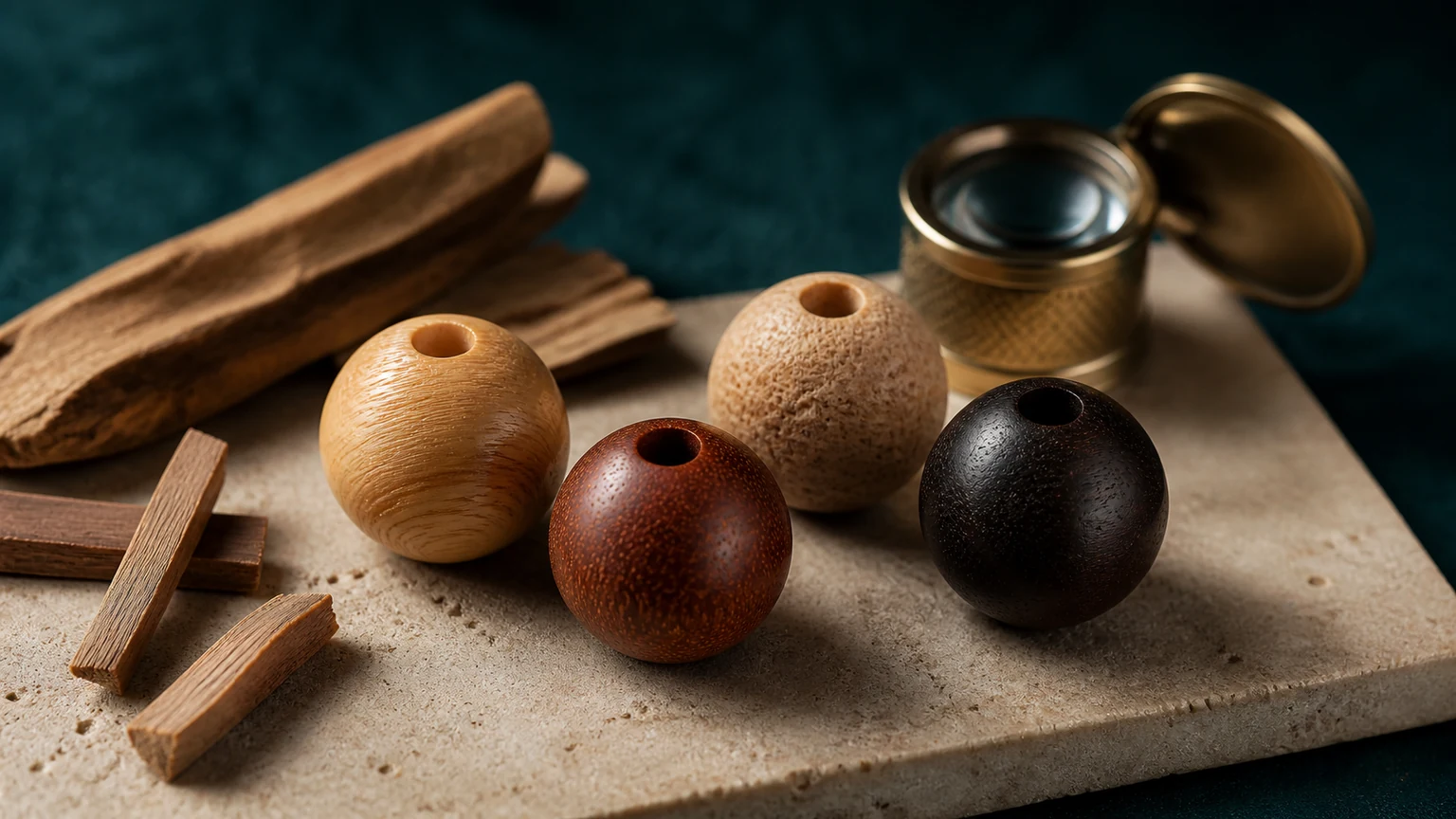
Sandalwood, rosewood, neem, and ebony differ in more than color. Their trade names may refer to different botanical species, wood anatomy, density, extractives, and finishes. Yet the appearance of a finished bead cannot reliably identify a species. Stain, oil, wax, lighting, and natural variation can all alter color and scent, so an honest comparison starts with a scientific name and supplier record, then adds measurements and consistent macro photography.
What the four names mean as material descriptions
White sandalwood is often associated with Santalum album, but sandalwood is also used for other aromatic woods. Kew records Santalum album as a distinct accepted species and documents its distribution. A product listing should therefore state the species and source of that identification. Remaining aroma may come from the wood, a finish, or added fragrance; the absence of strong scent after storage does not prove substitution.
Rosewood is an even broader trade group. Indian rosewood often refers to Dalbergia latifolia, which Kew recognizes as an accepted species, but rosewood can describe other Dalbergia species and unrelated materials. Dark streaks, visible pores, and reddish-brown color help describe a specimen. They are not a laboratory or wood-anatomy identification from a front-facing bead photograph.
Neem, Azadirachta indica, is botanically unrelated to sandalwood and rosewood. In a narrow example, ebony may refer to Diospyros ebenum, while commercial ebony covers several very dark woods. Kew confirms the nomenclature of those species, not the material in a particular mala. That link requires purchasing records, a maker statement, and, where value justifies it, independent examination.
The USDA Wood Handbook explains that density varies both among and within species and that moisture contributes to weight. A bead adds a channel, shaping, sanding, and finish. “Ebony is always heavier” is therefore too categorical without matched measured samples. A useful listing gives the finished strand’s mass, bead-size range, finish, and documented material for that SKU.
| Trade name | Documentable reference | Appearance cannot prove |
|---|---|---|
| Sandalwood | Scientific name, scent before/after finishing, coating | That it is Santalum album |
| Rosewood | Named Dalbergia species, pore macro, measured mass | Country or legal provenance |
| Neem | Record naming Azadirachta indica, processing notes | Any medical benefit |
| Ebony | Named Diospyros species, sample density, coating | That black color is natural or diagnostic |
Comparing texture, weight, aroma, and care
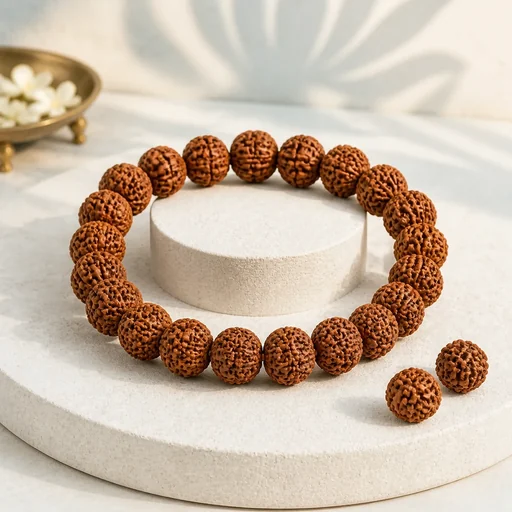
Request macro photographs at one scale under diffuse neutral light. Examine open pores, grain direction, sanding marks, and hole edges. A glossy film may conceal anatomy, while aggressive contrast can exaggerate stripes. An unfinished end grain from the same documented batch is useful, but it still does not replace the species record.
Compare weight on finished strands with the same construction or on several beads of equal diameter. One heavy bead does not characterize a species. Record storage conditions because wood is hygroscopic and exchanges moisture with the air, affecting mass and dimensions. For a wearer, the finished weight, smoothness, absence of fresh cracks, and stable stringing matter more than an abstract density claim.
Describe aroma neutrally: pronounced, faint, resinous, woody, or not detectable at inspection. Do not heat, scrape, or apply solvent as an identification test; those actions can damage the surface and create misleading signals. Packaging, oil, and fragrance can mask the underlying scent. A listing should disclose applied substances when aroma is part of the buying decision.
For routine care, remove dust with a dry soft cloth and keep the strand away from prolonged wetting, heaters, and sharp humidity swings. Do not soak wood or add cooking oil or essential oil without instructions for the actual finish. A substance may darken the bead, collect dust, or weaken an adhesive. Test any approved product on an inconspicuous area and evaluate it only after complete drying.
Finish can conceal wood cues more strongly than natural color. Stain, oil, wax, lacquer, heat treatment, and added fragrance change tone, gloss, scent, and moisture response. A listing should therefore disclose known surface treatment as well as the trade or scientific wood name. A macro of an unfinished offcut or production blank can help distinguish wood appearance from finish, although it still does not provide botanical identification.
Do not carry a species name from an earlier order into a new visually similar batch. The new supply needs its own record, and color difference should remain an observation until its cause is documented.
- Find the scientific name and the record linking it to the exact SKU or batch.
- Ask whether stain, oil, wax, lacquer, or fragrance was applied.
- Compare macro images at one scale under neutral lighting.
- Check finished weight, hole edges, fresh cracks, and surface smoothness.
- Start with dry care; use liquids only after a documented material test.
Questions and answers
- Can sandalwood be identified by smell?
- Scent can support a description but is not a sufficient test. Storage and finish alter it, and fragrance can imitate it. A species name and batch evidence are still needed.
- Why is an ebony bead not completely black?
- Wood blanks vary, and ebony is used broadly in trade. Color by itself neither confirms nor disproves a particular botanical species.
- Should a wood mala be oiled regularly?
- Not as a universal rule. Oil can alter color and coatings. Use only a compatible product supported by the maker or a test on the same construction.
- Does a heavier strand mean better wood?
- No. Weight reflects material, moisture, dimensions, and construction. Quality requires a documented material, sound finishing, stable assembly, and transparent measurements.
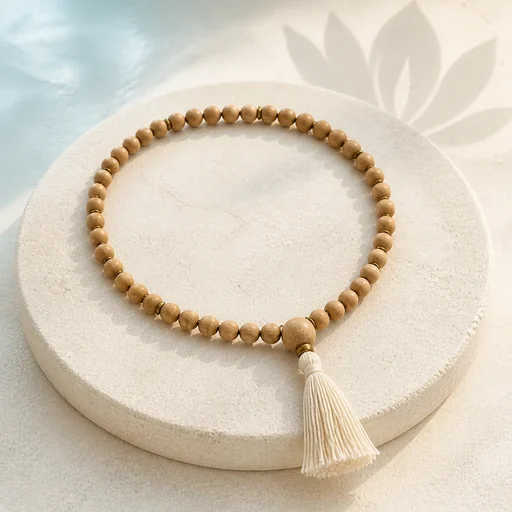
See current options and actual wood-bead photos in the Narayana Shop mala and prayer-bead collection. Verify the material on the individual listing because inventory and species documentation vary.
Continue reading
Sources and further reading
- Kew Plants of the World Online — Santalum album.
- Kew Plants of the World Online — Dalbergia latifolia.
- Kew Plants of the World Online — Azadirachta indica.
- Kew Plants of the World Online — Diospyros ebenum.
- USDA Forest Products Laboratory — Wood Handbook, physical properties and moisture.
This educational guide cannot identify the wood in a specific item from a photograph and does not promise medical, physical, or spiritual effects. Product claims require batch-specific evidence.