




Why Natural Gemstones Never Look Identical: Inclusions, Color Variation, and Honest Photography
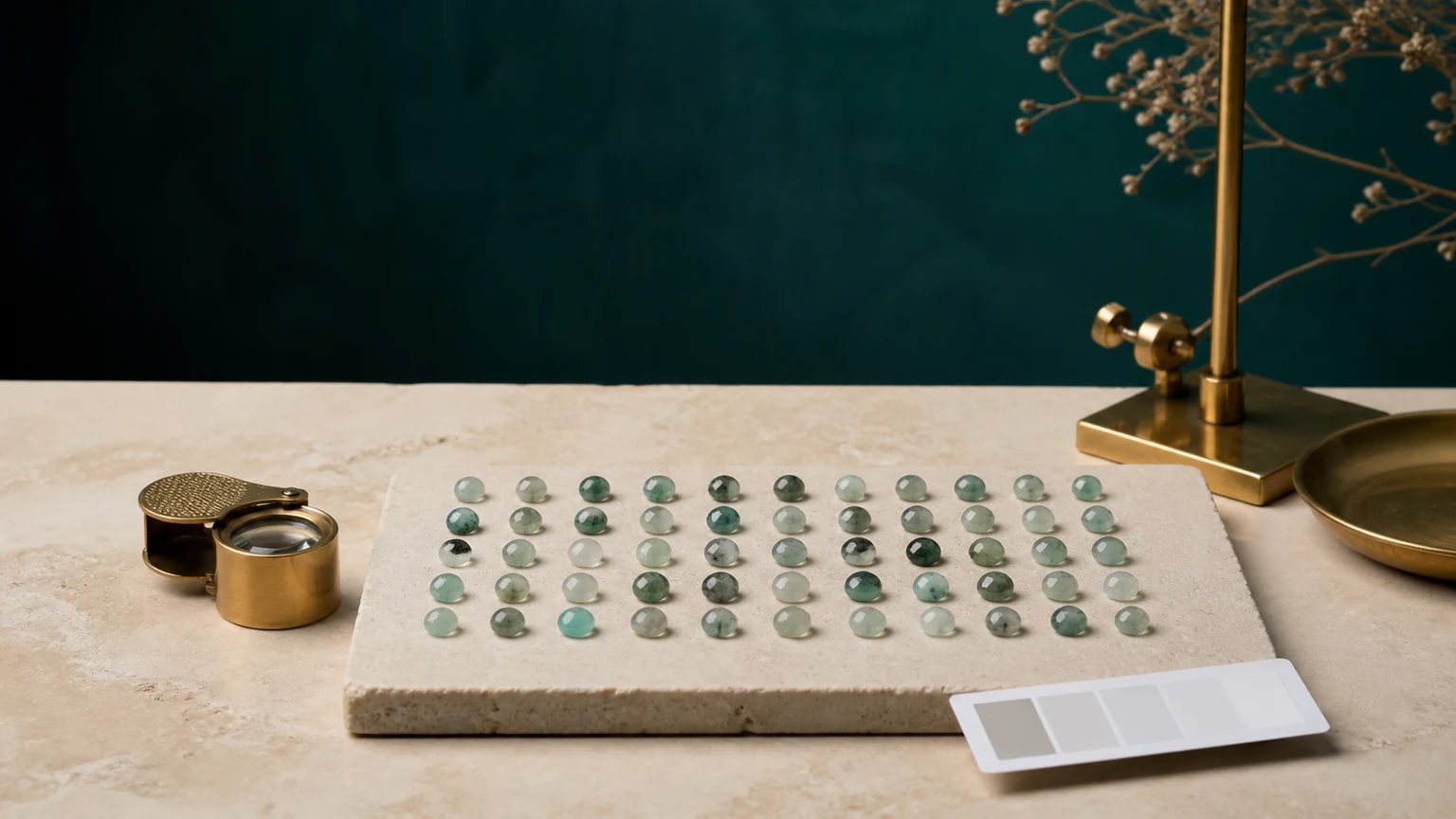
Two beads cut from natural mineral material rarely match in inclusions, color zoning, transparency, and pattern. Those differences develop during mineral growth and later processing, but not every spot is proof of natural origin. Synthetic gems can contain inclusions, and imitations can reproduce familiar effects. An honest listing therefore combines batch documentation, actual-item photography, neutral light, and carefully limited language.
Why inclusions, color, and transparency vary
GIA describes inclusions as crystals or cavities containing liquid and gas within a host gem and explains that they may predate, accompany, or follow host growth. Healed fractures, color zones, and microscopic particles interact with light differently. Neighboring beads can therefore appear clearer, cloudier, or more banded even when sold under one documented material name.
An inclusion is not automatically damage. A small internal feature may be stable and visually compelling, while an open fracture at a drill hole, a chip, or a weakened zone affects construction. A listing should separate optical observation from condition: an internal needle is not the same as a surface-reaching crack. Photography may suggest the distinction, but magnified inspection is stronger.
Color can arise from composition, lattice defects, inclusions, thickness, and orientation. Light source, white balance, background, and the buyer’s display then affect perception. The same stone may look warmer near a window and cooler under an LED. That does not excuse unpredictable images: a seller can provide one neutral reference and an additional household-light view with its conditions stated.
Synthetic gems may also have internal growth features, while glass can contain bubbles and flow structures. GIA emphasizes analysis of inclusion type, distribution, growth relationship, and other tests—not the mere presence of something inside. “It has inclusions, so it is natural” is not a valid conclusion. A commercial claim needs supplier disclosure and, when consequential, a laboratory report with a defined scope.
| Observation | What it may indicate | What it cannot prove |
|---|---|---|
| Color zone | Uneven color distribution | Natural status or geography |
| Internal crystal | An inclusion type for further analysis | Identity without other tests |
| Bubble-like cavity | An internal structure | Glass or mineral by itself |
| Surface-reaching fracture | Condition and chip risk | Age or “energy” |
| Bead-to-bead color range | The appearance of the offered batch | A seller error by itself |
What honest gemstone photography should show
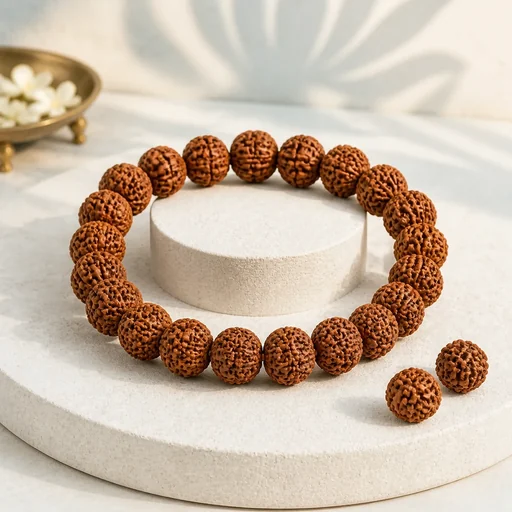
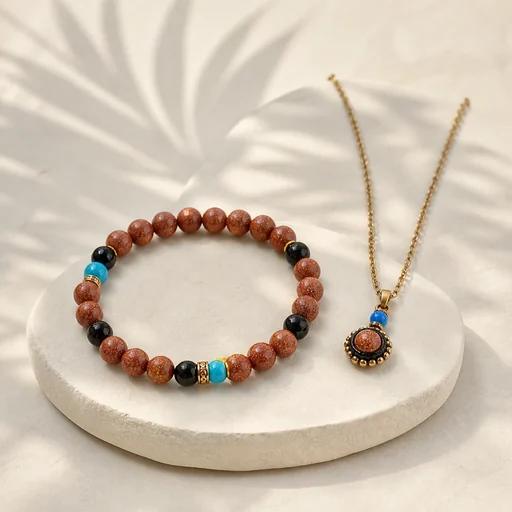
A one-of-a-kind bracelet needs an overall view and close-ups of the actual piece. Useful coverage includes the front, reverse, side lighting, and drill holes or settings. A ruler or published dimensions establish scale. If an image is representative, label it beside the image rather than burying that fact in general site terms.
FADGI’s documentary object-imaging guidance recommends multiple views and color and grayscale targets. A retailer need not leave a target in every final image, but a target in the master frame helps verify color. A neutral matte background reduces reflected color; diffuse light shows the overall hue, while a clearly supplemental directional view reveals inclusions and optical phenomena.
Editing may normalize exposure, crop, and bring color back to the controlled master. It should not paint out inclusions, push saturation into a new hue, or assemble an ideal bracelet from separate items without disclosing a composite. The compressed web file should retain a zoomable macro. Decorative blur must not conceal edges, knots, or surface texture.
Compare all images on one device, disable a night-color filter, and inspect a slow rotation video when available. A screenshot preserves the listing state. Even excellent images cannot reveal every treatment or hidden weakness. When natural status, treatment, or provenance affects price, ask a direct question and look for evidence tied to the item or batch.
Honest photography documents a batch range as well as its most dramatic member. Capture several examples in the same light, then the exact selectable item. If fulfillment is random, say so and show the observed low, typical, and high variation without promising a match. Add scale: an unscaled macro can make a dot look like a major fracture or conceal that a line crosses the bead.
Keep editing reproducible. Retain the source file, color profile, and a reference frame for the series. Consistent exposure and cropping are appropriate; retouching an inclusion, chip, or color boundary is not. A composite or editorial illustration must be labeled and cannot replace the actual gemstone image. Date or batch-label the series when inventory changes so an old ideal example does not become a promise for new stock.
- Confirm whether images show the exact item, the batch range, or a representative sample.
- Compare overall, macro, side, and drill-hole views under neutral light.
- Find dimensions, weight, and any treatment disclosure.
- Check whether features persist across stills and video without abrupt saturation changes.
- Keep visual description separate from documented natural-status and provenance claims.
Questions and answers
- Do inclusions prove that a gemstone is natural?
- No. Their type and context matter, along with other tests. Synthetic materials and glass can also have internal features.
- Is bead-to-bead color variation a defect?
- Not necessarily. It may be expected batch variation. Condition concerns include open fractures, chips, weak drill holes, and a mismatch with the listing.
- Why does a stone look different at home?
- Lighting, background, white balance, and display settings alter perception. A good listing supplies a neutral reference and labels supplemental lighting.
- Can treatment be identified from a photograph?
- Some clues may be visible, but many treatments require specialist methods. Ask for supplier disclosure or a report when the fact is material.
See current options and actual product photos in the Narayana Shop handmade bracelet collection. Verify material status and treatment on the individual listing and its batch documentation.
Continue reading
Sources and further reading
- GIA Gems & Gemology — scientific review of gemstone inclusions.
- GIA — observing inclusions under different lighting setups.
- FADGI — studio object imaging and color-target guidance.
This guide supports careful reading of photographs and descriptions but does not replace gemological examination of the specific item. It makes no medical, energy, or guaranteed spiritual claims.