


Full, Pocket, and Wrist Mala Formats: Counting, Fit, and Portability
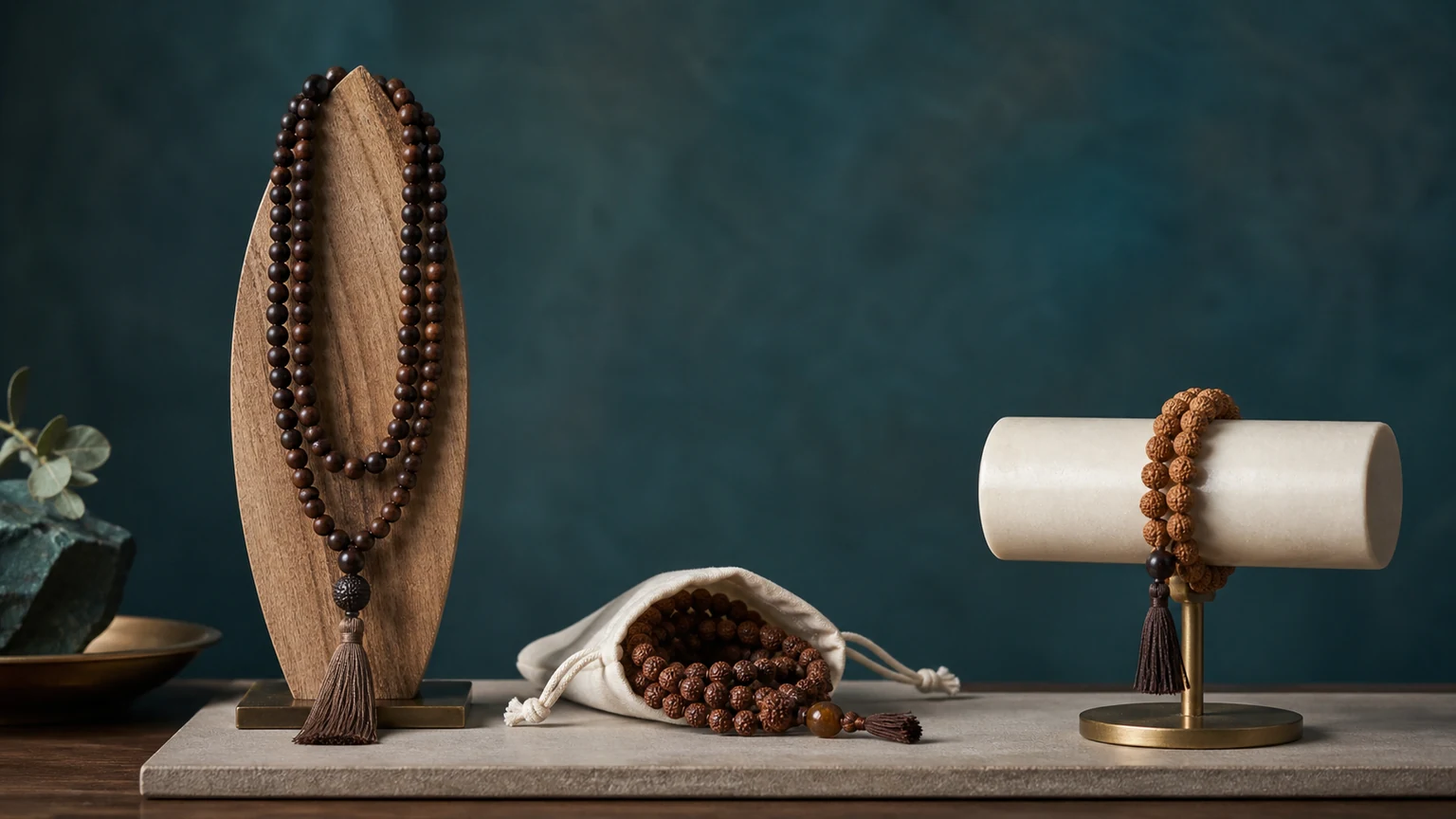
Full, pocket, and wrist mala formats differ first in physical scale: overall length or inner circumference, bead diameter, weight, flexibility, and the way the strand is carried. The format label does not guarantee a fixed bead count or a universal fit. To choose well, start with the job the mala must do, then compare the actual measurements and construction of the individual piece. A longer loop can offer generous handling space; a pocket mala prioritizes portability; a wrist mala makes access compact but adds fit and everyday-wear considerations.
Three physical formats and their tradeoffs
Full-format mala
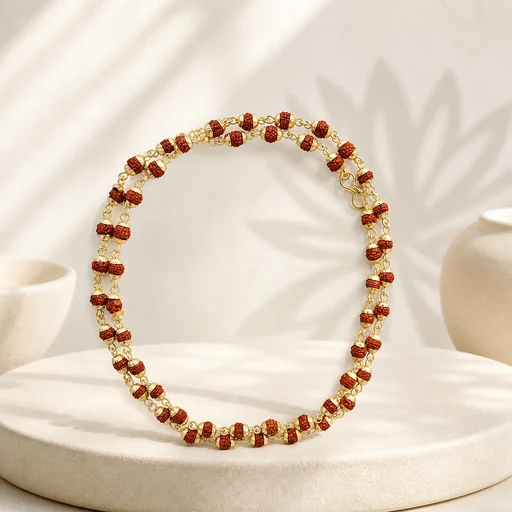
This label commonly describes a long loop with room to move through the beads in sequence. Overall length depends on more than bead count: bead diameter, spacing, inter-bead knots, the guru-bead assembly, and tassel all contribute. Larger beads may be easier for some hands to distinguish by touch, while also increasing bulk and, depending on material, weight. A product photo worn as a necklace does not establish that the length or weight will suit every body.
A longer strand also needs intentional storage. It should not be lifted by the tassel, pinched under a hard lid, or folded sharply at a stiff terminal assembly. For travel, choose a pouch large enough to accept a relaxed coil without forcing the beads into a tight bundle.
Pocket mala
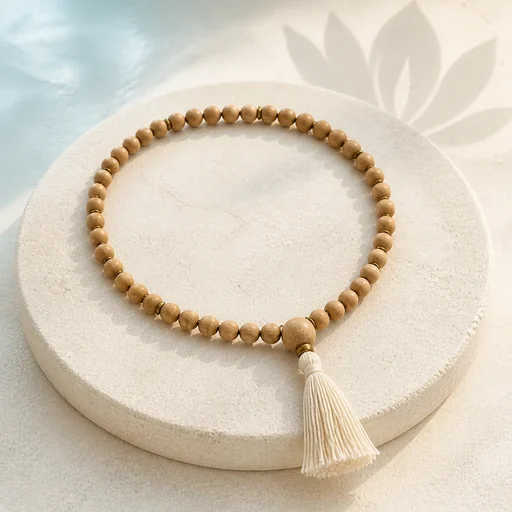
“Pocket” is a functional label rather than an industry standard. One maker might use it for a shorter loop with fewer beads; another might preserve a larger sequence by using smaller beads and closer spacing. The only dependable comparison uses stated count, bead diameter, overall length, and a scale reference in the photographs.
Compactness can be valuable in transit, but smaller components are not automatically easier for every hand. If tactile distinction matters, cut a few paper circles at the listed bead diameter or compare that diameter with a familiar object. A compact strand still needs protection: a loose pocket containing keys, coins, or a zipper exposes surfaces and cord to repeated abrasion.
Wrist mala
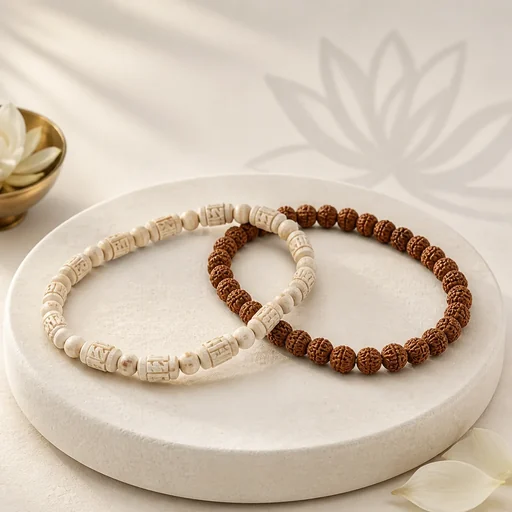
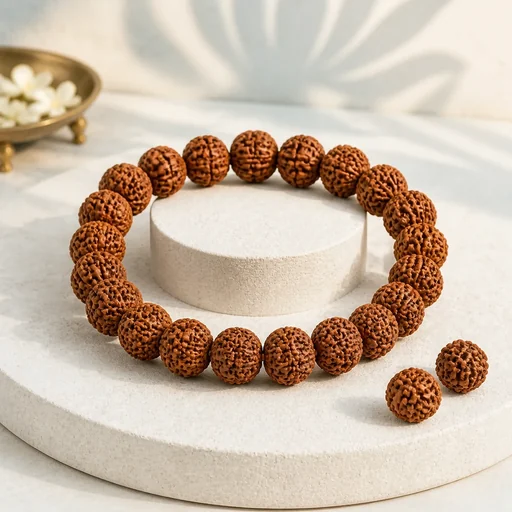
A wrist mala may use elastic, a clasp, an adjustable cord, or a longer strand wrapped in multiple turns. Each construction fits differently. For a closed bracelet, inner circumference is more useful than a flat outside measurement. For a wrap design, compare full length and the intended number of turns. Bead diameter also affects how far the strand sits away from the wrist.
Wrist wear creates a different load pattern from quiet counting. Beads may contact desks, door hardware, sleeves, water during handwashing, and personal-care products. That does not make a wrist format inferior; it simply makes fit, material-specific care, and regular inspection more important. A strand that leaves deep pressure marks, catches frequently, or requires forceful stretching is not a good practical fit.
Comparison table and fit checklist
| Format | Primary advantage | Verify before choosing | Typical tradeoff |
|---|---|---|---|
| Full | Generous loop for sequential handling | Working count, overall length, weight, bead diameter, terminal assembly | More volume to store and carry |
| Compact travel footprint | Actual count, bead diameter, grip comfort, pouch size | Less room between components; needs protection from pocket hardware | |
| Wrist | Compact access and wear | Inner circumference, closure or stretch, bead diameter, fit allowance | More contact with surfaces, moisture, and repeated movement |
- Name the primary use. Quiet counting at home, frequent travel, and daily wrist wear impose different priorities.
- Measure rather than guess. Measure the wrist with a flexible tape without pulling it tight. For a long loop, lay out a cord at the stated length to understand its scale.
- Confirm count and markers. Do not assume that “full,” “pocket,” or “wrist” encodes the number of working beads.
- Test the bead scale. Use paper circles at the listed diameter to check whether the size feels practical to distinguish and move.
- Plan the carrying method. A dedicated soft pouch should let the strand rest without a hard fold, compressed tassel, or contact with keys and zippers.
Before the first trip, place the mala in its intended pouch and check the fit. The foundation should not be sharply bent, the tassel should not be trapped under a closure, and hardware should not pull against neighboring beads. When moving the strand, support the loop rather than lifting it by the tassel or one end component.
Frequently asked questions
- Does a pocket mala always have fewer beads?
- No. Compactness can come from fewer beads, smaller bead diameter, tighter spacing, or a combination. Check the actual working count and measurements for the specific item.
- Is overall length enough to compare two malas?
- No. Bead diameter and material, weight, stiffness, knots, terminal construction, and tassel can make strands of the same length handle very differently.
- How can I estimate wrist fit online?
- Measure the wrist with a flexible tape without tightening it, then compare that number with the listed inner circumference and the construction. If only a flat or outside dimension is shown, ask for the inner circumference and intended fit range.
- Can I carry a mala loose with keys?
- That is best avoided. Metal edges and zipper teeth can scratch beads and abrade cord. A dedicated soft pouch of the right size reduces snagging and keeps detached components together if damage occurs.
- Is a stretch wrist mala truly one size fits all?
- No. Comfortable fit is limited by the loop's inner circumference, bead diameter, and the allowable extension of the specific elastic. “One size” does not replace measurements. Compare your untightened wrist measurement with the listed inner circumference and ask how the piece is intended to pass over the hand. If it must be stretched forcefully every time or leaves deep pressure marks, select another size or an adjustable construction.
Sources and further reading
Format names describe physical configuration. They do not promise a medical, emotional, or spiritual outcome.