






Knotted Cord, Elastic, or Beading Wire: How Construction Affects Mala Durability
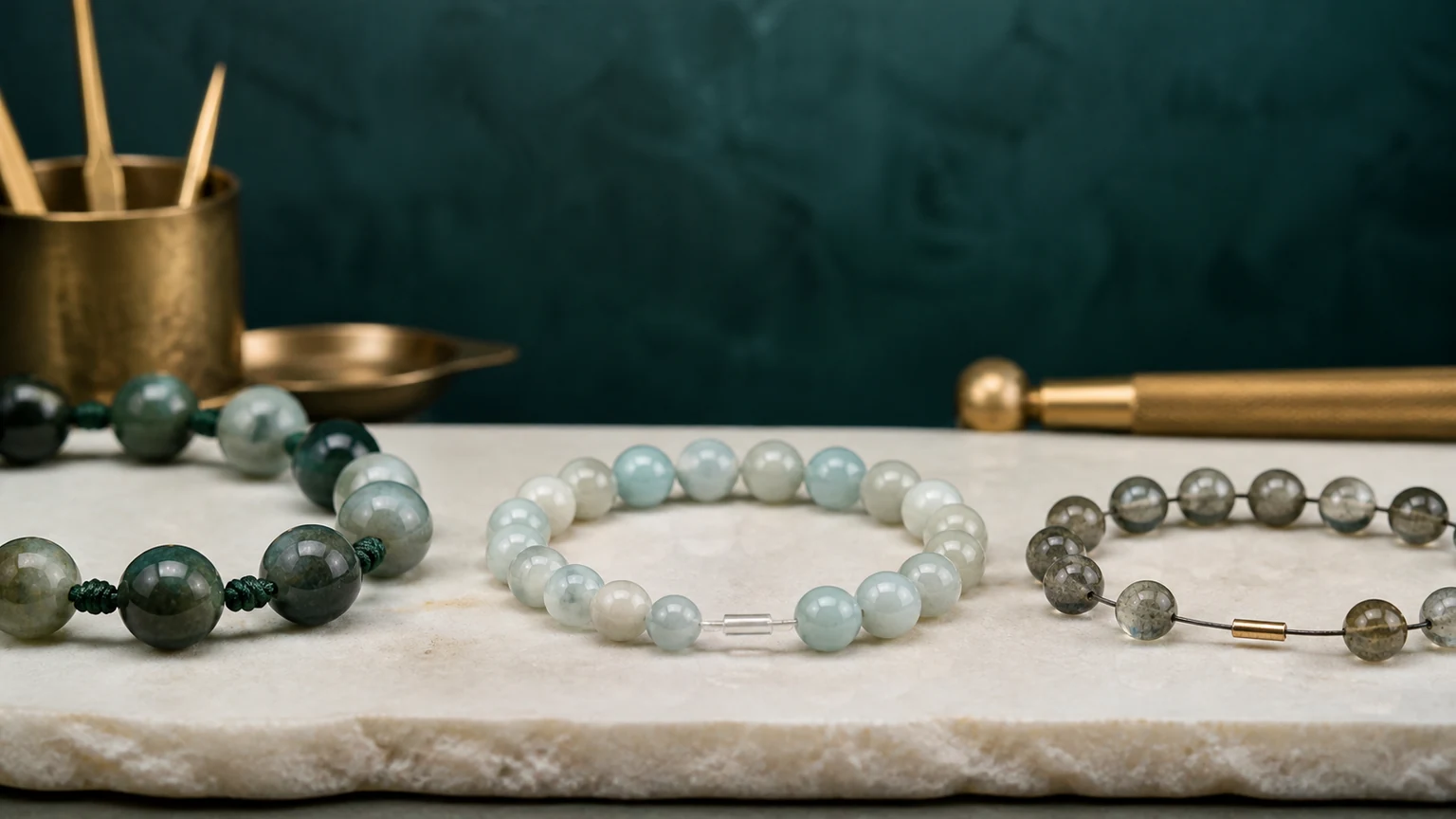
Knotted cord, elastic, and beading wire distribute stress differently between the beads and the terminal connection. None can honestly be described as permanent or universally best. Mala durability is a system property: it depends on the exact foundation material and diameter, bead weight, hole edges, knots or crimps, closure design, exposure, fit, and handling. Choose by use case and documented construction—not by an unsupported promise that one category will last a fixed number of years.
How the three constructions behave
Textile cord with knots
A knotted mala may have only a finishing knot, or it may place a separate knot between each neighboring pair of beads. Individual knotting spaces the beads, changes the drape, and can retain beads on either side of one local break. It is not absolute insurance: a small knot can pass through a wide hole, several worn points can fail, and a damaged terminal knot can release a larger section.
Fiber cord changes first where it repeatedly rubs against a hole edge. Watch for fuzzing, thinning, a shifted knot, uneven spacing, or a color change concentrated at a friction point. Do not turn a visual inspection into a pull test. A strong tug on a weakened strand may cause the failure you hoped to predict.
Elastic foundation
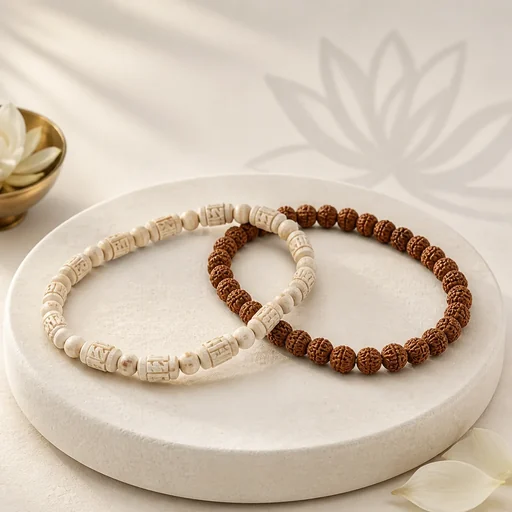
Elastic allows a closed loop to pass over the hand without a clasp. That is convenient for wrist malas when the inner circumference fits and the strand does not need to be stretched to its limit each time. Large beads, a tight circumference, and frequent removal over the hand increase the extension required during wear.
Elastic products are not all the same polymer, diameter, or construction, so a universal service-life estimate would be misleading. Practical warning signs include permanent enlargement of the loop, cracks, clouding or surface change, and a knot beginning to emerge from its hiding place. If putting the loop on requires unusual force, reconsider the size rather than repeatedly forcing the elastic.
Beading wire
“Beading wire” commonly refers to a flexible, coated, multistrand metallic foundation, but the strand count, core material, coating, and diameter belong in the product specification. It is not a substitute for elastic and is not intended to provide large, spring-like extension. It typically works with a clasp or a closed terminal assembly.
The entire system includes crimps, guards, jump rings, and clasp—not merely the cable. A sharp bend can leave a persistent kink; damaged coating may reveal metal; and a poorly placed crimp can become a stress concentration. Stop wearing a strand if you see exposed wire, a permanent kink, a displaced crimp, or a malfunctioning closure. A jewelry repair professional can assess whether complete restringing is appropriate.
Comparison table and inspection checklist
| Construction | Handling character | Inspect | Stop wearing when |
|---|---|---|---|
| Knotted cord | Flexible drape with defined spaces | Fuzzing, thinning, moving knots, sharp hole edges | A strand is visibly cut, a knot is opening, or a thin inner section is exposed |
| Elastic | Stretchable closed loop | Permanent elongation, cracks, surface change, knot position | The loop remains enlarged, cracks appear, the knot exits, or putting it on requires excessive force |
| Beading wire | Flexible but nonstretching foundation | Kinks, coating, crimps, clasp, exposed strands | A persistent kink, exposed metal, displaced crimp, or failed closure appears |
- Ask for the exact foundation. “Thread” alone does not identify fiber, diameter, number of plies, or stretch; “wire” does not give strand count or coating.
- Inspect the whole loop in good light. Focus on bead holes, the guru-bead area, knots, crimps, and the closure.
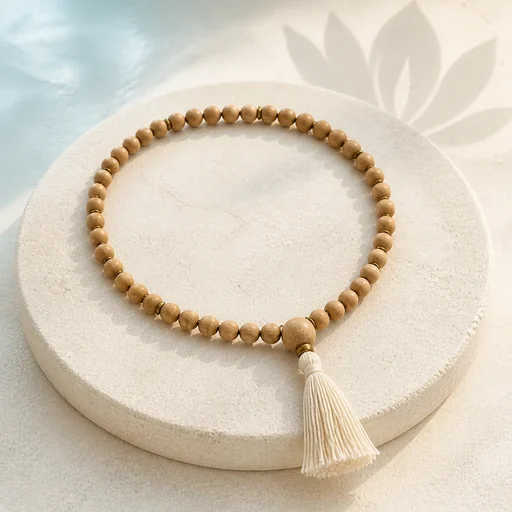
- Avoid destructive testing. Do not pull the tassel or bend wire sharply to “make sure” it is strong.
- Create a baseline. Photograph the terminal finish and two or three representative areas so gradual change is easier to notice.
- Isolate a damaged strand. Place it in its own pouch or box, keep any detached beads, and consult a qualified restringing professional.
Institutional sources support this preventive approach without predicting a mala’s lifespan. The Canadian Conservation Institute advises examining beaded objects for weak or broken thread and unstable beads before movement. GIA’s pearl-care guidance likewise calls attention to the condition of the string and periodic restringing for strung jewelry. These are useful handling principles, not evidence that every mala should follow a single calendar.
Frequently asked questions
- Which mala foundation lasts the longest?
- There is no universal winner. The answer requires the exact material and diameter, bead weight and hole edges, terminal workmanship, fit, exposure, and use pattern. Compare specifications and construction quality rather than generic categories.
- Do knots guarantee that beads cannot scatter?
- No. Inter-bead knots can limit movement after one local break, but their performance depends on knot size, hole diameter, cord condition, and where failure occurs. They reduce one risk; they do not eliminate it.
- Can damaged elastic or wire be repaired with glue?
- A spot of adhesive does not restore a foundation that is wearing along its length and may stain porous beads or damage a coating. When elastic cracks, wire is exposed, or cord opens, stop wearing the strand and discuss full restringing with a qualified professional.
- How often should I inspect a mala?
- No single calendar fits every material. A brief inspection is sensible before travel, after a snag or impact, and whenever fit, flexibility, or bead spacing changes. Follow any product-specific maker instructions as the primary care reference.
- Should I keep beads that detach after a break?
- Yes. Place every detached component in a labeled pouch and keep it with the remaining strand. Photograph the break and the bead order before moving anything, if possible. Do not force damaged cord or wire back through the holes: that can scratch a surface and erase evidence of the original sequence. Give the repair professional the complete set of parts and photographs so the construction can be assessed before restringing.
Sources and further reading
This guide addresses construction and care. A foundation type does not promise protection, a health effect, or a guaranteed spiritual result.