



How to Choose an Incense Holder: Length, Ash Control, Heat Resistance, and Stability
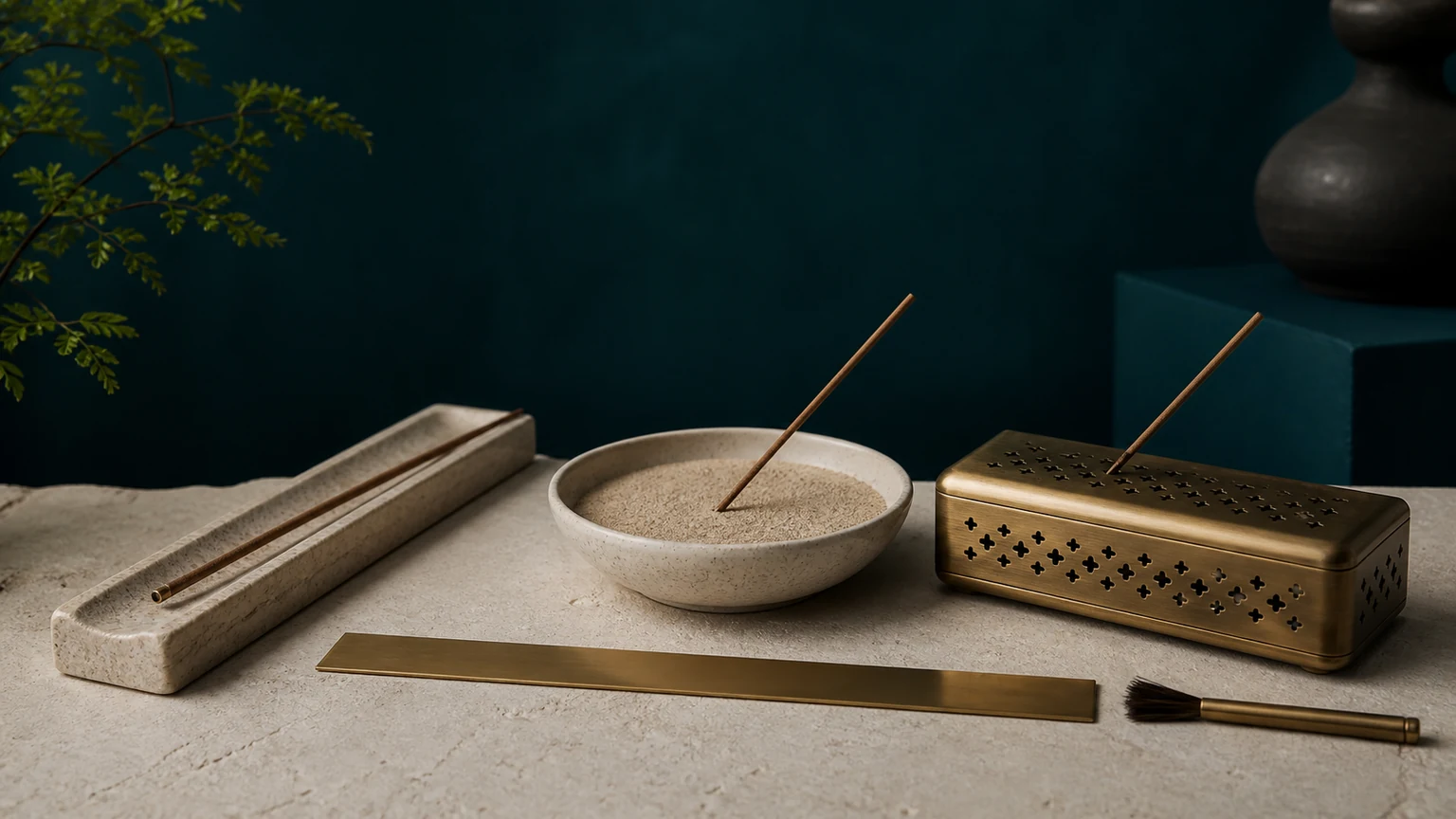
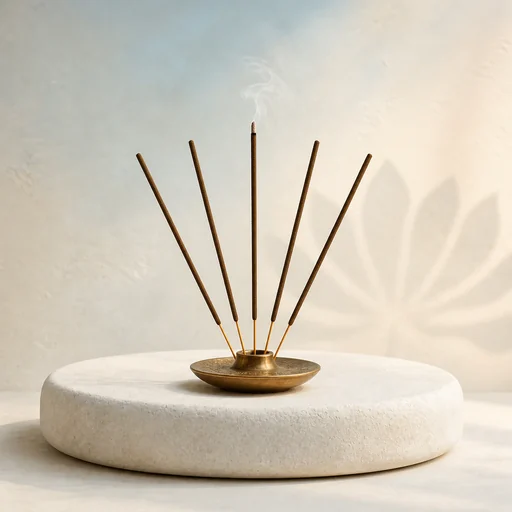
How do you choose an incense holder when a product photo shows only the ornament? Ask for dimensions and perform an unlit fit test. Measure the aromatic stick length, bare-core and hole diameters, catcher length and width, base mass, and footprint. Then assess insertion depth, angle, and response to a gentle table touch. A live burn is unnecessary for initial screening and should occur only under a separate controlled safety protocol. A decorative object without verified material or instructions is not automatically a heat-resistant incense holder.
A compatibility matrix for stick, hole, and ash area
Measure in millimeters and state exactly where each boundary lies. For the stick, separate aromatic length from exposed core. For the holder, record overall tray length, internal hole diameter, rim height, and catcher width. A caliper is helpful for the hole, while a ruler is adequate for the broad dimensions. Do not round an awkward fit into a compatibility claim. Actual dimensions and tolerances belong in the product record.
An unlit fit test reveals insertion behavior. Place the stick at its ordinary depth: it should enter without force, avoid jamming, and stay seated after a gentle touch to the table. Mark the projection above both tray edges. If the tip or a substantial length extends beyond the catcher, ash can land on furniture. Test each advertised stick style because bamboo cores and coreless sticks do not necessarily share a diameter or mounting method.
Angle matters as much as length. A nearly vertical stick drops ash closer to the base but raises the center of gravity. An angled stick produces a longer horizontal projection. In both arrangements, the holder must not rock or slide. Low, broad geometry usually gives more stability than a tall decorative form with a narrow foot, but the actual item should be tested rather than judged from a silhouette.
Name materials precisely: metal type, ceramic body and glaze, stone, composite, or wood with a separate metal insert. Looking like ceramic does not prove heat resistance. Request maker directions and confirm that coating, adhesive, and anti-slip pads are intended for operating temperatures. Reject an item with cracks, loose feet, unknown material, or a finish that has already blistered or scorched.
| Check | What to measure | Rejection signal |
|---|---|---|
| Fit | Hole and stick-base diameter plus insertion depth | Jamming, falling out, or movement |
| Ash | Projected length, catcher width, and rim | Tip or ash path extends outside |
| Stability | Mass, footprint, and center-of-gravity height | Rocking, sliding, or snagging |
| Heat | Exact material, coating, and maker instruction | No heat-use evidence, cracks, or damage |
Safe verification and everyday cleanup
Initial selection should be entirely unlit. If an editorial team conducts a heat test, use a dedicated noncombustible area, one documented format, continuous observation, and a stop rule for cracking, deformation, tipping, or surface damage. Record the exact sample and conditions. One successful use is evidence about that sample under those conditions, not a perpetual guarantee for every batch or every incense format.
At home, place the holder on a secondary heat-resistant base away from curtains, paper, textiles, wood, and any shelf above it. Avoid walkways, table edges, and places within reach of children or animals. Fire services explicitly advise continuous supervision for ceremonial burning. Leaving the room means extinguishing the incense completely; a timer or attractive enclosure does not substitute for attention.
Ventilate without creating a draft that moves the stick or scatters ash. Never shield an ember with paper or fabric. A covered holder must be designed for the selected format, provide the maker-specified clearance, and avoid contact with the smoldering material. Smoke alarms should remain in working order, and ignition sources should be secured. Learn the manufacturer's extinguishing method before lighting.
Remove ash only when the holder is fully cool. Clean according to the verified material: thermal shock can crack ceramic, water can affect wood or adhesive, and abrasives can remove glaze or coating. Inspect the hole, feet, seams, and surface before reuse. Retire the holder if it cracks, rocks, develops a loose component, or shows scorching that its instructions do not identify as normal.
- Measure the stick, hole, tray, and footprint in millimeters.
- Check fit, angle, projection, and stability while unlit.
- Verify material and coating against maker heat-use directions.
- Place the holder on a secondary noncombustible base away from combustibles.
- Supervise combustion and cool and inspect the holder before cleanup.
Questions and answers
- How much extra tray length is needed?
- There is no universal number because angle changes projection. Test the exact unlit stick and leave a visible margin beyond its tip.
- Will a large hole fit every stick?
- No. A thin core may move freely, changing angle and ash path. Confirm actual fit rather than relying on a broad label.
- Can the holder sit directly on furniture?
- No. Use a stable secondary noncombustible base with clearance around the holder, even when the holder itself is heat resistant.
- How can heat resistance be tested at home?
- Do not improvise a fire test. Find exact material data and maker directions; if those are unavailable, do not use the object for burning incense.
Compare available incense formats and compatible holders in the Narayana Shop incense collection. Confirm dimensions, material, and directions in the individual listing.
Continue reading
Sources and further reading
- National Institute of Standards and Technology — SI units for length.
- Greater Manchester Fire and Rescue Service — ceremonial burning practices.
- Hampshire and Isle of Wight Fire and Rescue Service — candle safety.
This guide does not replace manufacturer instructions or guarantee safety. Every burning setup requires a heat-resistant base, clearance, ventilation, and continuous supervision.