



How to Store Incense, Resins, and Palo Santo Without Mixing Aromas
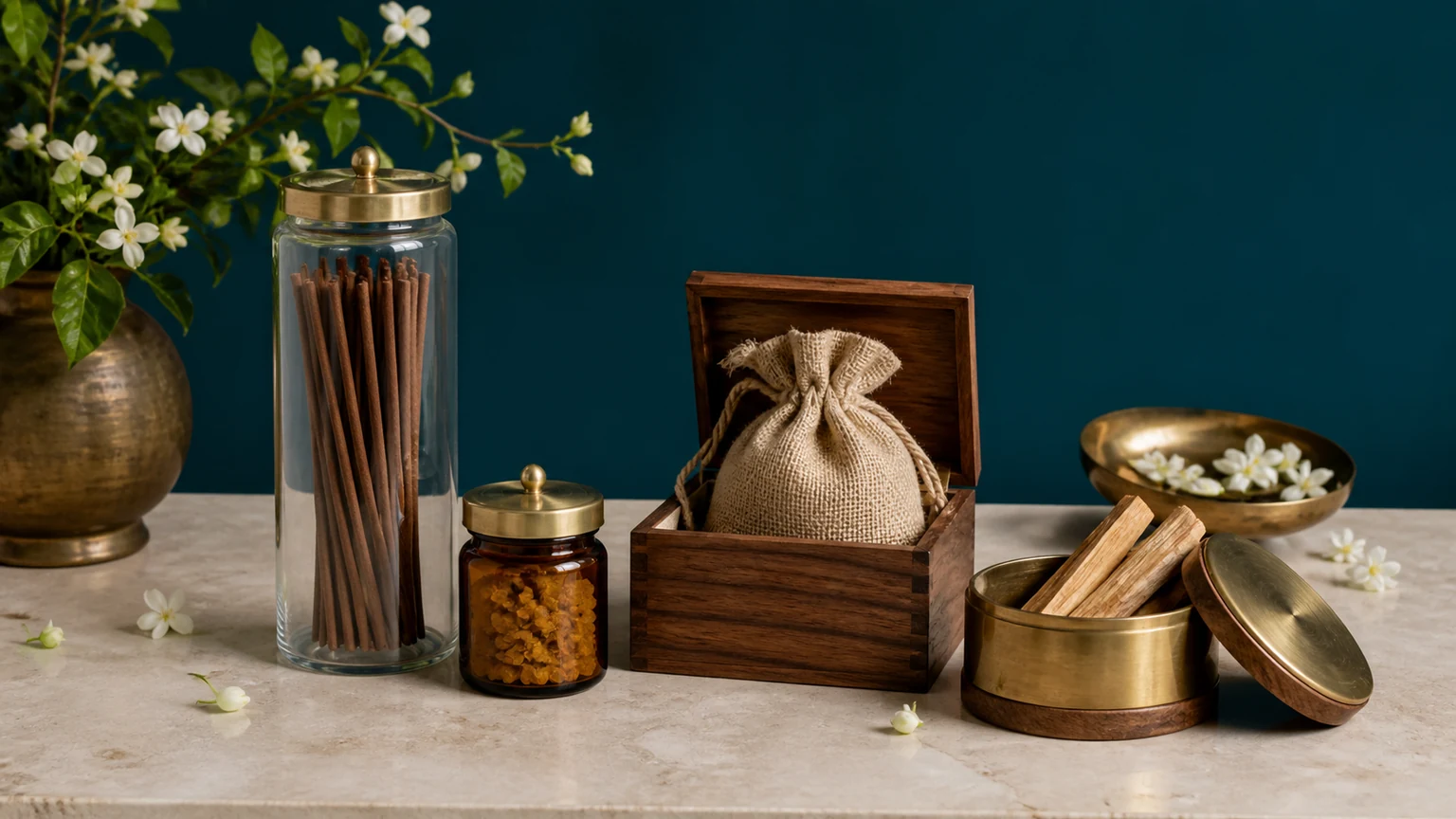
How do you store incense without blending its aromas? Do not pour every package into one textile pouch or jar. Give each scent its own primary barrier and a label with brand, name, lot, receipt date, and opening date; then place those units in a protective cabinet or box. Sticks, resin pieces, and dry aromatic wood respond differently to sealed storage and moisture, so choose the inner container from the material's actual condition and maker instructions. The storage system preserves identification and condition; it does not prove botanical species, provenance, or spiritual qualities.
Separate aroma while protecting the material
On arrival, record supplier, brand, name, lot, receipt date, and opening date. Inspect seals, film, lids, and material for condensation, mold, insects, softening, breakage, or an unrelated odor. Keep the new lot in a separate tray until inspection is complete. This brief quarantine prevents a packaging problem from spreading into the clean cabinet and creates a traceable point for a supplier query.
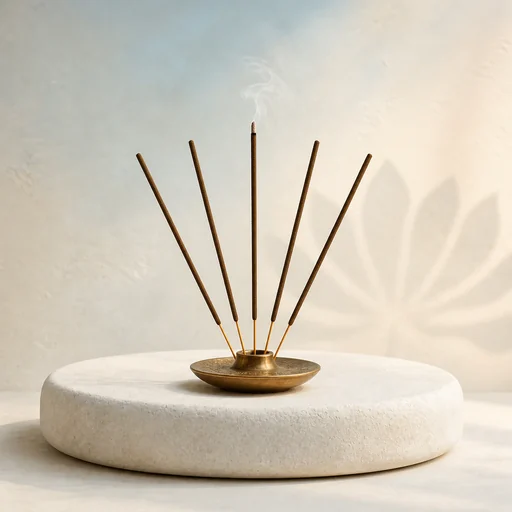
Keep sticks in their intact inner wrap when it is dry and sound, then place that package in a rigid box or tube. The rigid shell prevents breakage; the inner layer prevents contact with a neighboring aroma. Do not pour several scents into a decorative chest, and do not crush a soft package beneath resin jars. Preserve the maker label even if a shorter working label is added outside.
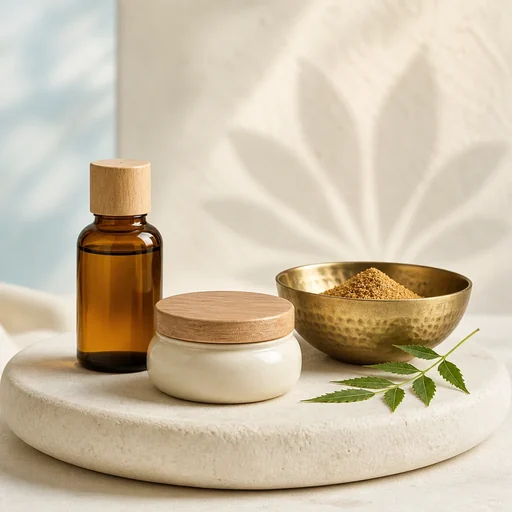
Dry aromatic resin can be kept in its own tightly closed, nonreactive jar when the maker gives no contrary direction. Duplicate the identity on lid and side so rearrangement cannot separate the label. Give each resin a dedicated clean scoop, since a sticky particle on a shared tool transfers aroma to the next jar. Close the container promptly and take a working portion rather than leaving the stock open during a session.
Dry aromatic wood, including goods labeled palo santo, should not be sealed if there is any sign of dampness. Plant materials are vulnerable to mold and pests. Clean paper and a ventilated rigid box in a dry cabinet can be safer than trapping uncertain moisture in a jar; follow the supplier's directions for the actual product. This storage guidance does not authenticate the species or source of any stick of wood.
| Material | Primary separation | Monitor |
|---|---|---|
| Sticks | Intact inner wrap inside a rigid tube or box | Breakage, dampness, foreign odor, and label |
| Resins | Separate tightly closed nonreactive jar | Tackiness, condensation, contamination, and lid |
| Palo santo or aromatic wood | Clean paper and ventilated rigid box when fully dry | Moisture, mold, pests, and cracking |
| Outer storage | Closed cabinet or tray after inner separation | Dust, light, heat, leaks, and child access |
A stable environment and a clean workflow
Choose a cool, dry, dark, and stable cabinet rather than the coldest point in the home. Bathrooms and sinks add moisture; windows and radiators add light and heat; refrigerators can add condensation whenever a container is opened. Keep aromatic materials away from household cleaners, perfume, coffee, spices, and cosmetics because their odors can migrate too. Store well away from ignition sources.
Place jars in trays so they cannot fall onto fragile sticks. Bring one working lot to the table rather than the entire collection. Portion resin onto clean paper without reaching into stock with fingers, close the lid, and return a clean, dry scoop to its labeled place. This routine controls aroma transfer more reliably than adding scented sachets, which introduce another fragrance into the system.
Inspect monthly and adjust frequency to the real season and room. Check lids, dust, condensation, stick softness, mold, insects, and foreign odor without placing material against the nose. Photograph and log a concern. Isolate the affected unit and inspect neighbors; do not put it on a radiator, spray it, or cover the smell with more fragrance. Contact the supplier when an unopened or recent lot arrives compromised.
A storage inventory does not establish botanical identity or legal harvest. The cited CITES document concerns Bulnesia sarmientoi and separately notes that Bursera graveolens also appears in trade under the name palo santo. That common-name ambiguity demonstrates why the species and trade context need their own records. It does not identify an individual product; preserve supplier lot documentation separately from the condition log.
- Inspect and temporarily isolate each incoming lot.
- Label brand, scent, lot, receipt date, and opening date.
- Give every aroma its own inner package and dedicated resin tool.
- Use a cool, dry, dark, stable cabinet away from other scented goods.
- Inspect lids, moisture, mold, pests, and aroma transfer on a schedule.
Questions and answers
- Can all incense sticks share one jar?
- They should not. Even without direct contact, one enclosed air volume can transfer aroma. Keep a separate inner barrier for each scent.
- Should resin be refrigerated?
- Usually not unless its maker directs otherwise. Temperature cycling at opening can create condensation; a cool, stable cabinet is generally preferable.
- Why use a separate spoon for each resin?
- A sticky fragment on a shared tool can transfer both aroma and contamination into another small lot.
- Can damp wood be dried on a radiator?
- No. Heat can cause cracking and does not address why the wood is damp. Isolate the lot and contact the supplier.
Check format, packaging, and available storage directions in the Narayana Shop incense collection. Keep the lot label and maker instructions after purchase.
Continue reading
Sources and further reading
- Canadian Conservation Institute — basketry and plant-material collections.
- Canadian Conservation Institute — products used in preventive conservation.
- CITES — report on Bulnesia sarmientoi and ambiguity in the name palo santo.
This article addresses storage only. It does not authenticate species, origin, harvest practices, or spiritual properties of any aromatic material.