


Masala and Durbar Incense: Understanding Production Styles Without a “Better/Worse” Verdict
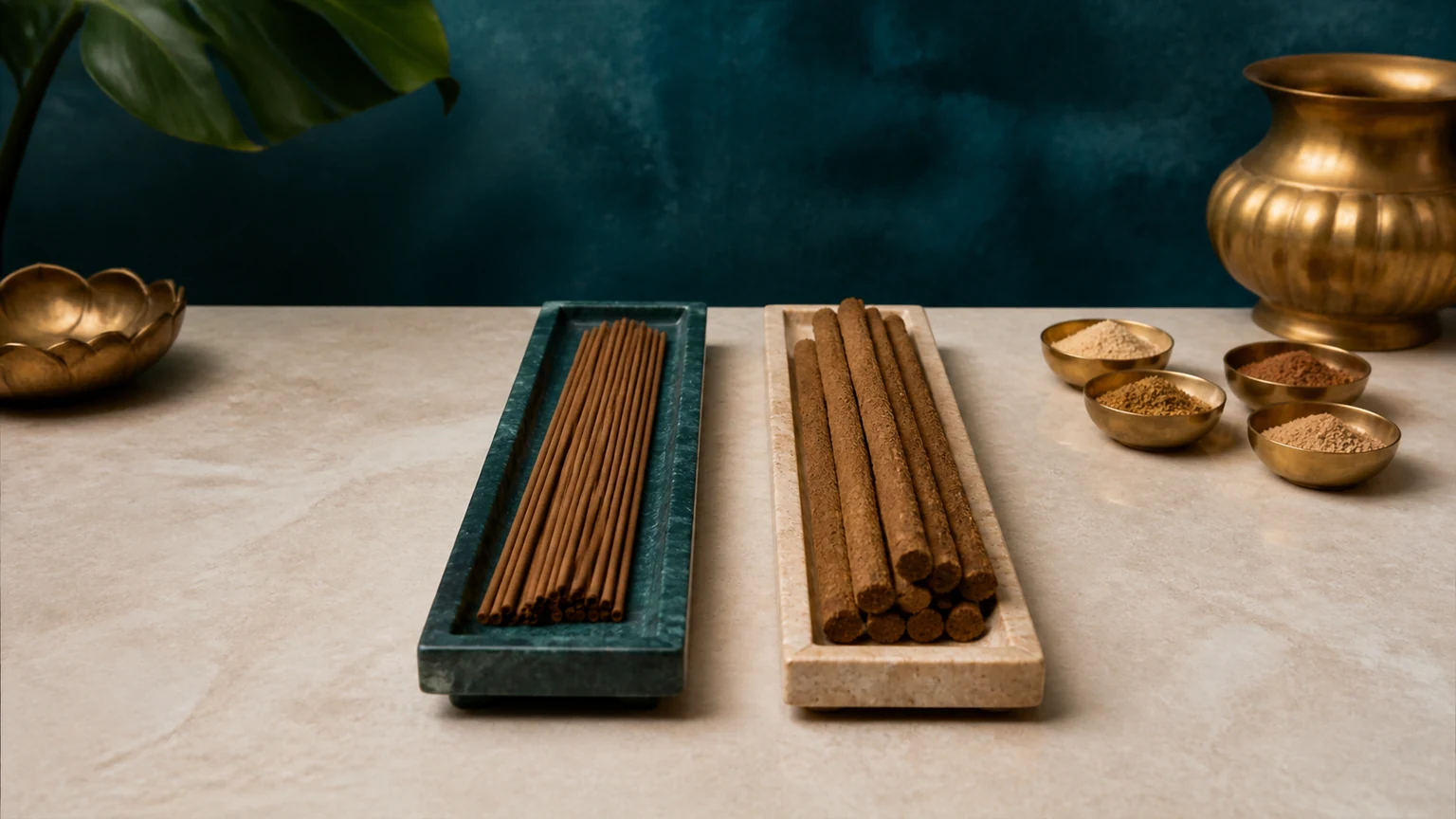
Masala and durbar incense are often placed on a ladder from ordinary to premium, but that hierarchy explains very little. An institutional review of India's incense value chain distinguishes perfumed agarbatti from masala batti by how aromatic material enters the stick. Durbar has no single technical definition in the institutional sources used here. The useful question is what the maker means, what the package discloses, and what remains unavailable for the actual batch.
What a production-style word can and cannot tell you
The IIM Sambalpur review distinguishes perfumed agarbatti, where a prepared stick is dipped in scented oil, from masala batti, where self-fragranced ingredients are coated onto a bamboo stick. That is a useful production distinction, not the formula for every brand. It does not identify each aromatic substance, binder, base, colorant, or later processing step, and it does not predict universal scent strength or burn behavior.
Manufacturers and retailers may use durbar for soft, moist, paste-rich, or heavily scented styles, but the institutional sources used here do not supply one universal definition for that market word. Do not silently import one seller's meaning into another brand. Ask what that maker means and request the base, binder, aromatic materials, application method, country of manufacture, and batch information. When the answer is partial, publish the limit instead of filling it with industry folklore.
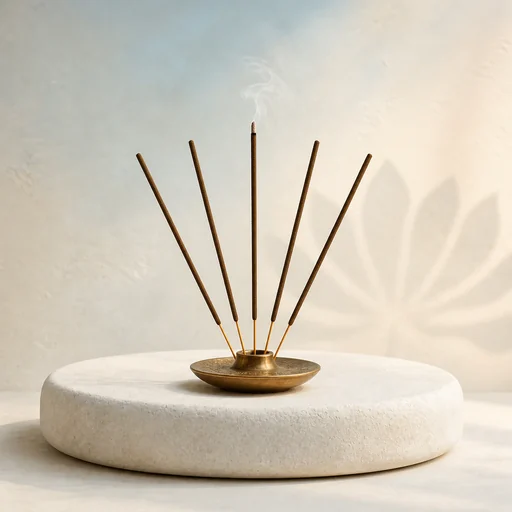
The Indian government project profile for small agarbatti businesses shows a multi-stage process: material mixing, paste application or rolling, drying, perfuming, and packing. A visible bamboo core, dark coating, grainy surface, or soft texture tells you only part of that history. It cannot reveal every substance used before or after drying. A photograph is useful for format and condition, but it is not a chemical analysis or proof of a claimed production style.
The word natural is similarly incomplete unless it is defined and supported with an ingredient list. Plant-derived material can still cause individual sensitivity, and every burning incense produces smoke. A useful listing supplies brand, scent name, country, net weight, count, lot or date, directions, precautions, and all composition information the manufacturer provides. If a complete composition is unavailable, say so directly; do not translate absent data into purity or safety.
| Package term | What it may describe | What to confirm |
|---|---|---|
| Masala | Aromatic materials incorporated into the mass before forming | Actual recipe, binder, base, and batch |
| Durbar | A brand or market style, often used for rich or soft pastes | The exact manufacturer's definition and composition |
| Charcoal-free | A claim that a charcoal component is absent | Complete ingredients and the brand's definition |
| Natural | A broad marketing category | Every ingredient; never equate the word with safety |
How to compare two packages without a false hierarchy
Photograph the front, back, ends, and any inner label. Record the exact product name, manufacturer, country, net weight, number of sticks, lot or date, directions, and precautions. Add the style term and scent notes only after those facts. This method compares what is actually declared rather than the reputation of a label. It also preserves the evidence if packaging changes between shipments.
Stick texture can be described as smooth or grainy, dry or soft, with a visible bamboo core or coreless. Do not turn texture into an ingredient analysis. For aroma, record neutral observations such as woody, floral, resinous, or sweet and disclose the conditions of the sample. Strong and soft remain subjective. Use the same room, ventilation, holder, unlit inspection period, and one tested stick from the recorded batch when producing editorial comparisons.
Batch variation matters because raw materials, drying conditions, storage, and age can affect behavior. Burn time and ash output should therefore be reported only from a measured test of the named length and lot, or as a clearly attributed manufacturer range. Include sample size and test conditions. One result does not describe all masala or all durbar incense, and a longer burn is not inherently better if it does not fit the user's room or routine.
Choose for the task and the quality of disclosure, not for a supposedly superior class. One person may want a short stick and restrained scent; another may prioritize a named profile; a third may need complete ingredient information. Every incense burns and creates smoke. A production label never replaces ventilation, a stable heat-safe holder, distance from combustible material, continuous supervision, or attention to individual sensitivity.
- Photograph every side of the package and record its lot or date.
- Check how the specific brand defines masala or durbar.
- Compare base, composition, net weight, count, directions, and precautions.
- Keep sensory description separate from ingredient claims.
- Remove unsupported claims of purity, health, natural superiority, or spiritual power.
Questions and answers
- Is masala incense always coreless?
- No. The production-style name does not exclude a bamboo core; inspect the actual stick and package.
- Is durbar an official stand-alone type?
- The institutional sources used here do not give durbar one universal definition. Confirm exactly how the specific brand uses the word.
- Can ingredients be identified from scent and appearance?
- No. Those are sensory observations, not a complete chemical or botanical analysis. Manufacturer documentation is required.
- Which style is healthier or cleaner?
- A style word does not establish health benefit or safety. Review disclosed ingredients, personal sensitivity, ventilation, and the fact that combustion creates smoke.
Compare available packaging, format, net weight, and disclosed information in the Narayana Shop incense collection. Check the individual lot description for composition and directions.
Continue reading
Sources and further reading
- IIM Sambalpur — review of India's incense value chain.
- Development Commissioner MSME — Agarbatti Sticks project profile.
This article explains production labeling and makes no medical, purity, or spiritual promise. Every burning incense creates smoke and requires ventilation, a heat-safe holder, and supervision.