

Labradorite, Moonstone, and Fluorite: Texture, Light, and Care
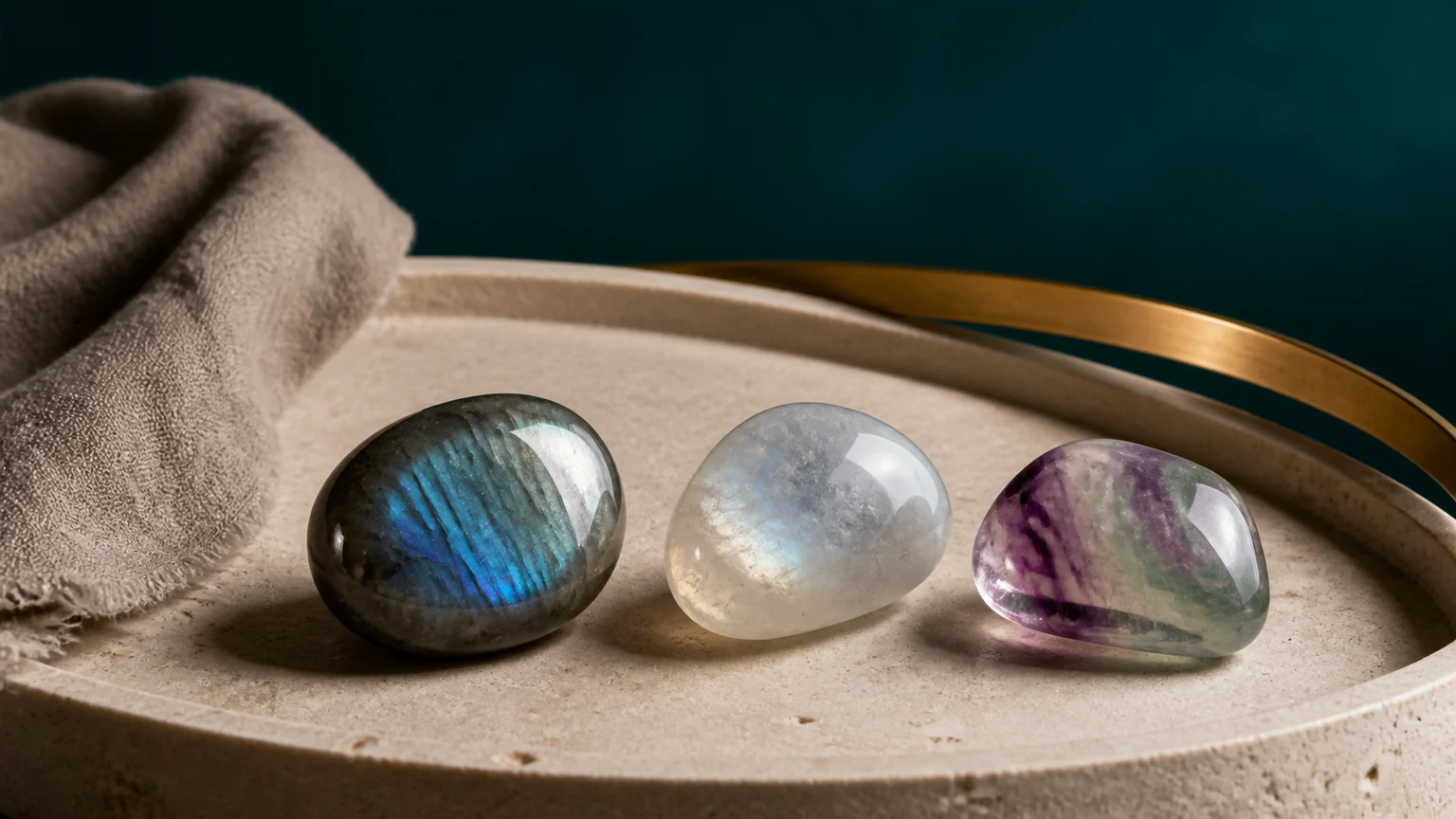
Labradorite, moonstone, and fluorite can draw attention through changing light, but their optical behavior and durability differ. Labradorescence and adularescence arise from internal feldspar structures and appear only at suitable angles. Fluorite often has vivid color and zoning, while the Smithsonian records Mohs hardness 4 and significant fragility. Selection and care should follow confirmed identity, not one dramatic photograph.
What light reveals—and why one image can mislead
GIA places adularescence and labradorescence among phenomena produced when microscopic internal structures scatter, reflect, or diffract light. In labradorite, a colored flash may switch on and off as the stone turns. Its area, strength, and color depend on cut orientation and lighting; a missing flash in one front view does not mean the effect is absent.
Moonstone is valued for adularescence, typically a softer floating effect that travels across a cabochon. The name does not guarantee a strong display; some material has a faint band visible only within a narrow angle. Feldspar trade names also overlap. A seller should use a documented identification rather than naming every pale stone with a blue reflection moonstone.
Fluorite is not feldspar. The Smithsonian describes calcium fluoride with broad color variety and frequent zoning, and notes its hardness of 4 and fragility. A color band or ultraviolet fluorescence is not diagnostic by itself. UV imaging also requires safe technique and clear conditions; neutral and transmitted light are sufficient for a standard listing.
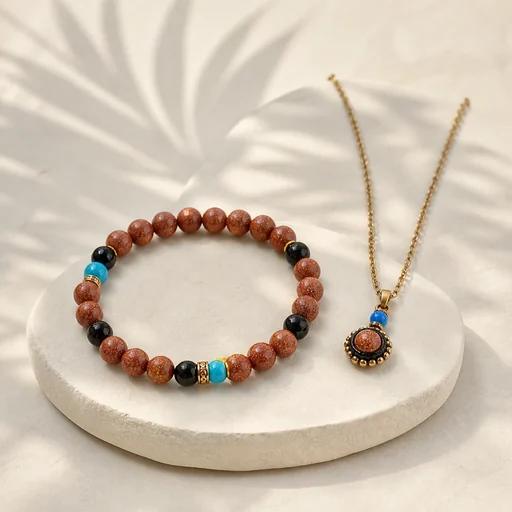
An honest series shows each stone in at least two positions at unchanged exposure: a neutral view and the angle of maximum effect. Slow rotation video is more informative than a single hero frame. A flash should never be painted in, copied from another bead, or selectively saturated. For an individual bracelet, show the effect on the actual beads offered.
| Material | Observed behavior | Practical risk |
|---|---|---|
| Labradorite | Directional colored labradorescence | Edge chips; effect weak outside its angle |
| Moonstone | Soft traveling adularescence | Impact sensitivity and unsuitable harsh cleaning |
| Fluorite | Color, zoning, sometimes fluorescence | Mohs 4, fragility, easy scratching |
| Any jewelry piece | Gem, metal, cord, and adhesive together | Care is limited by the most sensitive component |
Conservative care and condition checks
Before cleaning, inspect edges, drill holes, settings, and cord under bright diffuse light. Photograph chips and fractures. If fluorite is loose or feldspar has a surface-reaching crack, do not immerse the piece; consult a jeweler. Hardness measures scratch resistance, not toughness, so a relatively hard gem may still split from impact.
GIA advises warm soapy water only for moonstone and excludes steam and ultrasonic cleaning. Use an even more conservative method for mixed jewelry: begin with a dry soft cloth, then briefly hand-clean only if cord, adhesive, and metal are compatible. Do not rub fluorite with abrasive material or test it with a knife or quartz; a home hardness test deliberately causes damage.
After approved wet cleaning, rinse briefly, blot without rubbing, and air-dry flat. Avoid a hair dryer, radiator, boiling water, or rapid chilling. Apply lotion and household products before putting on the jewelry and allow them to dry. If residue at a drill hole does not release with light cleaning, a professional should handle it.
Store each piece in its own padded compartment. Fluorite can be scratched by quartz, a metal edge, or a grain of sand. Do not drop a bracelet onto stone counters or wear it during tool work. Inspection after an impact is more useful than aggressive polishing. A professional may sometimes restore luster; a home abrasive removes material permanently.
Document not only the best optical-effect frame but how it appears: starting position, light direction, and gradual rotation. A short uncut clip shows the width of the flash sector and whether it disappears during ordinary movement. Labradorite and moonstone examples may direct light differently because of material orientation and cutting, so describe the effect as observed in that specimen rather than as permanent glow.
Fluorite softness and feldspar cleavage make impact and abrasion practical concerns. A separate pouch does not replace inspection of the setting and cord. Coating, impregnation, lacquer, or polymer adds another care limit. Avoid abrasive paste, which can alter a face and reduce the clarity of the optical display. After a fall, inspect every side; a new chip at a hole or setting matters more than a changed flash and should remain unloaded until repair.
- Confirm the material and disclosed treatment on the listing or report.
- Record a neutral view and the optical effect before care.
- Inspect edges, holes, settings, and cord; do not wash damaged construction.
- Use gentle hand cleaning; avoid steam, ultrasonic, abrasives, and scratch tests.
- Store separately and inspect after any impact or fall.
Questions and answers
- Why is a labradorite flash missing from some images?
- The effect depends on the stone, camera, and light angles. Look for rotation video and paired images made at the same exposure.
- Is every white stone with a blue flash moonstone?
- No. Similar appearances and overlapping trade names occur among feldspars and imitations. Reliable documentation or gemological identification is needed.
- Can a fluorite bracelet be worn every day?
- That is a personal choice, but the material is soft and fragile. Reduce impact and abrasion, avoid harder objects, and inspect the piece regularly.
- Why avoid ultrasonic cleaning?
- Vibration can exploit hidden fractures or damage a setting. GIA excludes ultrasonic cleaning for moonstone; hand cleaning is safer for an unknown mixed construction.
See current options and actual product photos in the Narayana Shop handmade bracelet collection. Confirm current labradorite, moonstone, or fluorite stock and care on the individual listing.
Continue reading
Sources and further reading
- GIA — guide to gem phenomena, including adularescence and labradorescence.
- GIA — general jewelry care for sensitive gem materials.
- GIA — educational guide to moonstone and cleaning.
- Smithsonian National Museum of Natural History — fluorite hardness and fragility.
This guide applies only to confirmed materials and does not replace examination. Care follows the most sensitive component; no medical, frequency, or metaphysical outcomes are claimed.