


Om in Jewelry: Cultural Context, Script, and Respectful Wear
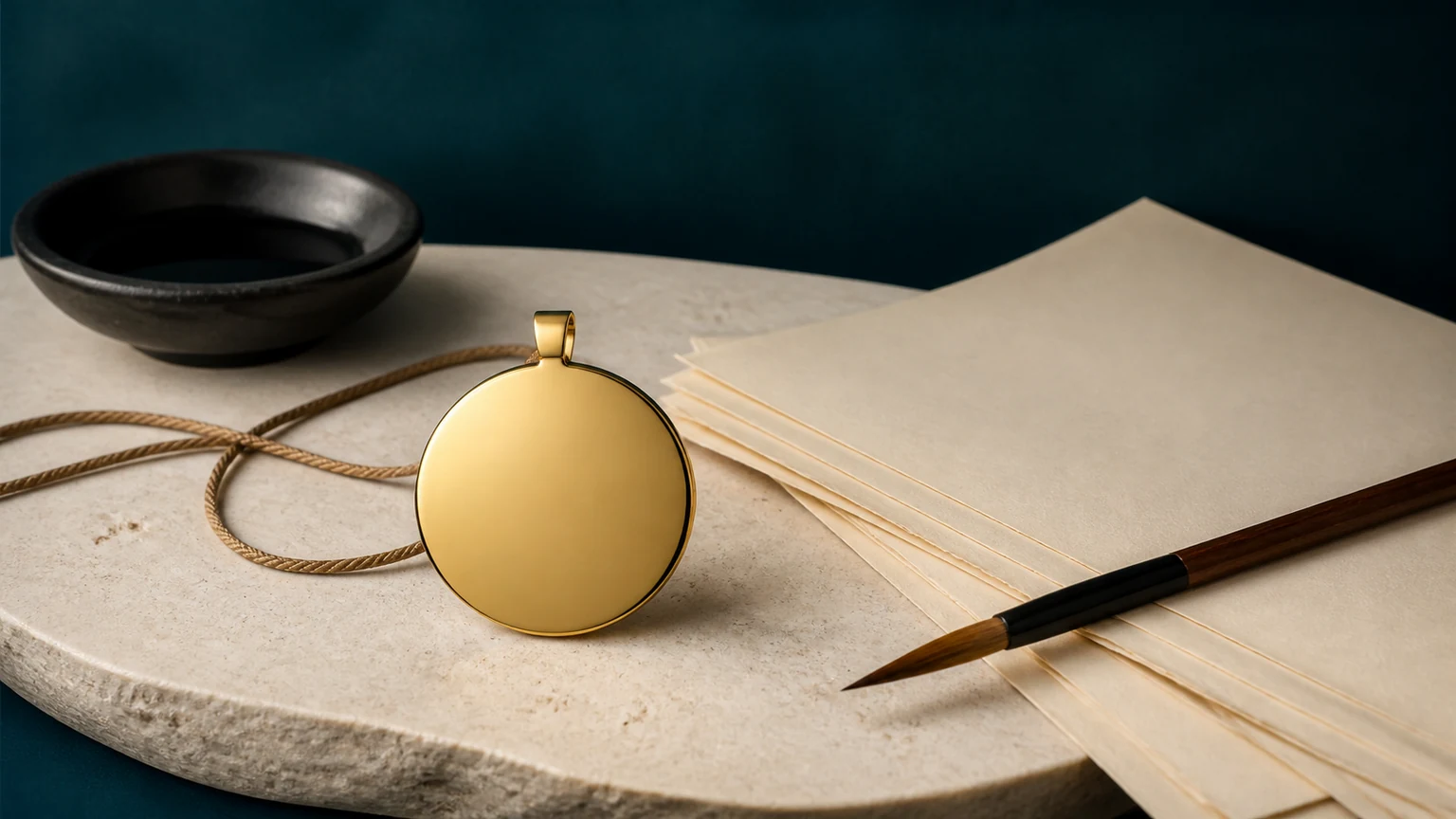
Om in jewelry represents a sacred syllable, not a neutral flourish or a universal sign for “positive energy.” Om is central to recitation, ritual, and interpretation in Hindu traditions, with forms and uses in other South Asian religious settings. Om, Oṃ, and Aum render the term through different conventions, while ॐ is a distinct Devanagari sign. Respectful selection begins with accurate script, a traceable design source, a named context, and willingness to ask a knowledgeable practitioner where no shared rule exists.
From a sounded syllable to a written sign
Begin with sound. Om appears in early Sanskrit textual and ritual history and receives sustained interpretation in the Upaniṣads. The University of Texas provides transcriptions from Patrick Olivelle's academic edition of the early Upaniṣads, including the Māṇḍūkya Upaniṣad, where the syllable and its components become philosophical subjects. One text does not exhaust the meanings; different schools read Om through their own theological, ritual, and contemplative frameworks.
The form oṃ uses scholarly transliteration, with the dot below m marking anusvāra in the chosen convention. Plain Om works in general English. Aum makes the traditional a-u-m analysis visible; it does not automatically denote a separate religion or a universally “more correct” pronunciation. A catalog should choose one editorial convention and explain variants briefly rather than treating them as a string of search synonyms.
The graphic history is not one frozen picture. A University of Vienna research lecture frames written and iconic Om as a subject with its own history. The most familiar Devanagari form today is ॐ. The Unicode chart assigns it U+0950, DEVANAGARI OM. Unicode also notes that reference glyphs are not prescriptive font designs, so proportions may vary while remaining legible within the writing system.
That variation is not permission for arbitrary distortion on a pendant. Mirroring, rotation, a lost stroke, or a decorative merger with another letter can damage recognition. Start from a reviewed vector master, compare several competent Devanagari typeforms, and ask a reader of the script to inspect it. Review the manufactured result again: a fine bridge may disappear in casting or carving, and a suspension hole may disrupt the silhouette.
Not every flowing line is Om. If the source sign cannot be established, describe the piece as an abstract motif rather than adding sacred meaning. Conversely, an accurate sign does not authorize one universal interpretation. A listing may say “pendant with the Devanagari form of Om; cultural interpretation varies by tradition,” then attribute any narrower meaning to a named source.
| Form | What it conveys | Editorial check |
|---|---|---|
| Om | Plain Latin spelling | Do not present spelling as a full explanation of meaning |
| Oṃ | Transliteration with anusvāra | Preserve the diacritic and encoding |
| Aum | Makes an a-u-m analysis visible | Attribute the interpretation to a text or school |
| ॐ | Devanagari sign U+0950 | Review direction, strokes, proportion, and manufactured result |
| Artist adaptation | A design based on the sign, when documented | Preserve legibility and obtain cultural review |
Choosing, gifting, and wearing with respect
First, articulate your relationship to the symbol. If the pendant recalls a practice, teacher, family, or course of study, that can be said without speaking for all believers. If you simply like the form, recognize that others hold it sacred and learn before buying. Respect does not require an invented initiation story; it requires refusing to reduce another community's religious form to exotic decoration.
Check the listing: which sign appears, who prepared the artwork, who reviewed the script, what material was used, and whether the image shows the actual piece. “Ancient,” “Vedic,” “Buddhist,” or “Jain” must connect to a particular context rather than appear together for reach. A design that combines Om with a lotus, deity, or mantra needs separate accuracy for every element and for their composition.
There is no universal rule for height, side of the body, clothing, or a mandatory wearing ritual across all communities. “Always do this” needs a named lineage source. A practical minimum is to avoid wearing a damaged sharp object, prevent a loose bail from leaving the sign upside down, and consider settings where a sacred symbol may be treated disrespectfully. When uncertain, ask a teacher or informed participant in the relevant tradition.
Do not assign belief when giving the piece. Ask whether the recipient welcomes a sacred sign, prefers a specific script, and wants religiously marked jewelry. Neutral packaging and a brief factual context card are better than promises of protection, luck, “activation,” or an effect. A person may respect Om and still prefer not to wear it.
Care has a cultural dimension but begins with material compatibility. Store the pendant so that it does not scratch or rotate awkwardly in a tight compartment, and clean according to the metal, coating, enamel, and inserts. Do not prescribe water, oil, incense, or ritual washing as universal product care. Physical compatibility and religious practice vary. Remove a damaged sign from wear and assess repair.
For publication, use two reviews. A language editor checks Om/Oṃ/Aum, Unicode, and the image caption. A cultural reviewer assesses the chosen context, composition, and tone without claiming to speak for every tradition. Record the reviewer role, date, and scope with consent. This is a transparent editorial process, not a certificate of sacred authenticity.
- Identify the sign and context; do not call an abstract line Om without a basis.
- Compare ॐ with several legible references and inspect the manufactured piece.
- Distinguish plain Om, transliterated Oṃ, and interpretive Aum.
- Name a specific tradition for a specific meaning and avoid universal etiquette.
- Ask the recipient before giving religiously marked jewelry.
- Remove claims of energy, healing, protection, luck, or a guaranteed spiritual result.
- Document language and cultural review before publishing a listing.
Questions and answers
- Are Om and Aum different symbols?
- They usually render the same syllable in different ways. Aum highlights an a-u-m analysis; attach any detailed interpretation to a source or school.
- Must ॐ always have one exact shape?
- No. Type and craft forms vary, but the sign should remain legible, upright, and not accidentally damaged by stylization.
- Can someone outside Hindu traditions wear Om?
- No one answer represents every community. Learn the context, do not claim an identity that is not yours, avoid degrading use, and ask someone from the relevant tradition when uncertain.
- Must an Om pendant be consecrated?
- That belongs to a particular religious practice, not an inherent product feature. A shop should not prescribe a universal rite or promise an outcome.
See current options and actual product photos in the Narayana Shop pendants collection. For a specific piece, verify its script, material, and cultural description in the individual listing.
Continue reading
Sources and further reading
- University of Texas at Austin — Early Upaniṣads, Patrick Olivelle edition and transcription.
- University of Vienna — “Inscribing the Sacred Syllable: Towards a History of OM as a Written Sign and Icon”.
- Unicode Consortium — Devanagari chart, U+0950 DEVANAGARI OM.
- World Intellectual Property Organization — Traditional Cultural Expressions.
This article distinguishes verifiable history, traditional interpretation, and personal choice. It establishes no universal religious etiquette and promises no medical, energetic, protective, or spiritual effect.