





Trishula, Damru, and Rudraksha: Shiva Symbols in Object Design
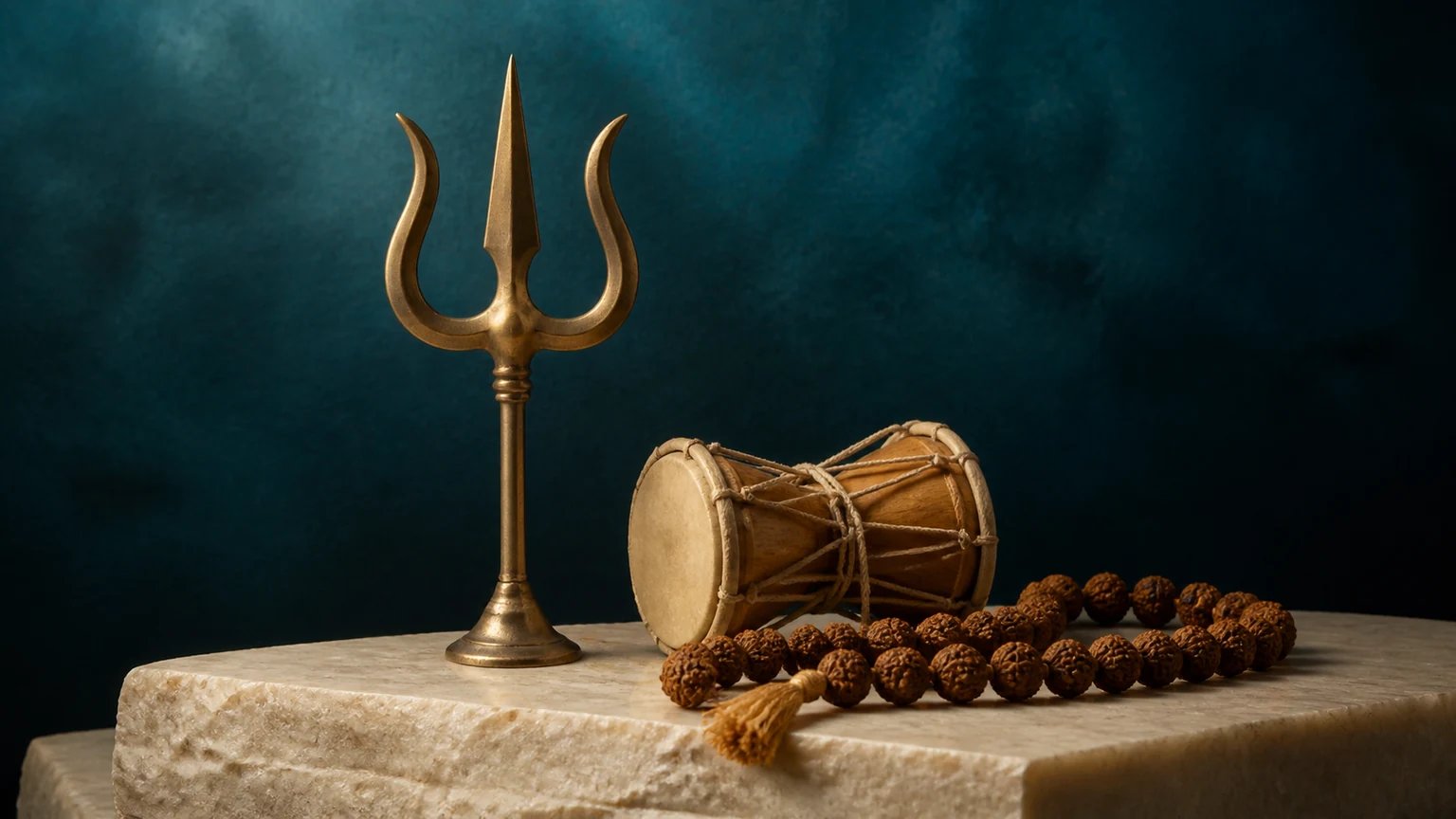
Trishula, damru, and rudraksha do appear in Shaiva visual culture, but they do not form a universal formula. Museum objects document the trident as an attribute of Shiva, an hourglass drum in the Nataraja context, and rudraksha beads within representations of Shiva. A product listing should identify what is physically present, cite the source of an interpretation, and avoid promising power, protection, or spiritual attainment. The shape alone never supplies provenance, ritual status, or authenticity for a particular item.
Three forms and three different object histories
The British Museum's bronze trishula, made around 950 in Tamil Nadu, shows that a trident can be a substantial devotional object rather than a small emblem. Its collection record identifies Shiva and Nandi, the material, dimensions, and evidence of repeated ritual handling. Those facts belong to that Chola-period object. A contemporary three-pronged pendant may reference it, but cannot borrow its date, provenance, or ritual history from visual resemblance.
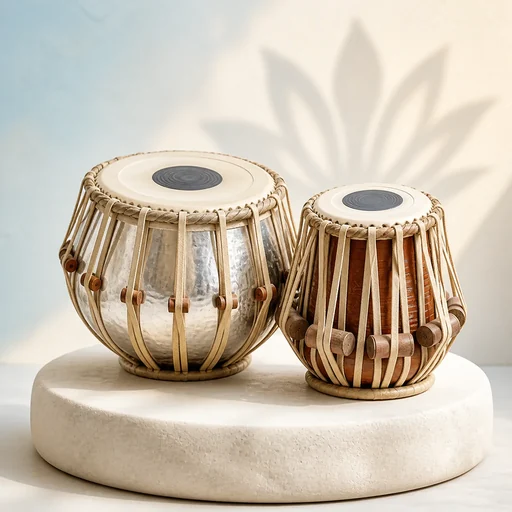
The Met's eighteenth-century damaru from South India is a functional double-headed waisted drum. Pellets attached at the waist strike its membranes when it turns. The museum discusses its association with Shiva as Natesa while also noting that this instrumental form is broadly distributed across South Asia, the Himalayas, and Mongolia. Shape is therefore a starting point, not proof of a single religious function.
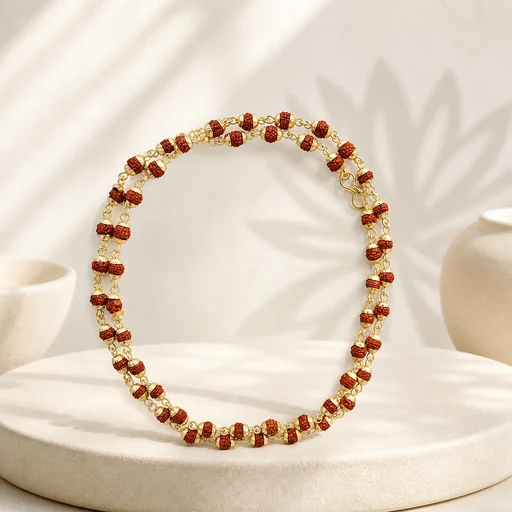
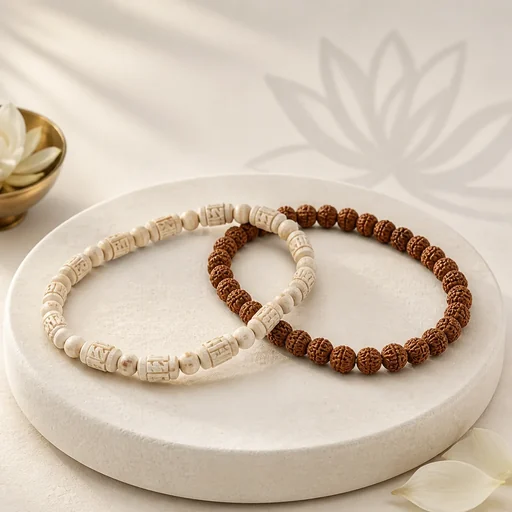
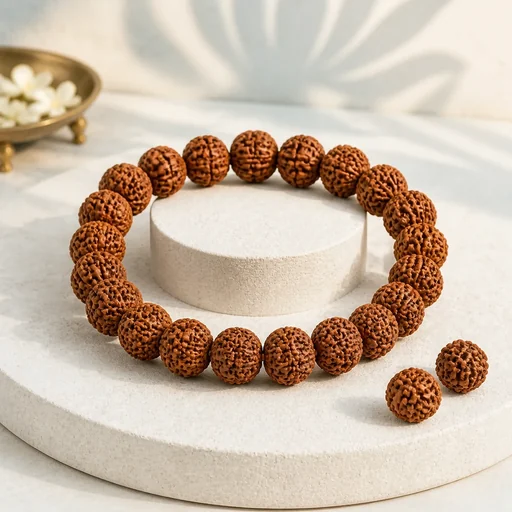
Rudraksha differs from the first two: it is an organic bead material rather than a graphic outline. A British Museum record for a brass lingam cover from Vrindavan describes Shiva wearing rudraksha beads. That establishes an iconographic connection in a documented object; it does not establish the botanical identity, mukhi count, opening, or origin of every strand sold under the name. Those claims require records and photographs of the beads themselves.
| Form | Visible construction | Listing evidence to request |
|---|---|---|
| Trishula | Three prongs, axis, and sometimes figures or ornament | Orientation, complete composition, material, source attribution |
| Damru | Waisted body, two heads, and cords with strikers | Whether functional, dimensions, materials, and documented context |
| Rudraksha | Natural beads or a representation of them | Material record, mukhi views, openings, and batch documentation |
| Combined design | Several Shaiva references in one object | Accuracy of each element and their relationship |
How to read and select a Shiva-related design
Begin by identifying the thing rather than its promised effect. A trident-shaped pendant is not the same object as a ritual trishula, and a miniature drum may be decorative rather than playable. A listing should provide dimensions, material, moving parts, edge safety, and the source of its attribution. If a bail allows the pendant to rotate, inspect the upright position and whether the suspension point interrupts the silhouette.
When trishula, damru, and rudraksha appear together, review each element first and then the composition. Mirroring, a missing prong, a drum without the characteristic waist, or molded imitations presented as natural beads can change the reading. Cultural review should happen before publication and again on a manufactured sample because casting and carving can remove fine bridges or reverse the artwork.
Respectful wear is not reducible to one global ritual. Some people use these forms within practice; others encounter them as art or cultural reference. Avoid describing a pendant as activated, protective, or inherently powerful. If a named community has a handling convention, attribute it precisely and do not turn it into a commercial guarantee. When gifting, first ask whether the recipient welcomes a religiously marked object.
- Identify the form and function of the actual object.
- Check orientation, silhouette integrity, material, and construction.
- Support the Shiva attribution with a museum, textual, or maker record.
- Show actual photos of the item offered, not only an editorial illustration.
- Remove claims of protection, healing, power, or guaranteed spiritual effect.
Questions and answers
- Are trishula and trident interchangeable?
- Trident describes a three-pronged shape; trishula names a South Asian object and symbol. Not every three-pronged emblem is automatically a Shiva trishula.
- Is every hourglass drum Shiva's damru?
- No. Similar drums occur across regions and practices. Confirm the connection through the depicted figure, collection record, maker statement, or other reliable context.
- Does a Shiva symbol prove that rudraksha beads are authentic?
- No. Botanical material, mukhi count, openings, and provenance must be checked for the actual beads using documentation and clear photographs.
- Can this kind of jewelry be given as a gift?
- Yes, when the recipient welcomes the Shaiva reference. Ask first and present factual information rather than promises of protection or power.
See current options and actual product photos in the Narayana Shop pendants collection. Compare material, dimensions, orientation, and motif description in the individual listing.
Continue reading
Sources and further reading
- The Metropolitan Museum of Art — eighteenth-century Indian damaru.
- British Museum — Chola-period bronze trishula.
- British Museum — lingam cover depicting Shiva with rudraksha beads.
- The Metropolitan Museum of Art — educator resource on Hindu deity attributes.
This article separates museum-documented iconography from tradition-specific interpretation. It is not a ritual instruction and promises no protection, healing, power, or spiritual outcome.