


The Lotus in Indian and Buddhist Art: Reading the Symbol Without Universal Promises
The lotus symbol meaning in Indian and Buddhist art is best read as part of a specific work, not as a universal code. The flower's form, position, date, region, material, and curatorial attribution matter more than a ready-made promise about “purity.” On jewelry, a lotus may be a religious reference, a decorative ornament, or both; the record for that object must establish the connection. This approach leaves room for tradition and personal meaning without implying that a motif provides protection, transformation, or any other result.
Where the lotus appears and what it does in the composition
Museum reading begins with the collection record. The Met dates its Two Lotuses relief from the Bharhut Stupa to about the first century BCE, identifies red sandstone and a Buddhist sacred precinct, and connects this particular carving with auspiciousness and the Buddha's enlightenment. That is a precise interpretation of one documented monument. It is not a dictionary entry that automatically governs every lotus pendant, textile, or painting made before or after it.
A lotus can be a seat or pedestal for a figure, an attribute held in a hand, a border ornament, or an independent object. The British Museum's twelfth-century bronze lotus mandala opens like a bud, revealing figures arranged on its movable petals. In that work, construction and ritual composition are part of the meaning. A flat floral rosette on a contemporary clasp does not acquire the mandala's context merely because both have petals.
In Hindu art, the lotus also participates in layered iconography. The identity of a deity, other attributes, gesture, pose, and setting all shape a responsible reading. A sentence such as “the lotus means something positive” erases those relationships. Even when two schools use closely related imagery, their texts and communities may explain it differently. Shared visual vocabulary does not prove a single theology.
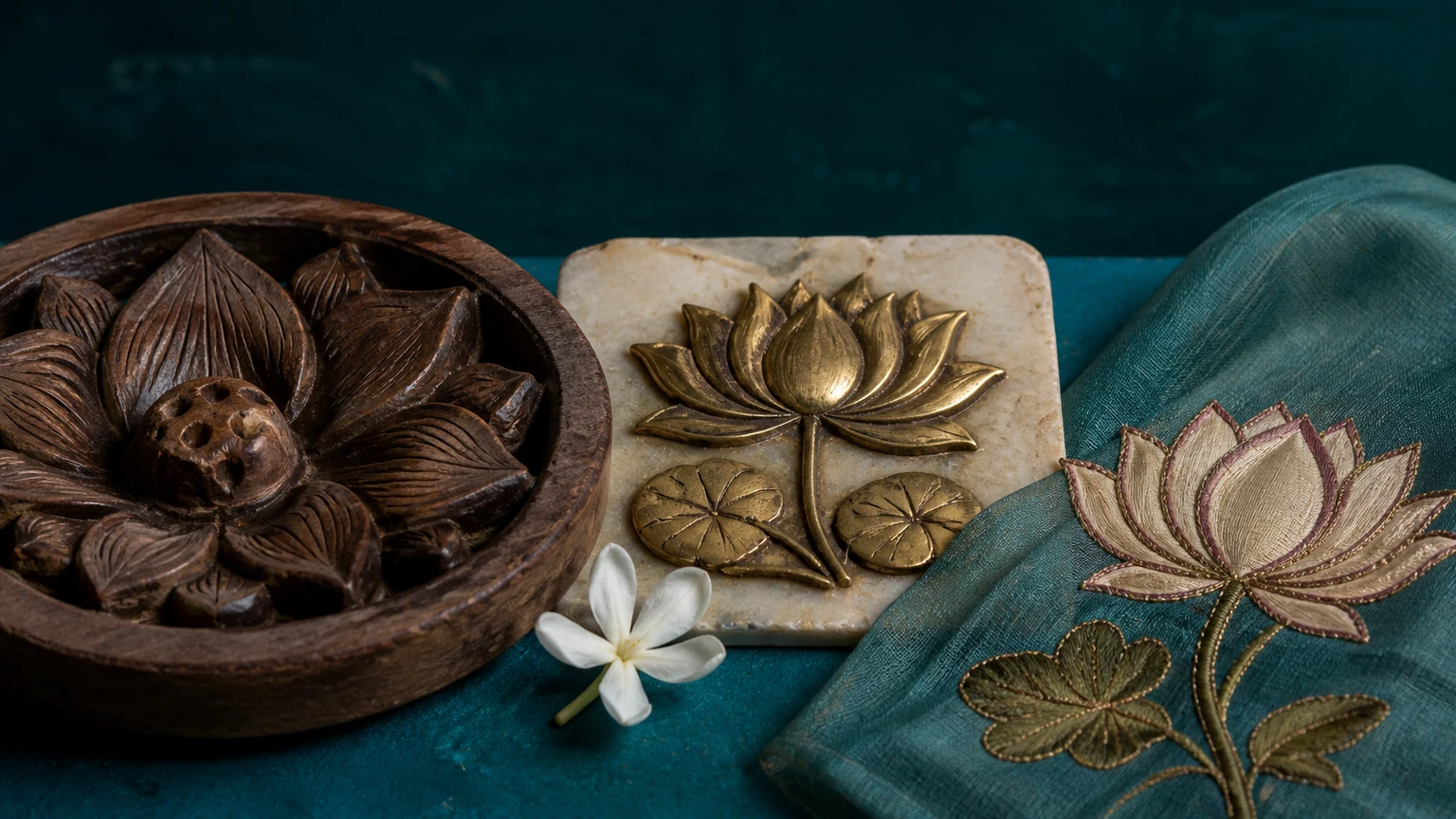
Craft practice may reduce a flower to petals, a radial rosette, or a silhouette. One petal is not enough to distinguish lotus from another floral ornament. Use the overall design, the maker's description, and cultural review. If the attribution is absent, “floral motif” is more accurate than attaching an unsupported sacred story to the object.
| Question for the object | What can be checked | What not to infer |
|---|---|---|
| What is depicted? | Bud, blossom, rosette, or pedestal | Automatic religious status |
| Where is it placed? | In a hand, under a figure, on an edge, or alone | One meaning for every position |
| What is the context? | Date, region, tradition, maker, and museum record | A school or date from silhouette alone |
| How was it made? | Material, process, wear, and later repair | Origin or age from appearance |
| What does the seller claim? | A specific attribution and its source | Purity, luck, protection, or transformation |
How to describe a lotus in jewelry or a crafted object
A useful listing separates three layers. The physical layer names metal, wood, or textile, dimensions, technique, and petal form. The documentary layer records who identified the motif, what the maker said, and which provenance records exist. The interpretive layer explains what the motif means in a named tradition. When the documentary bridge is missing, interpretation should not be presented as an item-specific fact.
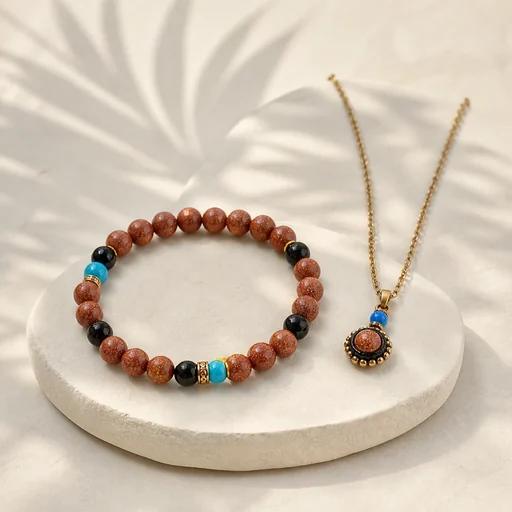
Product photography should show the actual item whenever the page offers a purchasable object. A general editorial illustration may introduce the topic but cannot prove the material, handwork, or origin of an item for sale. Do not splice a museum object into a listing or call a stylization a copy without supporting records. Museum examples are comparanda for careful reading, not borrowed provenance.
When giving a lotus object, ask whether the recipient sees the motif as religious and welcomes it. People bring different associations to the same flower, and respect does not require assigning a belief to them. A concise factual card about material and documented design context is more considerate than a promise of luck, purification, or inner change.
Editorial publication benefits from two distinct reviews. An art historian or curator can assess attribution and material facts; an informed cultural reviewer can evaluate tone and tradition-specific generalizations. One reviewer never speaks for every community. With consent, record the role, date, and scope of review so readers can understand what was actually checked.
- Describe visible form and placement before interpreting the motif.
- Verify date, region, material, and attribution against a primary record.
- Name the tradition and source behind each specific meaning.
- Separate actual product photography from editorial illustration.
- Remove promises of purification, luck, protection, or guaranteed transformation.
Questions and answers
- Does the lotus mean the same thing in Hinduism and Buddhism?
- No. Even within one religion, interpretation depends on the work, text, deity, school, and community. Related themes do not erase those distinctions.
- How can I tell whether a jewelry motif is truly a lotus?
- Compare the complete silhouette with the maker's description or design record. Without attribution, the neutral phrase “floral motif” is more accurate than an invented sacred identity.
- Can someone wear a lotus outside a religious practice?
- No single rule represents every community. Learn the context of the particular design, avoid claiming an identity that is not yours, and consider the setting in which it will be worn.
- Is a lotus object an appropriate gift?
- Yes, when the recipient welcomes the motif. Share factual material and design information, and leave out claims that it will bring luck, purification, protection, or transformation.
See current options and actual product photos in the Narayana Shop pendants collection. For a specific piece, verify its material, dimensions, and motif description in the individual listing.
Continue reading
Sources and further reading
- The Metropolitan Museum of Art — Two Lotuses from the Bharhut Stupa.
- The Metropolitan Museum of Art — The Art of South and Southeast Asia: A Resource for Educators.
- British Museum — bronze lotus mandala collection record.
This article separates documented features, attributed traditional interpretation, and personal meaning. It promises no medical, energetic, protective, or spiritual result.