



One-, Two-, and Three-Row Kanthi Malas: Construction, Length, and Fit
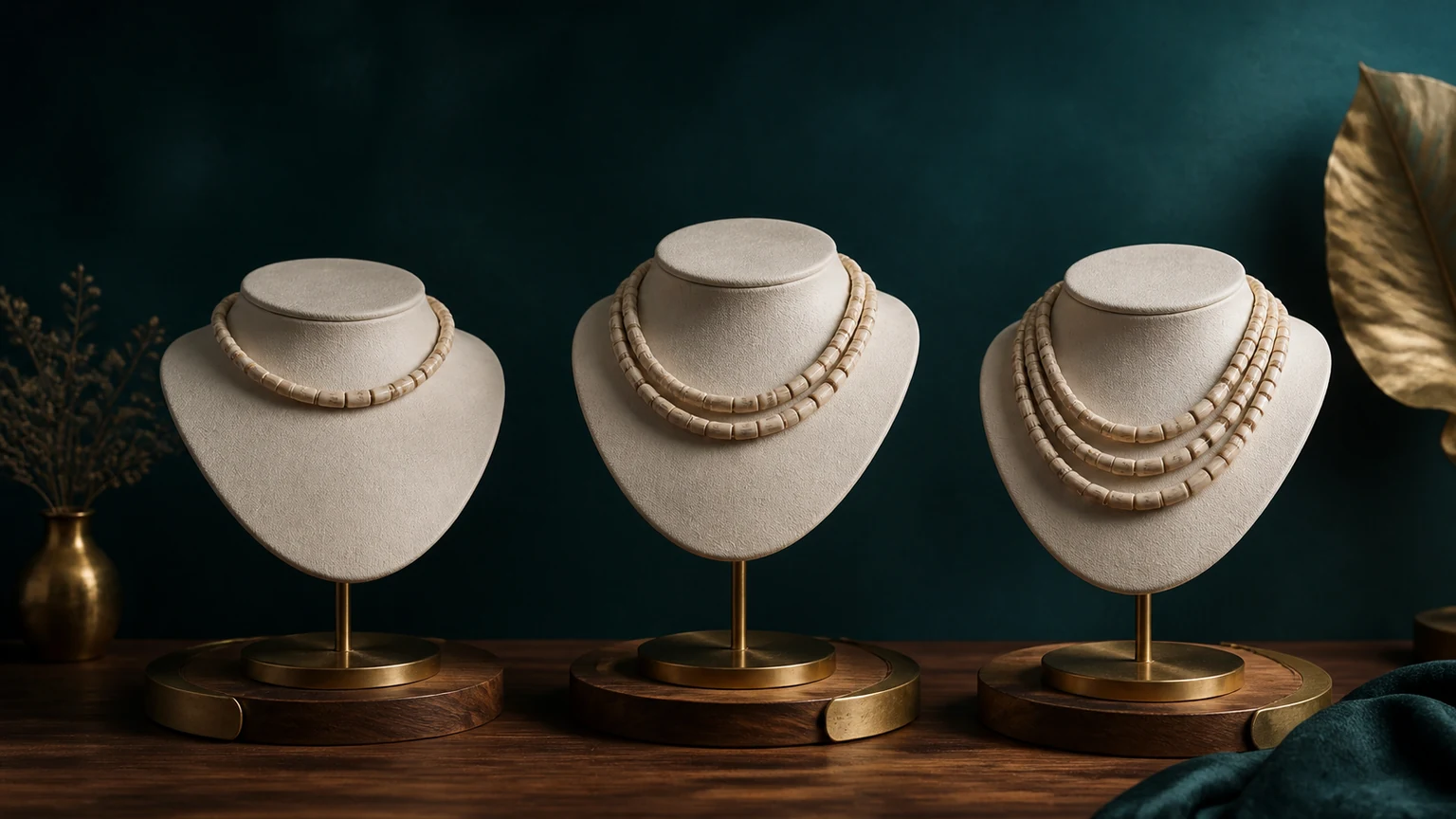
Choose a one-, two-, or three-row kanthi mala by its actual construction, the length of every row, and how it fits the individual neck. Row count tells you how many strands form the piece; it does not automatically reveal bead size, ritual status, comfort, or durability.
How row construction changes length and fit
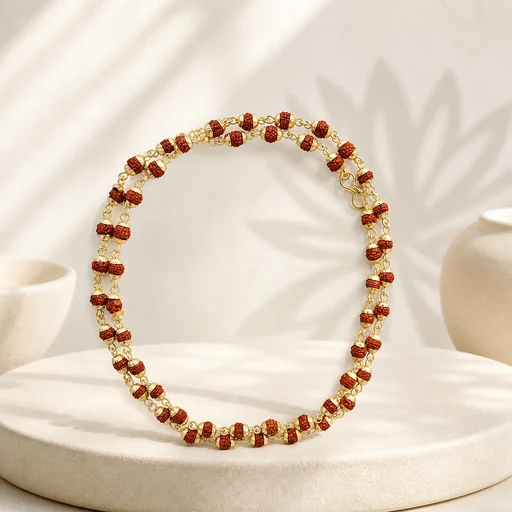
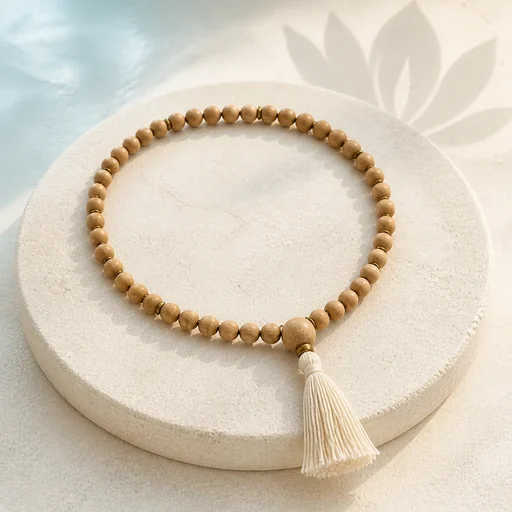
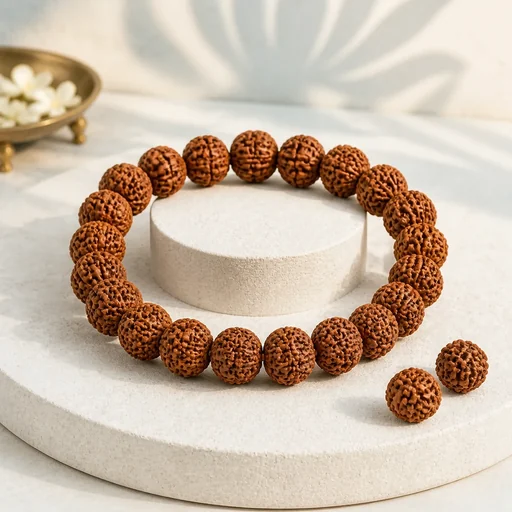
A one-row kanthi mala forms a single loop and is usually easiest to understand in a photograph. Even then, “40 cm long” is ambiguous: a seller might mean the full circumference, the folded length, the bare cord, or the outside contour of large beads. A useful listing names the measurement method and shows the relaxed piece beside a scale.
Two-row construction may use equal or graduated loops. Equal loops can overlap, while a deliberate drop allows parallel placement. The junction—one shared knot, connector, closure, or separate loops—affects flexibility and repair. A frontal image may conceal it, so a reverse view or diagram matters.
A third row adds another contact line and more opportunities for strands to cross. It is not automatically heavier or tighter. Small beads on relaxed loops can occupy less space than one row of large beads. Still, total thickness and independent strand movement deserve attention, especially when the piece has no closure and must pass over the head.
Neck circumference is not the only variable. Fit changes with head movement, clothing collars, and other jewelry. A close-fitting piece should still allow comfortable breathing and rotation. A lower fit should be checked for flipped or collapsed rows.
Material claims need equal care. NCBI confirms the taxonomic identity of Ocimum tenuiflorum, while a Vaishnava source demonstrates Tulsi terminology for neck and chanting beads, but those general facts do not identify a particular item. The listing should be based on maker or supplier records, and imagery must show the actual piece or be clearly labeled as representative.
A practical fit check
When an in-person fitting is available, handle the piece with clean, dry hands for several minutes without abrupt movement. Check the resting position, head turn, forward tilt, and contact with a collar. For online ordering, model the stated inside length with a soft tape or cord without tightening it around the neck. This approximates placement, not the finished bead thickness.
| Format | Check | Ask the seller |
|---|---|---|
| One row | Measurement method, bead shape, knot, or closure | “Is this the finished inside circumference or the strand length?” |
| Two rows | Both loop lengths, drop, shared junction, twisting | “What is the length of each row?” |
| Three rows | Total thickness, movement, and connection method | “Is there a reverse view showing every junction?” |
| Any format | Bead-size range, cord condition, exact-item imagery | “Do these measurements belong to the photographed piece?” |
- Model a comfortable loop with a soft tape while preserving free movement.
- Confirm the seller’s measurement method before comparing numbers.
- Record every row length, not only the longest outline.
- Inspect the junction, core material, repair access, and any sharp edge.
- Compare the received object with its listing before extended wear.
Do not select size from a model photograph unless both model and product measurements are provided. Perspective, clothing, and retouching alter the impression. A measurement diagram and full construction view are stronger evidence.
When comparing price, look beyond row count. Hole finish, even tension, knot protection, handwork, and current condition all matter. At the same time, Narayana Shop should not label a piece handmade or assign a place of origin unless that fact is verified for the item.
Questions and answers
- Is a three-row kanthi mala always tighter?
- No. Fit depends on every loop length, bead size, and the junction. Measurements matter more than row count alone.
- How should a loop without a closure be measured?
- Lay it relaxed without stretching the core and record the full inside circumference or twice the folded length, clearly stating the method.
- Can a multi-row mala be shortened?
- Sometimes, but changing one loop alters the drop and tension of the others. Ask a skilled maker and preserve the original layout first.
- Which format is religiously correct?
- That depends on community and instruction. A store can describe an object but should not replace lineage-specific guidance.
See current options and actual product photos in the Narayana Shop kanthi mala collection. Check each row length and measurement method in the individual listing.
Continue reading
Sources and further reading
- NCBI Taxonomy — Ocimum tenuiflorum taxonomic record.
- Bhaktivedanta Vedabase — an institutional example distinguishing kaṇṭhī-mālā and japa-mālā.
- U.S. National Park Service — Curatorial Care of Textile Objects.
Fit is individual, and ritual guidance varies by community. Do not alter a multi-row construction without understanding its junctions.