

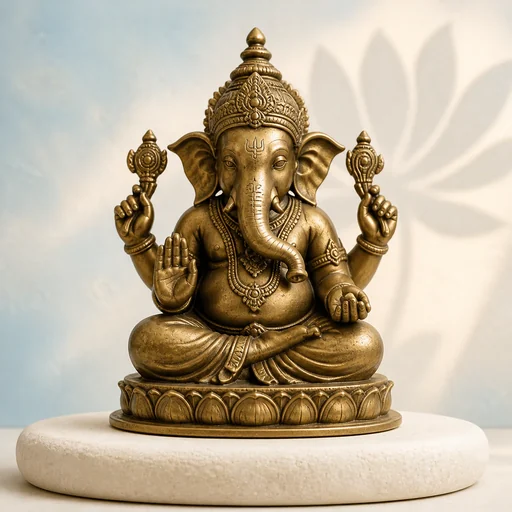
How to Care for Wood, Stone, and Metal Murti: A Safe Practical Guide
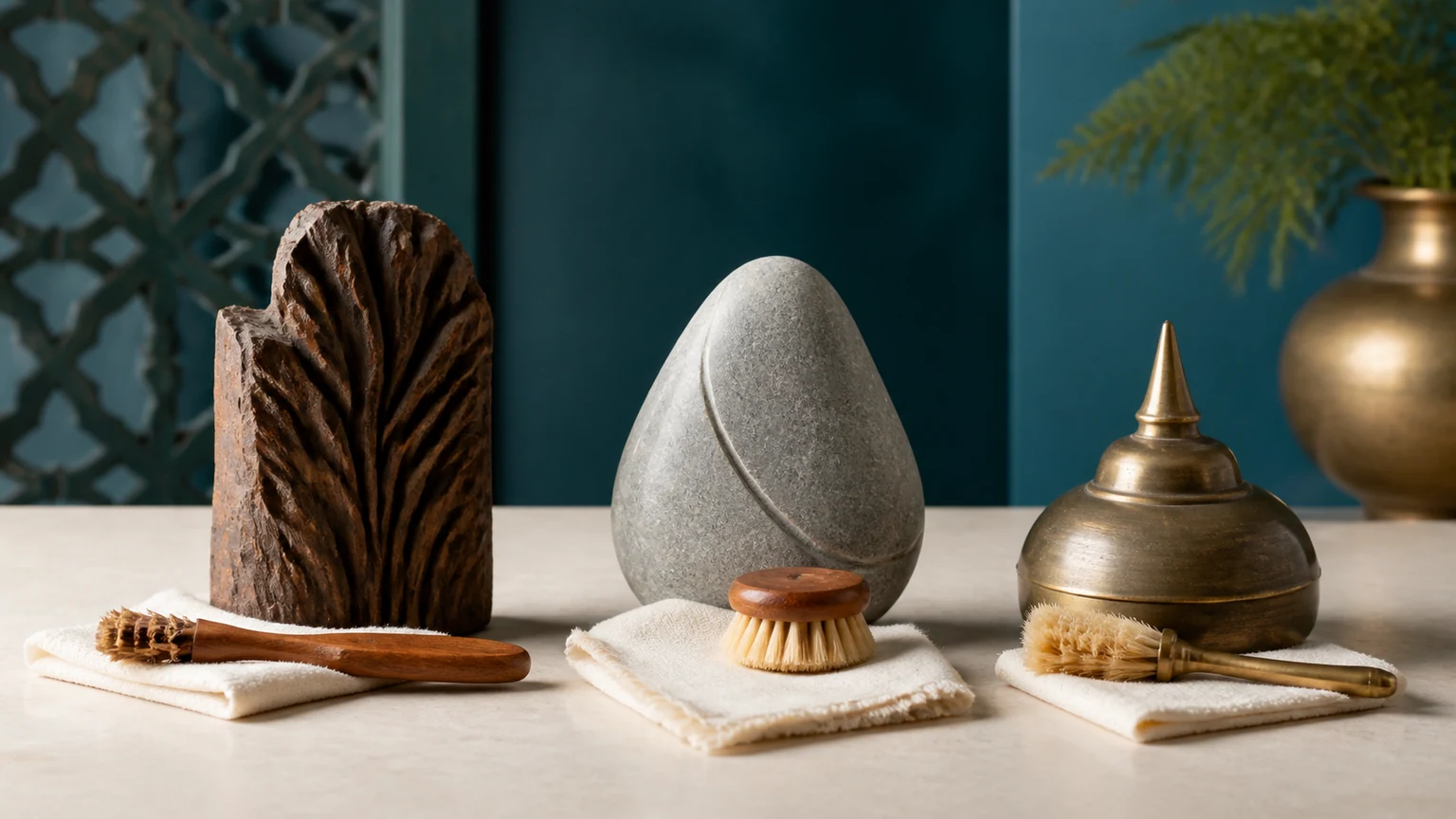
Murti care cannot be reduced to one damp cloth. Wood may carry paint or gilding, stone may be porous or cracked, and metal may be lacquered, plated, or intentionally patinated. First record the material, finish, joins, and condition; then choose the least invasive action. Ritual practices are a separate question. They vary across communities and may use water, oils, powders, or offerings that are incompatible with a fragile finish, so discuss religious practice and material care with the appropriate people rather than assuming one universal method.
Material and finish come first
Record dimensions, weight, substrate, and every coating exactly as supplied by the maker or seller. Examine the object under raking light for cracks, loose elements, lifting paint, powdery corrosion, white salts, and old repairs. Photograph all sides and close views of vulnerable areas. This condition record is not paperwork for its own sake: it gives you a baseline for deciding whether dust was removed safely or whether the surface itself changed.
Wood moves as surrounding humidity changes, while paint, gilding, and lacquer may respond differently from the substrate. Canadian Conservation Institute guidance emphasizes a stable environment and cautions against unnecessary polish. Do not apply water, wax, or oil to painted, gilded, or coated wood without item-specific instructions. Oil can darken bare wood, hold dust, travel into paint, and complicate later conservation. A soft brush and stable display location may be the entire routine required.
Stone does not automatically mean washable. Porous stone, friable carving, paint, wax, filled cracks, and salt deposits each create a different risk. Acid, vinegar, bleach, and abrasive powder can permanently etch or discolor a surface. Until the stone and coating are positively identified, limit intervention to gentle removal of loose dust from a stable surface. White deposits may be salts, residue, or repair material and should be diagnosed before removal.
A metal murti may be cast from an alloy, plated, lacquered, assembled with solder, or given an intentional dark patina. Metal polish removes material and can erase a designed finish or expose a different metal underneath. Green, white, or orange powder, pitting, moisture trapped in a recess, and lifting lacquer are reasons to stop. Move the object away from the moisture source, support it safely, and consult a qualified conservator rather than scrubbing the symptom.
| Material | Low-risk starting point | Stop signal |
|---|---|---|
| Wood | Condition photos, stable support, soft dry brush | Flaking paint, lifting gilding, loose join, or powdering |
| Stone | Identify stone, coating, repairs, and cracks | Salts, friable surface, paint, or unstable fill |
| Metal | Dry soft brush, separate cloth, dry environment | Powdery corrosion, pitting, or lifting coating |
| Mixed object | Plan around the most vulnerable component | Unknown adhesive, textile, gemstone, gilding, or inlay |
Minimal intervention and respect for practice
Prepare a clean work area with a soft, light-colored pad. Remove rings and watches. Clean, dry hands often provide the best control; suitable gloves can be useful for some metals. Never lift the figure by an arm, attribute, crown, or other projection. Support the base with one hand and stabilize the body with the other. Large or heavy objects should be moved by two people using a planned route and a prepared destination.
Remove loose dust with a small, soft brush, working from top to bottom without forcing particles into recesses. If a vacuum is appropriate, use low suction through a screen and never touch the object with the nozzle. Stop immediately if pigment, gilding, or material crumbs appear on the brush. A cloth should barely touch a stable broad area; rubbing a detailed relief can burnish high points while leaving dust in the hollows.
Any wet or chemical treatment needs maker approval and a small inconspicuous test. Put the minimum liquid on the tool rather than the object and prevent it from entering joins. Let the test dry fully, then compare it with the original photograph for color, gloss, tackiness, or paint transfer. One successful patch does not prove that a different material or finish will respond the same way. Keep separate tools for different metals and surfaces.
Some household traditions bathe, anoint, decorate, or apply powders to a murti. That is religious practice, not a universal conservation protocol. Water, oil, dairy products, pigments, smoke, and flowers can alter vulnerable materials. Ask a knowledgeable person in your own community about the practice and the maker or conservator about compatibility. If the two needs conflict, explore a durable practice object or a non-contact arrangement rather than imposing one answer on every owner.
- Photograph the murti and record material, finish, joins, and damage.
- Prepare a padded support and remove jewelry from your hands.
- Begin with a soft dry brush and minimal pressure.
- Test any approved damp method on a small inconspicuous area.
- Stop at flaking, corrosion, salts, loose parts, or unexpected color transfer.
Questions and answers
- Can I wipe a murti with a damp cloth?
- Only when the substrate and finish are positively identified and the maker permits it. Begin with a small test and stop at color, gloss, or texture change.
- Should a dark metal surface be polished?
- Not until you know whether it is dirt, intentional patina, plating, or coating. Polish removes material and can permanently alter the design.
- What should I do with white deposits on stone?
- Do not automatically wash them away. They may be salts, practice residue, or restoration material, so a specialist should identify the cause first.
- Must every murti be bathed?
- No universal rule applies to every tradition and material. Consult your community about practice and the maker or conservator about physical compatibility.
Choose by documented material, finish, and dimensions in the Narayana Shop deities and statues collection. Keep the care directions for the specific object you select.
Continue reading
Sources and further reading
- Canadian Conservation Institute — Basic care of furniture and objects made of wood.
- Canadian Conservation Institute — Guidelines for metal collections.
- US National Park Service — Museum Handbook, Part I.
This is general preventive-care guidance, not a diagnosis or mandatory ritual instruction. A fragile, valuable, or actively deteriorating object requires a qualified conservator.