




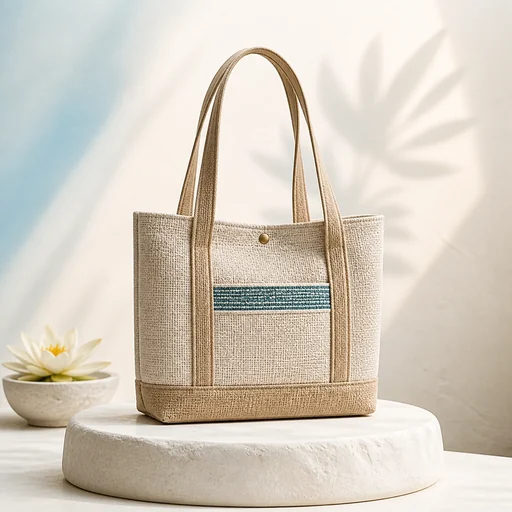
Hemp Fabric for Bags: Weight, Weave, Lining, and Hardware
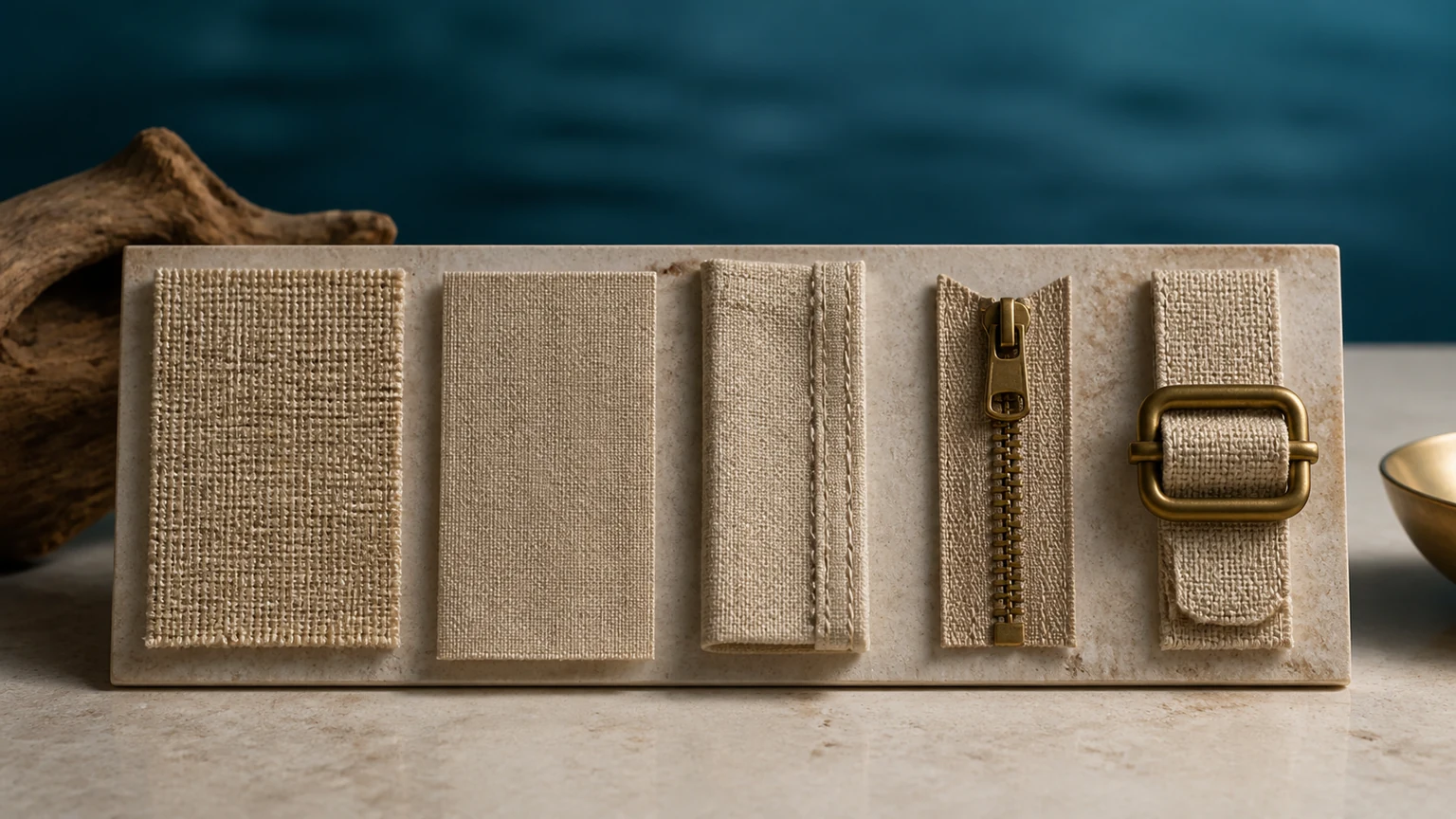
Hemp fabric for bags is not one universal material. An outer shell may blend hemp with cotton or another fiber, while lining, thread, zipper tape, webbing, and reinforcement have their own compositions. Start with the supplier's fiber percentages for the actual lot; then examine a weave macro, fabric mass per unit area, and construction of the specific bag. Broad words such as eco and natural do not replace those records, and the presence of hemp alone does not establish an environmental superlative or unlimited durability.
Composition, fabric mass, and weave are separate fields
A composition record should list every fiber and percentage, adding to 100 percent. Confirm whether it applies to the outer fabric, lining, strap, or entire item. A bag cannot be called 100 percent hemp when the evidence documents only a blended shell, and texture, slubs, or beige color cannot identify fiber visually. Preserve supplier and lot information so a later fabric change does not inherit an old description.
Weight is often used loosely. For textiles, the clearer term is mass per unit area, reported in grams per square meter. ISO 3801 and ASTM D3776/D3776M describe established approaches. On a finished bag, rely on the textile supplier's tested lot because cutting out a specimen is destructive; weigh the complete bag separately. Finished weight includes lining, thread, interfacing, zippers, and hardware and cannot substitute for fabric mass.
Weave describes how warp and weft interlace, not fiber composition. Plain or twill structures, dense canvas-like cloth, and open cloth can all be made from different fiber blends. A sharp, evenly lit macro should reveal warp and weft, slubs, fuzz, pilling, distortion, and pulls. Terms such as canvas do not prove hemp content, origin, strength, or a specific weight.
Two fabrics with equal mass per area can bend, abrade, and hold shape differently because yarn, weave, finish, and construction differ. That is why one GSM figure is not a durability score. Abrasion, tensile performance, seam performance, and finished-product use each require their own methods. Without those tests, avoid indestructible, lifetime, or load-bearing promises.
| Field | Evidence | Do not infer |
|---|---|---|
| Fiber composition | Lot percentages for every fiber and layer | 100% hemp from color or texture |
| Fabric mass | Grams per square meter under a named method | Finished bag weight or durability guarantee |
| Weave | Macro photo and textile lot record | Fiber, strength, or origin |
| Construction | Lining, seams, reinforcement, zipper, and hardware | Load rating without a finished-product test |
Lining, seams, and hardware make the bag a system
Turn out the lining as far as the design safely permits and show it in macro photographs. Record composition, color, weave or knit, coating, number of layers, and attachment points. A lining may reduce visible snagging and isolate contents, but it does not make the shell waterproof. Water-resistance claims need a separate method and actual result.
Inspect stitches for straightness, skips, loops, loose ends, and tension. Focus on corners, strap entries, zipper ends, and transitions between thick and thin layers. Record seam type, allowance, and reinforcement when known. Two parallel rows may be reassuring construction evidence, but they do not establish a maximum load unless the complete product has been tested under a disclosed protocol.
Open and close the zipper slowly several times without pulling on fabric. Inspect tape, teeth, slider, stops, and stitching. For buckles and hooks, record material, rounded edges, play, closure, and attachment. A brass-colored finish does not prove brass. Exact hardware material must come from supplier documentation, and coating wear should be shown rather than retouched away.
Link the finished bag to the lots of shell, lining, thread, and hardware and photograph that actual item. Record inspection date and stock status. When material or supplier changes, update composition, macros, and description together. This is more useful than repeating sustainability superlatives: it lets a buyer compare what is present and what remains unknown.
- Verify fiber percentages for each textile layer.
- Keep fabric mass per area separate from finished bag weight.
- Capture macro photos of weave, lining, seams, zipper, and attachments.
- Support thread and hardware materials with supplier records.
- Remove unsupported 100% hemp, indestructible, and environmental superlatives.
Questions and answers
- Is a hemp bag always 100 percent hemp?
- No. The shell may be a blend, and lining, thread, strap, and hardware use other materials. Ask for layer-specific percentages.
- Does higher GSM always mean stronger fabric?
- No. Yarn, weave, finish, abrasion, and construction matter too. Strength requires its own test.
- How can weave be inspected online?
- Use a sharp, evenly lit macro that shows warp and weft, then compare it with the supplier's textile description.
- Can a hemp bag be called the most sustainable choice?
- Not without comparative life-cycle evidence for the entire product. State verified composition and avoid superlatives.
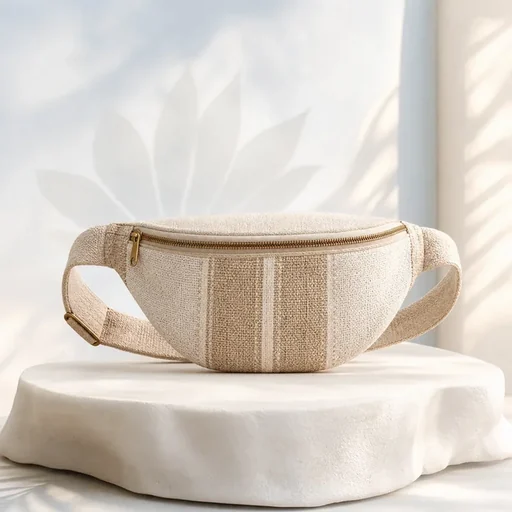
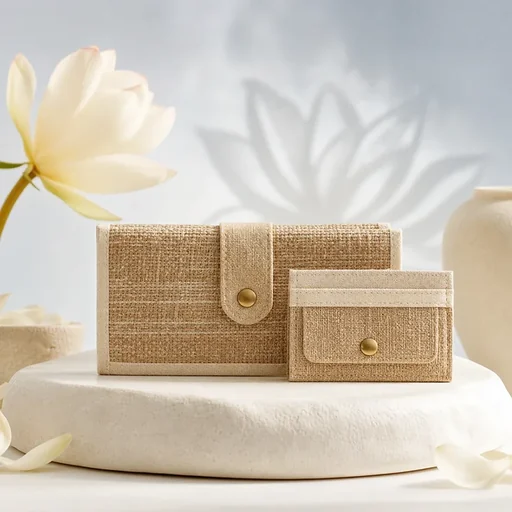
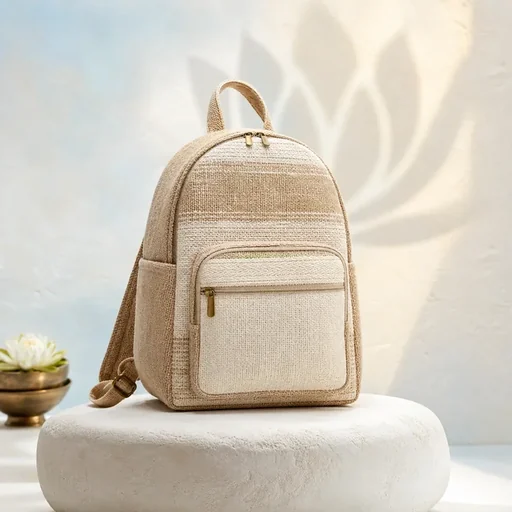
Compare actual photos, composition, dimensions, lining, and hardware in the Narayana Shop eco backpacks and hemp bags collection. Check fiber percentages in the individual listing.
Continue reading
Sources and further reading
- ISO 3801 — determination of mass per unit length and mass per unit area.
- ASTM D3776/D3776M — mass per unit area of fabric.
- Textile Exchange — Growing Hemp for the Future.
This article does not certify the composition, load rating, or environmental superiority of any item. Those claims require lot-specific records and disclosed methods.