









How to Choose a Hemp Backpack: Capacity, Straps, Seams, and Laptop Fit
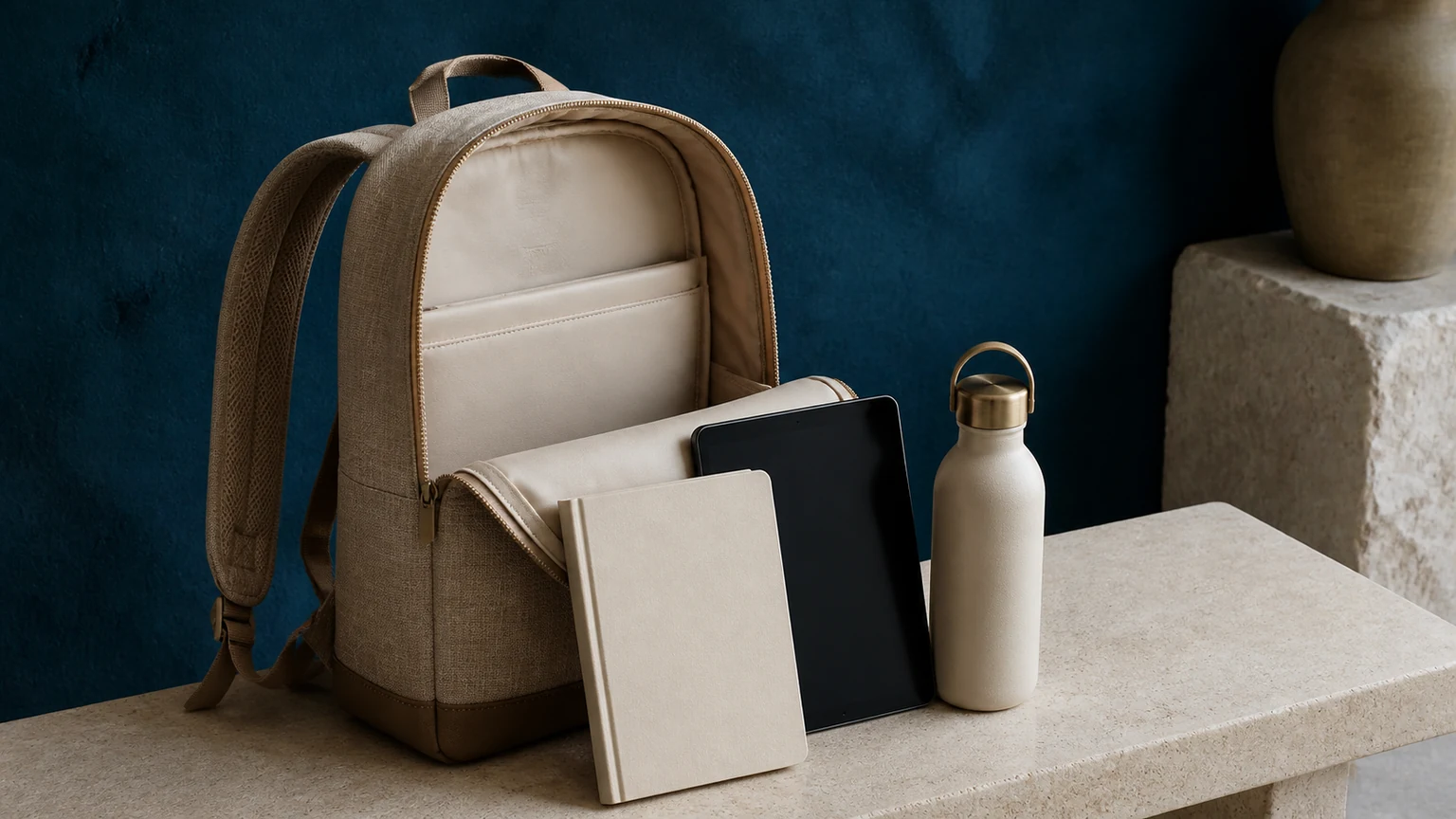
How do you choose a Hemp backpack online? Start with a protocol, not a liter figure or a fits 13-inch label. Record exterior and usable interior dimensions, opening width and height, capacity under a named method, minimum and maximum strap length, strap width and padding, seams, and closures. Measure a laptop as a three-dimensional object in its usual case. Unless the complete backpack has passed a disclosed finished-product test, the shop should not invent a maximum load from fabric thickness or stitch count.
Capacity and internal dimensions need a method
Measure exterior height, width, and depth on an empty bag in its natural form without stretching fabric. Include protruding pockets and the top handle separately. Inside, measure the main compartment, laptop sleeve, pocket openings, and narrow points. Show each figure in an actual-item ruler photograph rather than a generic model diagram. Clear dimensions are more useful for rigid objects than a single overall silhouette.
Capacity in liters depends on the method. Multiplying three maximum exterior dimensions calculates a bounding box that includes air around curved corners and ignores pocket geometry. ASTM F2153 provides a standardized backpack-capacity method. A listing should disclose the method, sample count, pockets included, and closure rule. Without that context, liter figures from different sellers are not necessarily comparable.
Measure the laptop body and its everyday case across width, height, and thickness. Screen diagonal is not a chassis dimension. The sleeve must exceed the cased device in all three axes, and its opening and zipper path must clear the widest point without scraping corners. Add realistic margin for seams and lining rather than forcing a device into a nominally equal pocket.
Official dimensions for a named device, such as Apple's MacBook Air 13-inch specifications, can serve as one transparent reference. They do not represent every laptop marketed with the same screen size. For staged fit photos, use a clearly disclosed inert size dummy rather than an employee's live device. Buyers should compare their exact model and case, not the reference name alone.
| Check | Required data | Common error |
|---|---|---|
| Capacity | Liters, method, included pockets, closure rule, and samples | Multiplying maximum exterior dimensions |
| Laptop | Cased device in three axes plus sleeve and opening | Comparing screen diagonal only |
| Straps | Minimum, maximum, width, padding, and attachments | Promising universal fit |
| Load | Finished-product protocol and failure criteria | Printing kilograms from seam appearance |
Straps, seams, and an honest fit check
Measure each strap from attachment seam to attachment seam along its centerline at shortest and longest settings. Record usable padded width, thickness, padding material, underside texture, adjustment hardware, and free-tail length. Buyers can compare that range with a familiar backpack. The word adjustable does not reveal whether the range accommodates a particular torso or clothing layer.
Show macro photographs of upper and lower strap attachments, corners, base, handle, laptop sleeve, and zipper ends. Inspect for skipped stitches, loops, loose ends, distortion, and narrow seam allowances. ISO 13935-2 illustrates that seam rupture force is separately measurable. Visual inspection supports quality control but cannot replace a strength test or justify a maximum carry weight.
A fit demonstration may use consenting people with recorded height, torso circumference, clothing, and strap setting. Show the empty bag and the same light inert contents across examples; do not stage an undisclosed heavy load. Note where top and base sit, whether strap length remains, and whether hardware is accessible. This is a visual reference, not a medical ergonomic assessment or universal promise.
Record stock status and the date of all measurements. Handmade production can create small variation, so publish a measured range rather than assigning one sample's figures to every unit. If cut, fabric, or hardware changes, repeat dimensions, seam inspection, and photos. Current item-level evidence is what makes an online guide actionable.
- Photograph exterior and usable interior dimensions with a ruler.
- Publish capacity with the named method and pocket rule.
- Compare the cased laptop in three axes with sleeve and opening.
- Measure strap range and show attachment seams and hardware.
- Do not publish a maximum load without a finished-product protocol.
Questions and answers
- Can liters be calculated from three exterior dimensions?
- That gives a bounding-box volume, not useful capacity. Use a named backpack-capacity method for comparison.
- Will every 13-inch laptop fit?
- No. Screen diagonal does not define chassis size. Compare the cased device in three dimensions with the sleeve and opening.
- How can I tell whether straps are long enough?
- Compare minimum and maximum attachment-to-attachment lengths with a familiar backpack; adjustable alone is insufficient.
- How many kilograms can the backpack carry?
- No maximum should be stated without testing the complete product under a disclosed protocol. Seam appearance alone cannot answer it.
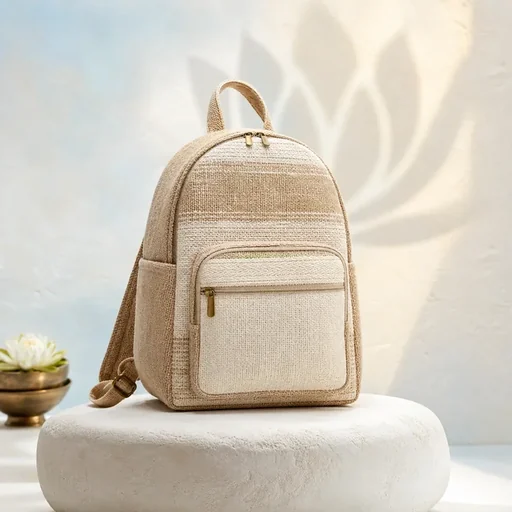
Compare actual dimensions, straps, pockets, and seam photos in the Narayana Shop backpacks collection. Match a laptop by its cased three-dimensional measurements.
Continue reading
Sources and further reading
- ASTM F2153 — standard test method for measurement of backpack capacity.
- ISO 13935-2:2026 — maximum force to seam rupture.
- National Institute of Standards and Technology — SI units for length.
- Apple — MacBook Air 13-inch technical specifications as a size reference.
Fit examples and device references are not universal guarantees. State a maximum load only after a disclosed finished-product test.