
Narayana Journal — Practice, Culture and Meaningful Living

Narayana Journal

Practical guides to meaningful objects and mindful living

Evidence-aware guides to rudraksha, tulsi, malas, natural materials, incense, puja objects, handmade craft, care, and responsible choice. Traditional meanings are presented as cultural context—not as medical advice or guaranteed results.
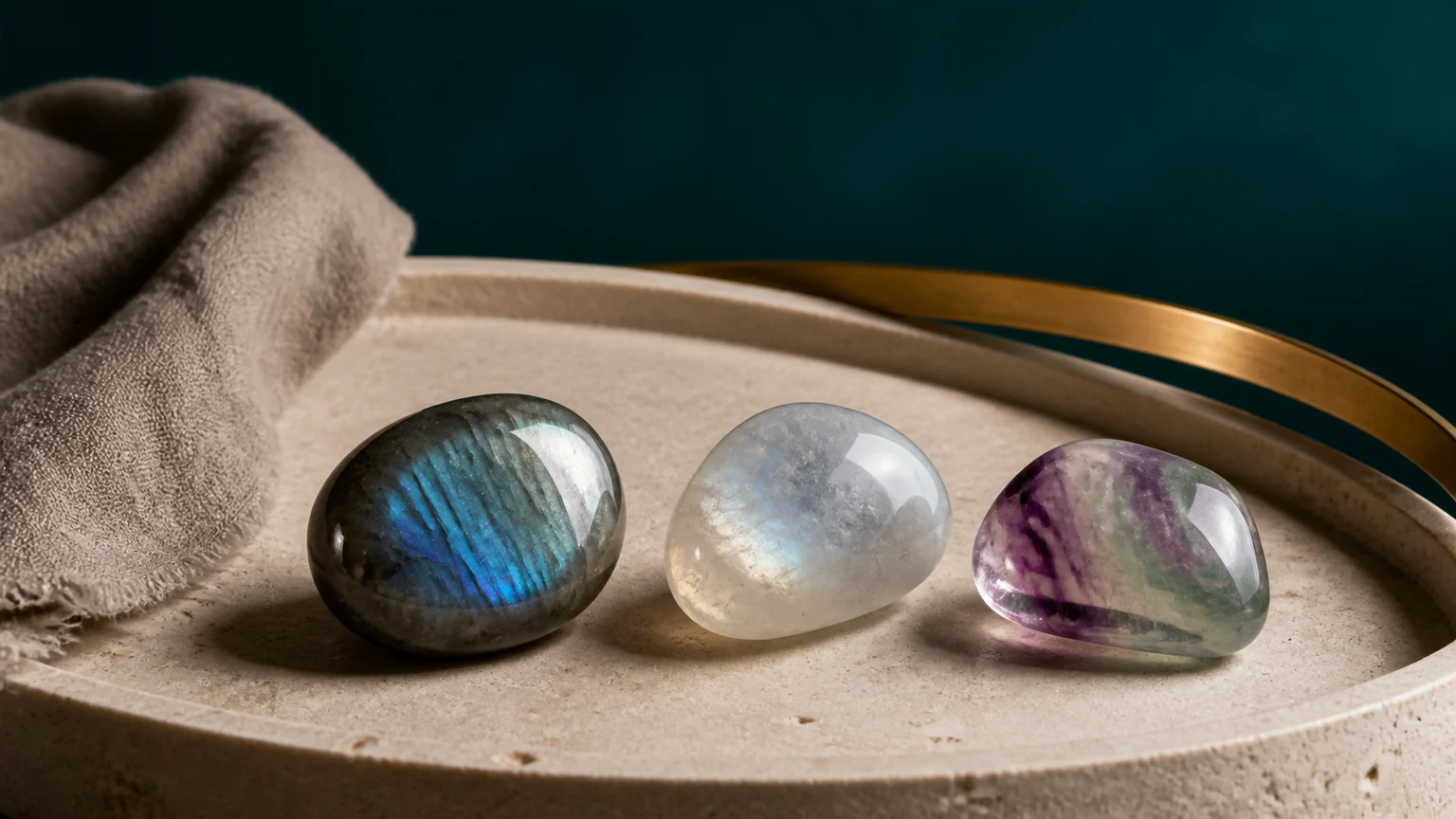
Labradorite, moonstone, and fluorite photographed at controlled light angles
Optical gems and care
Labradorite, Moonstone, and Fluorite: Texture, Light, and Care

Labradorite and moonstone reveal effects at certain light angles, while fluorite needs especially careful handling. Photography is not identification.
Narayana Journal / September 5, 2026
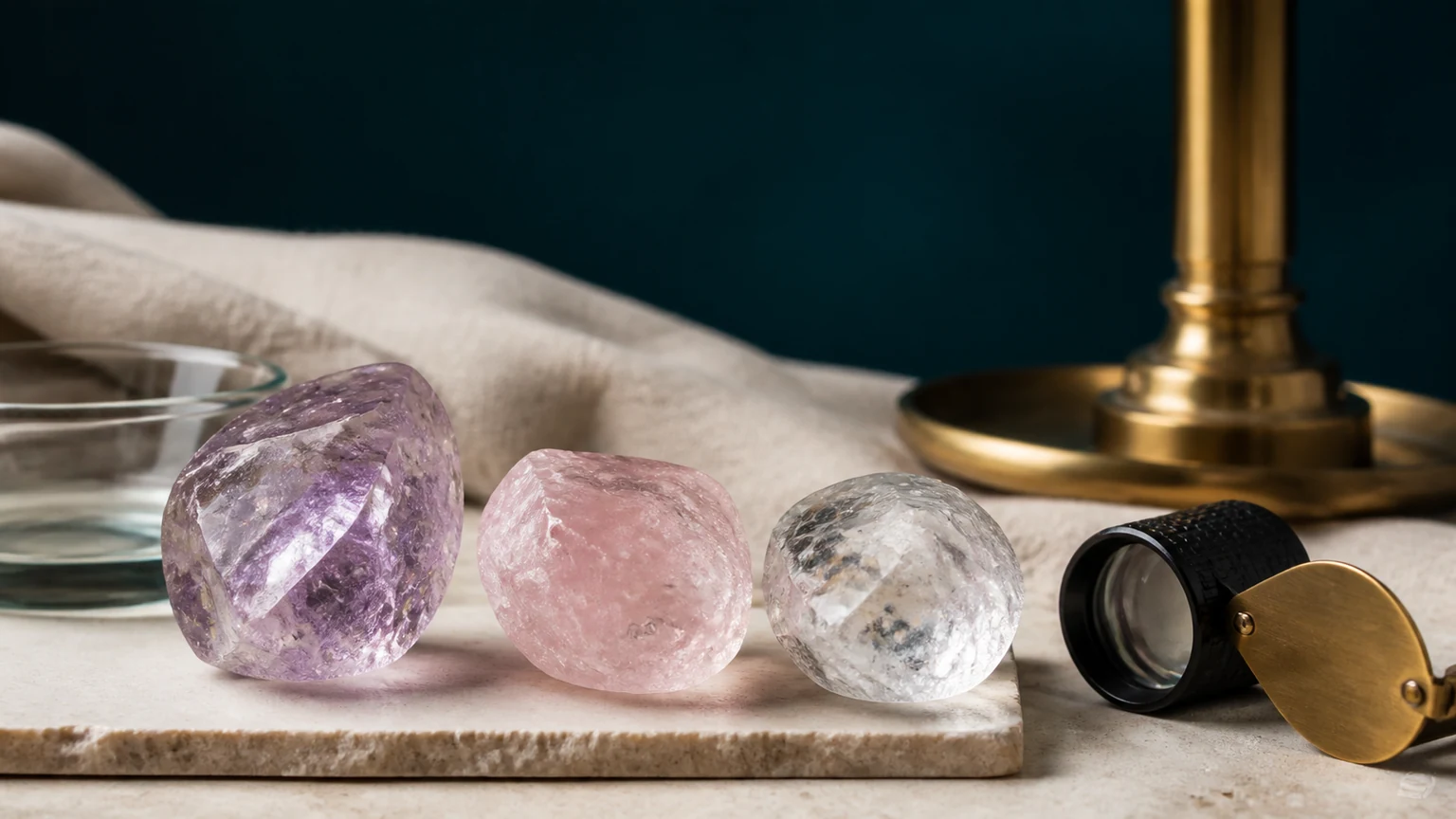
Amethyst, rose quartz, and clear quartz under neutral and transmitted light
Quartz and care
Amethyst, Rose Quartz, and Clear Quartz: Visual Clues and Gentle Care

These familiar materials belong to the quartz family but differ in color and transparency. Visual inspection helps; it is not a laboratory test.
Narayana Journal / September 5, 2026
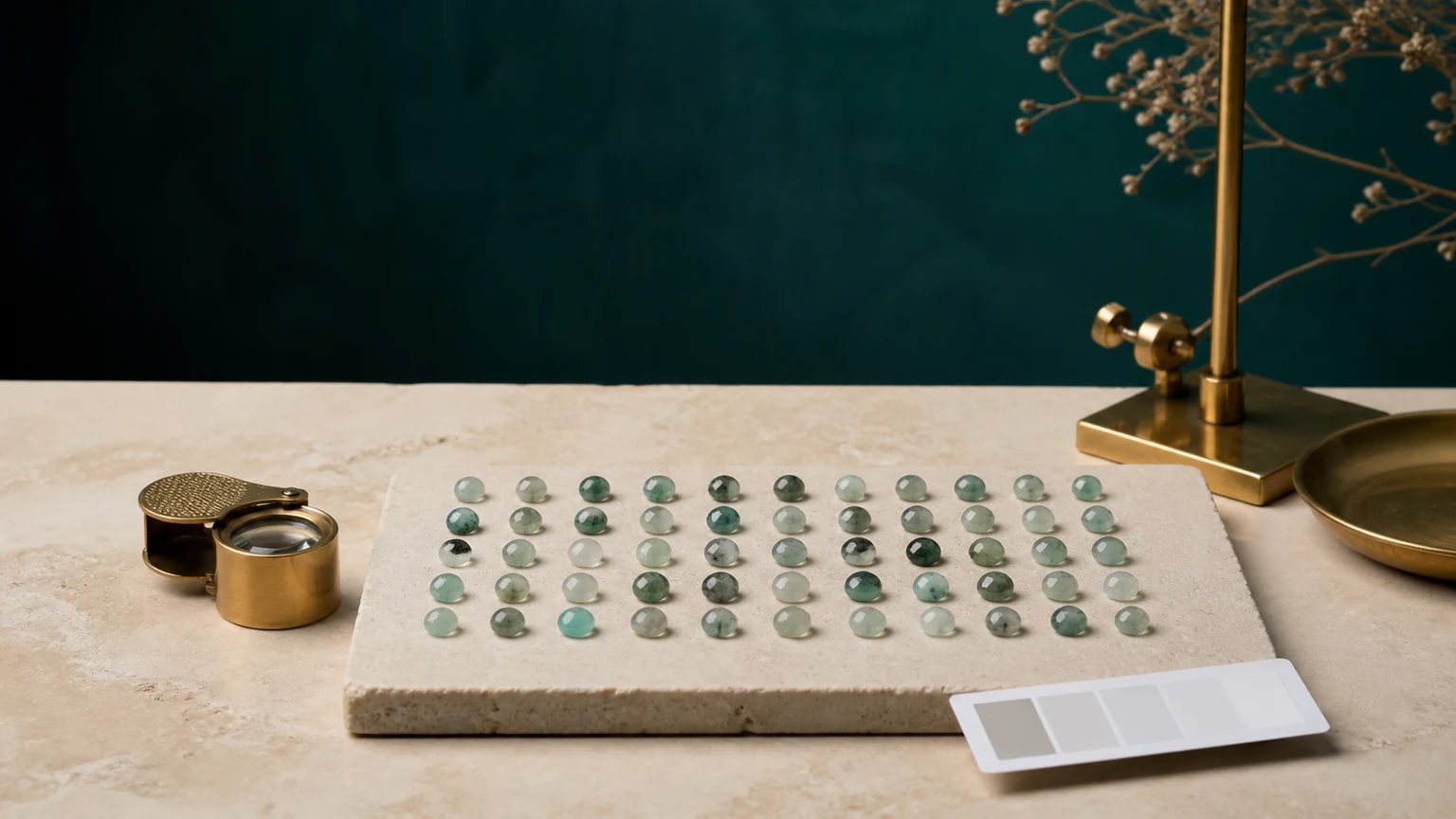
Same-type gemstone beads with visible inclusions and color variation
Gemstone variation
Why Natural Gemstones Never Look Identical: Inclusions, Color Variation, and Honest Photography

Variation in color and inclusions is expected in natural material, but it does not prove natural origin. Here is how to read actual-item images.
Narayana Journal / September 5, 2026
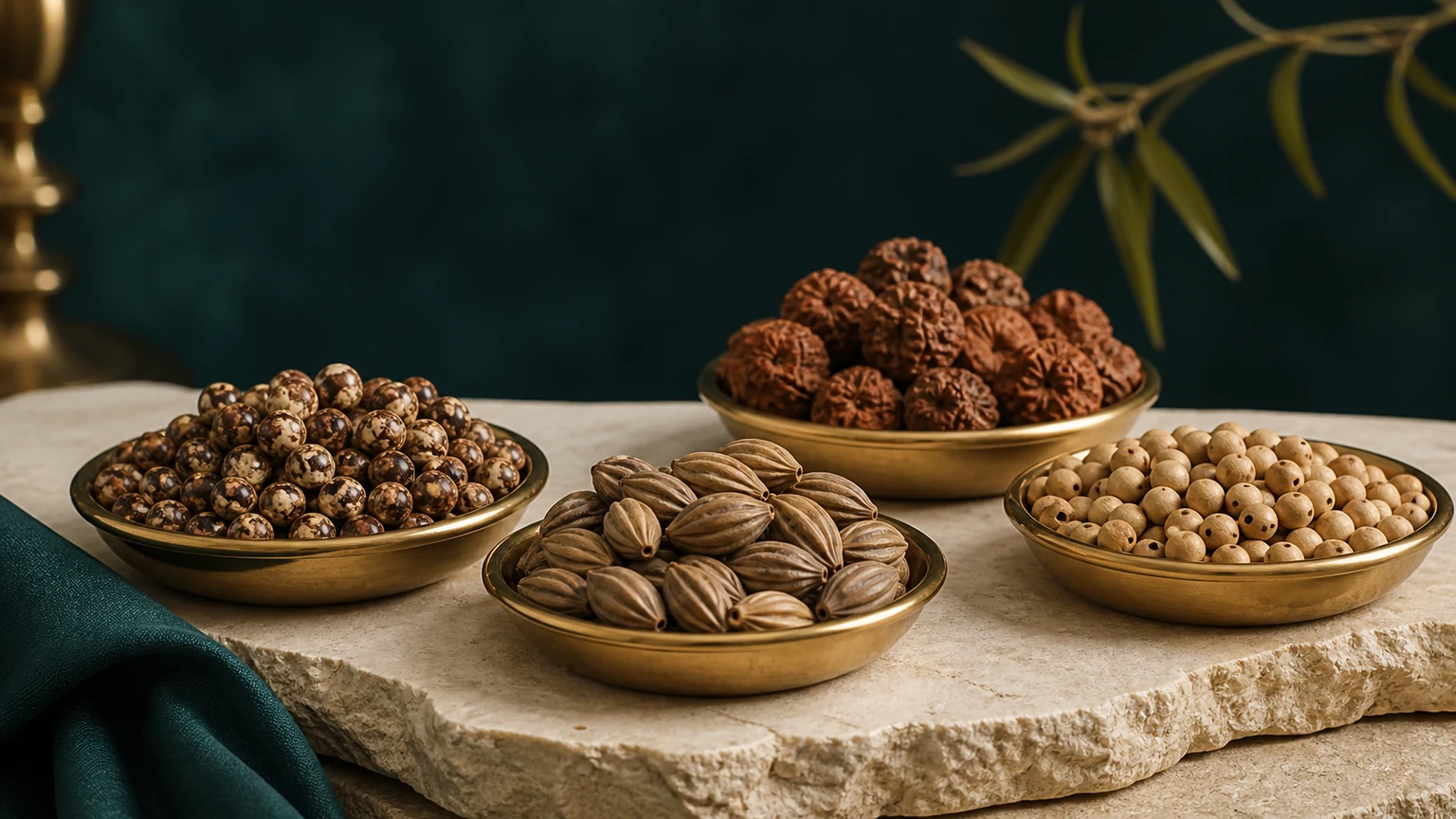
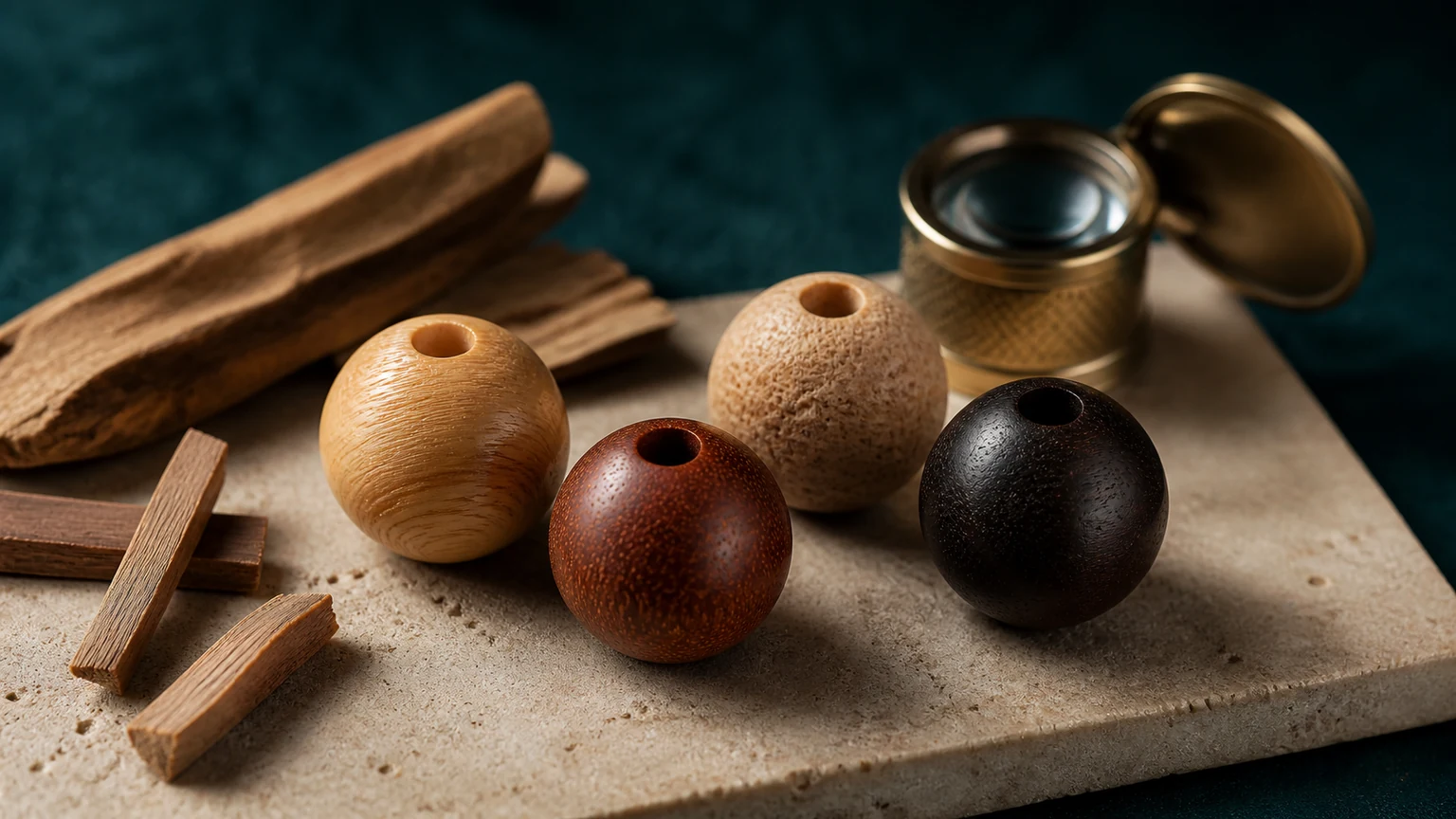
Macro comparison of documented bodhi, lotus, rudraksha, and tulsi bead materials
Organic materials
Bodhi, Lotus, Rudraksha, and Tulsi Seeds: Material, Texture, and Care

“Seed beads” is convenient catalog language but botanically imprecise. This guide separates bodhi, lotus, rudraksha, and tulsi by evidence.
Narayana Journal / September 5, 2026
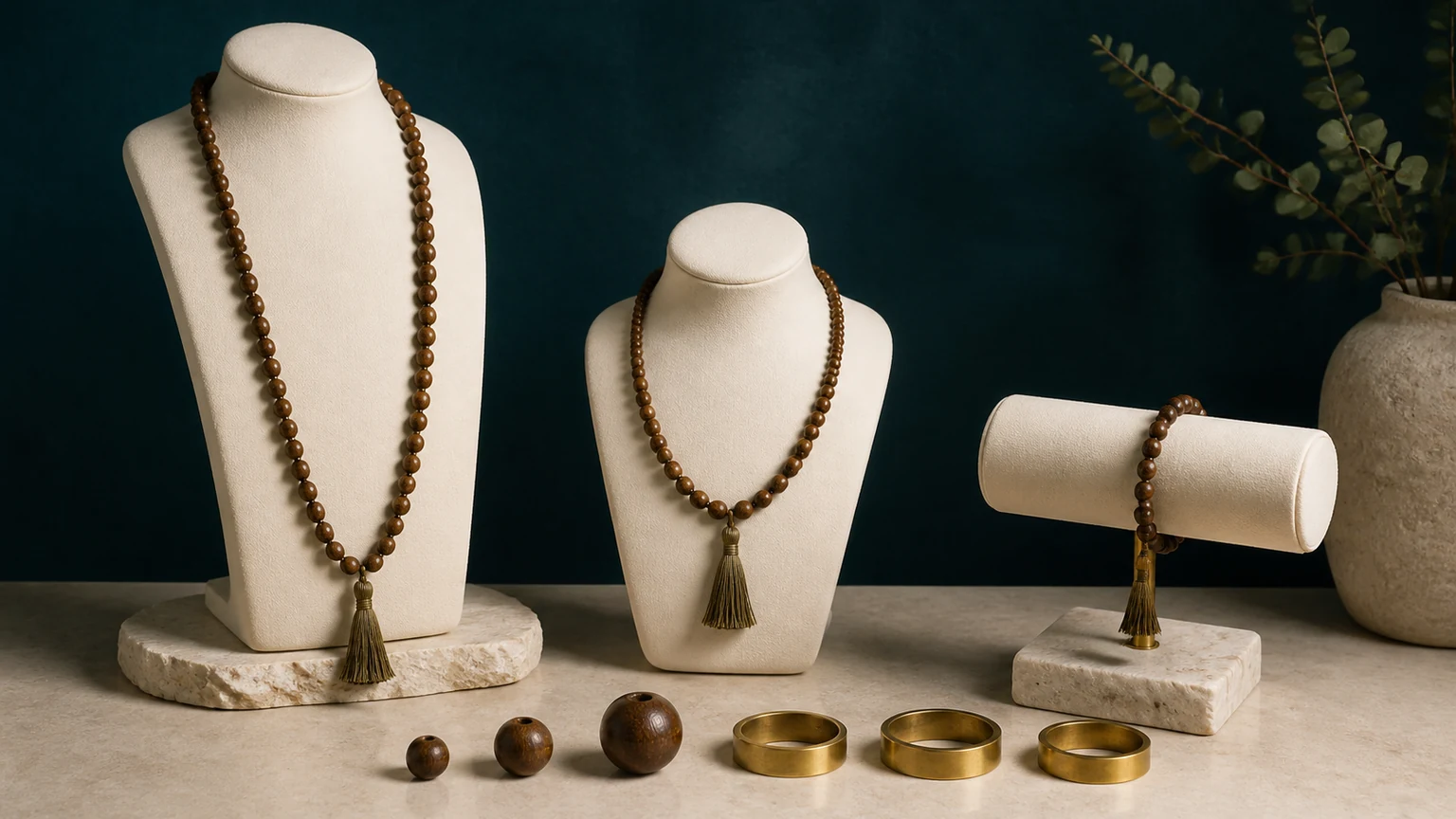
Four documented wood bead samples photographed under identical lighting
Wood beads
Sandalwood, Rosewood, Neem, and Ebony: How Wooden Beads Differ

Sandalwood, rosewood, neem, and ebony are more than colors. Honest comparison starts with species records, processing, and item-specific facts.
Narayana Journal / September 5, 2026
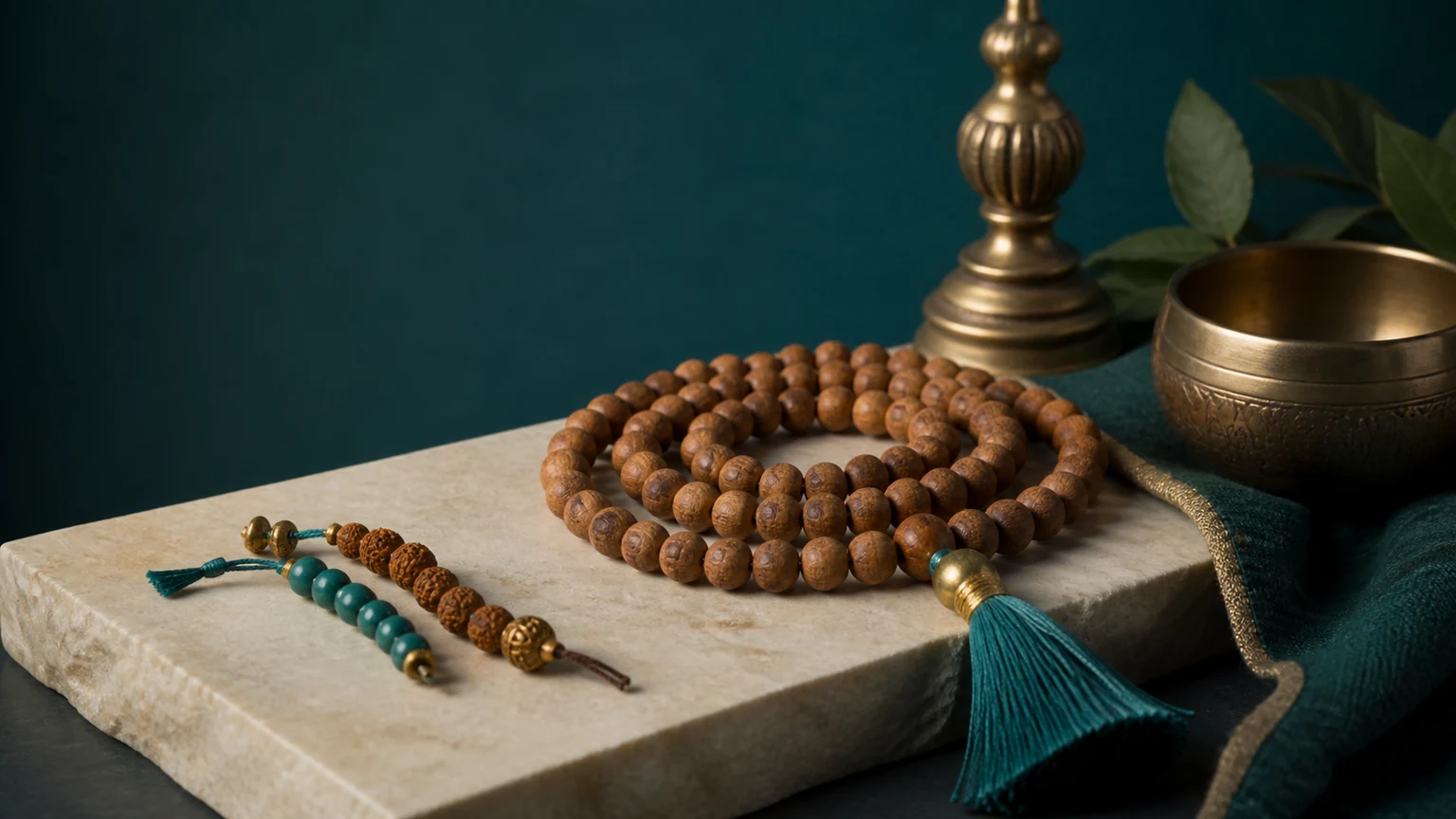
A mala, ruler, and flexible tape for measuring strand length and wrist fit
Sizing and fit
Mala Sizing and Fit: Bead Diameter, Necklace Length, and Wrist Measurement

Mala sizing combines bead diameter, strand length, construction, and personal fit. Here is a neutral way to compare each measurement.
Narayana Journal / September 5, 2026
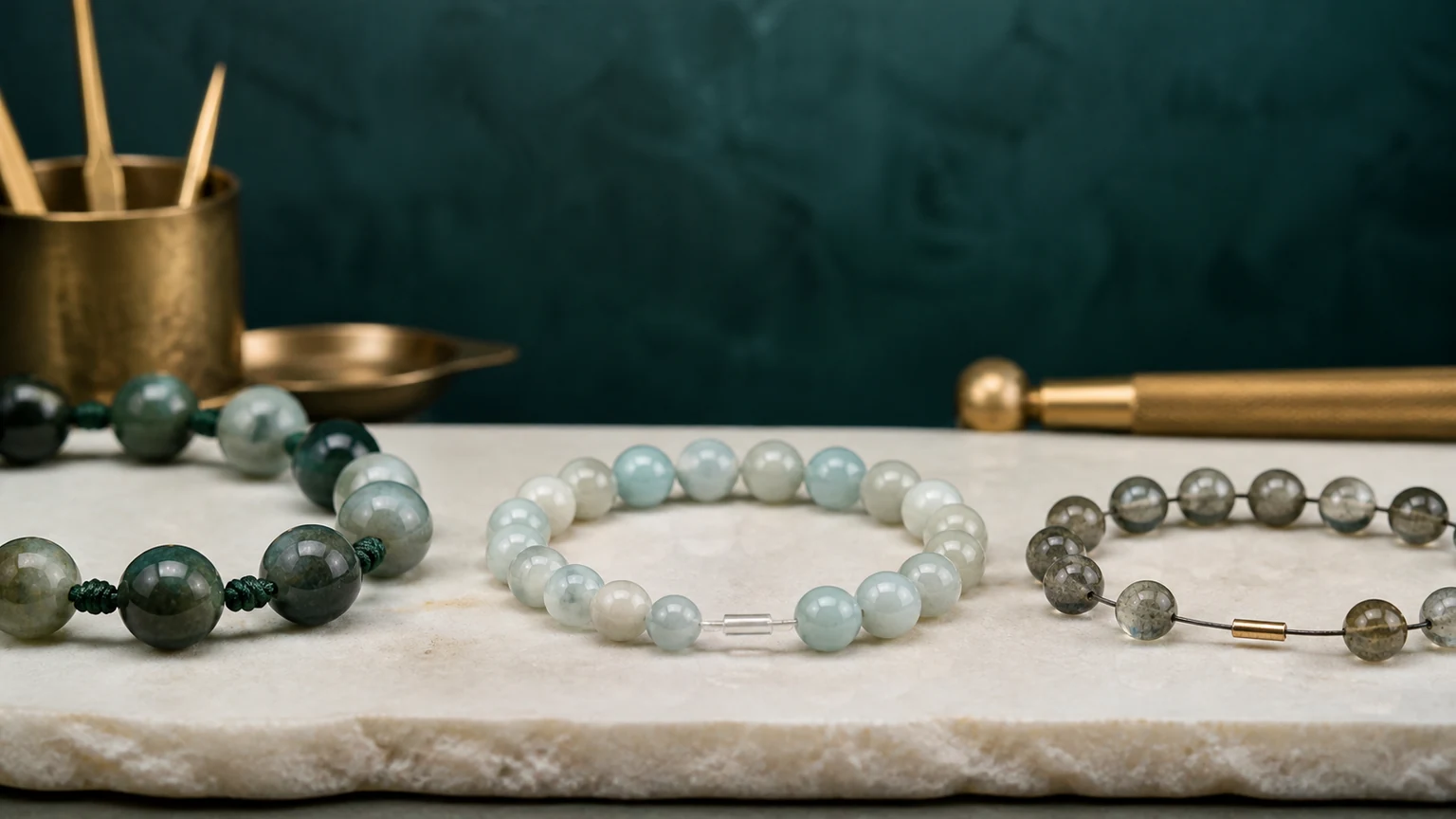
Hands demonstrating a counter strand and round markers beside a mala
Japa practice
Japa Counters: Counter Strands, Markers, and Multiple Rounds

A practical guide to counter strands, round markers, and multi-round tracking, with a clear line between physical construction and tradition.
Narayana Journal / September 5, 2026
Three macro mala samples on knotted cord, elastic, and beading wire
Construction durability
Knotted Cord, Elastic, or Beading Wire: How Construction Affects Mala Durability

Compare three stringing systems by load, repairability, and visible wear without making unsupported lifespan promises.
Narayana Journal / September 5, 2026
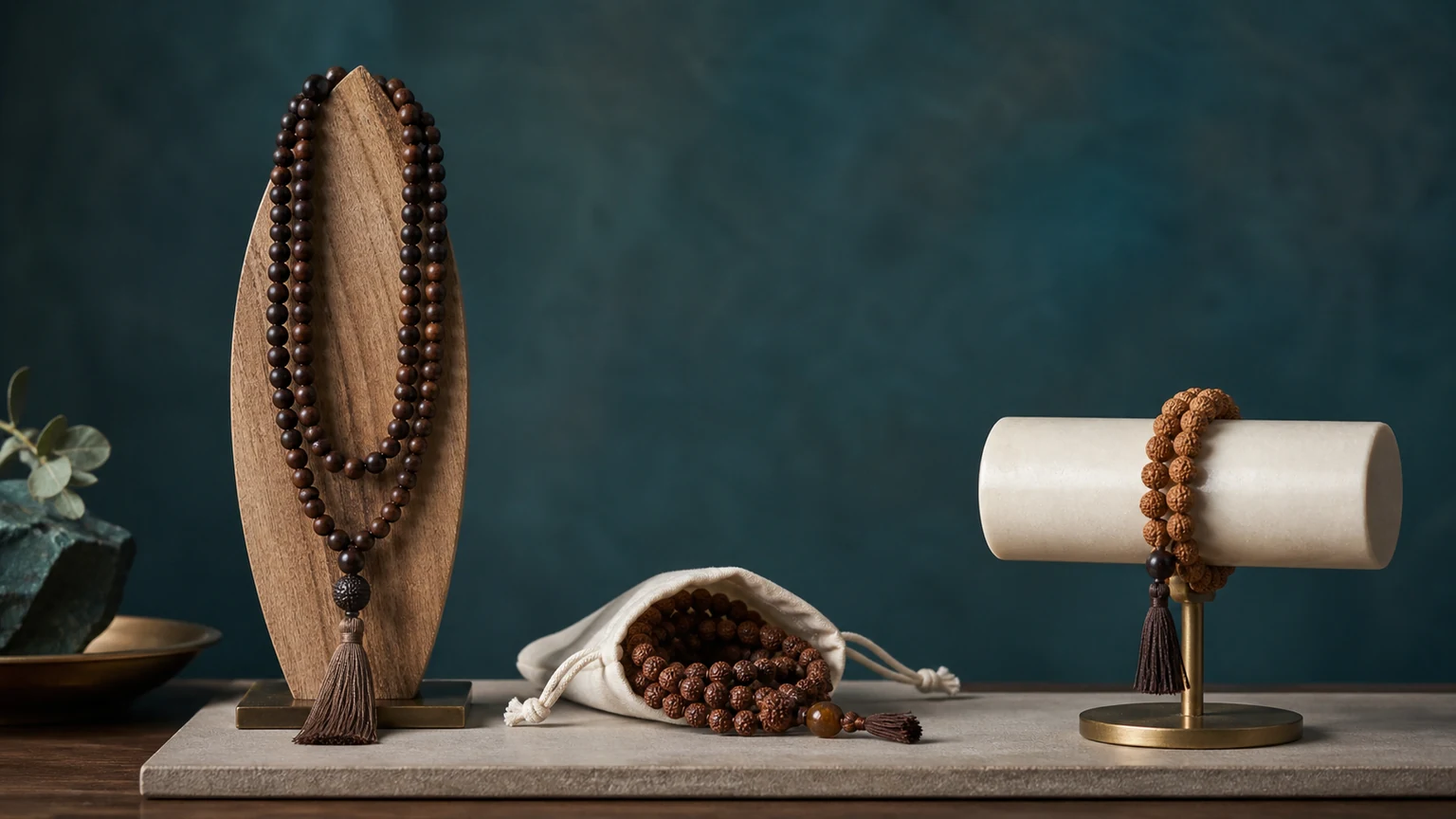
Full, pocket, and wrist mala formats displayed together at one consistent scale
Mala formats
Full, Pocket, and Wrist Mala Formats: Counting, Fit, and Portability

Compare physical mala formats by size, verified count, portability, and use conditions without turning tradition-specific practice into a product rule.
Narayana Journal / September 5, 2026
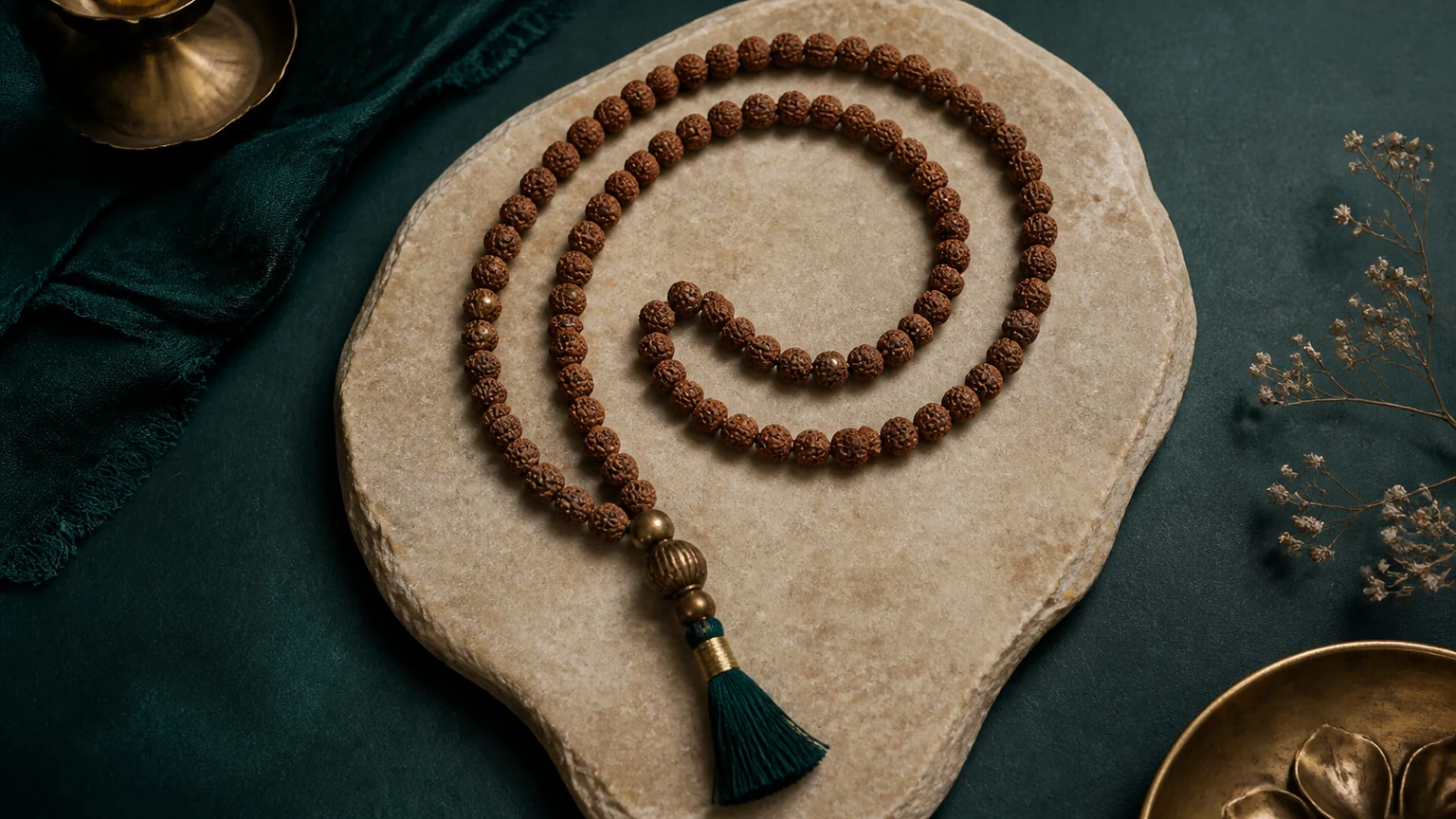
A mala with visually distinct guru bead, markers, cord, and tassel shown without labels
Mala construction
Anatomy of a Mala: Guru Bead, Meru, Bindu, Markers, and Tassel

Mala anatomy treated as construction: component names, visible functions, and item-specific questions that avoid universalizing one tradition.

Narayana Journal / September 5, 2026